Berlin, Germany, January 2026 — Brussels Morning Newspaper highlights that Germany Iran relations have entered a new and carefully defined phase as Berlin signals a tougher, more conditional diplomatic posture toward Tehran. The reassessment comes amid prolonged internal pressure inside Iran, growing concern within Europe, and a broader re-calibration of German foreign policy priorities at a time of global uncertainty.
German officials describe the shift not as a rupture but as an evolution shaped by experience. Longstanding assumptions about gradual reform, economic engagement, and diplomatic patience are being reviewed in light of persistent political stagnation and repeated cycles of unrest inside Iran. The result is a strategy that emphasizes realism, coordination, and clearly defined expectations.
Berlin Redefines Its Strategic Outlook
At the heart of the policy shift is a reassessment of how diplomacy should function in an era marked by competing power blocs and fragile international norms. Policymakers argue that engagement must be grounded in outcomes rather than intention. In this context, Germany Iran relations are increasingly evaluated on measurable progress rather than symbolic dialogue.
German diplomats emphasize that the country’s credibility as a leading European power depends on aligning words with actions. This re-calibration reflects a broader effort to modernize foreign policy tools and adapt them to more confrontational geopolitical conditions.
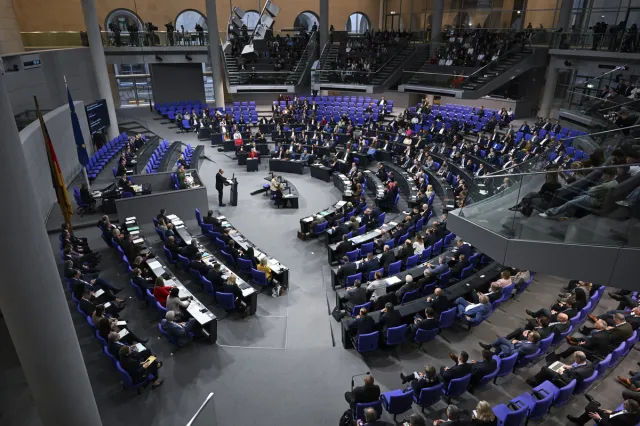
Parliamentary Dynamics Drive Policy Momentum
The Bundestag has become a central arena for debate on Iran. Parliamentary committees, cross party working groups, and public hearings have all contributed to a more transparent and assertive policy discussion. Conservative voices, including Friedrich Merz, have played a visible role in pushing for clarity.
During a recent session focused on Europe’s external relations, Merz delivered a pointed assessment:
“Diplomacy loses its meaning when it ignores realities that citizens can already see.”
The remark crystallized a growing consensus that Germany Iran relations require firmer boundaries to remain credible both domestically and internationally.
Historical Engagement and Its Reassessment
Germany’s approach to Iran has long been shaped by history and economic pragmatism. For decades, Berlin maintained open channels even during periods of international tension, often positioning itself as a bridge between Tehran and Western capitals.
However, officials now acknowledge that historical engagement has not produced the anticipated political transformation. The assumption that sustained dialogue and trade would gradually moderate behavior has weakened, prompting a fundamental review of Germany Iran relations and their underlying rationale.
Internal Pressures Inside Iran Shape Berlin’s View
Developments within Iran continue to weigh heavily on German assessments. Economic challenges, demographic pressures, and repeated protest movements have altered perceptions of stability and governance. German diplomatic reporting increasingly describes structural strain rather than temporary disruption.
These dynamics have pushed Germany Iran relations into a framework focused on resilience and contingency planning. Policymakers stress the need to prepare for a range of outcomes, including prolonged instability or abrupt political shifts.

The European Union’s Coordinated Approach
Germany’s re-calibration is closely linked to European coordination. As the EU’s largest economy, Berlin’s position carries significant influence. Consultations in Brussels have intensified to ensure alignment among member states and prevent mixed messaging toward Tehran.
Within these discussions, Germany Iran relations are often cited as a reference point for broader European strategy. A clearer German stance strengthens collective leverage while maintaining space for multilateral diplomacy.
Economic Links No Longer Dominate Policy
Trade once formed the backbone of bilateral engagement, with German companies playing a notable role in Iran’s industrial sectors. That era has largely passed. Sanctions, financial barriers, and political uncertainty have sharply reduced economic interaction.
As a result, Germany Iran relations are no longer anchored primarily in commercial interests. Business associations now prioritize risk management, easing political resistance to a more assertive diplomatic approach.
Security Considerations Gain Prominence
Security concerns have become a defining element of Germany’s policy review. Iran’s regional activities, combined with ongoing conflicts in the Middle East, are evaluated for their potential impact on European stability.
From Berlin’s perspective, Germany Iran relations intersect with issues such as migration flows, energy market volatility, and regional escalation risks. Officials argue that clearer strategic positioning is essential to protect European interests.
Public Opinion and Media Scrutiny Intensify
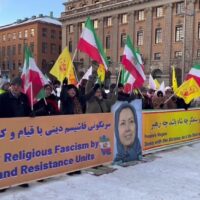
German public opinion has shifted alongside extensive media coverage of events in Iran. Investigative journalism, expert analysis, and testimonies from the Iranian diaspora have heightened awareness of governance and rights issues.
This environment has transformed Germany Iran relations into a topic of domestic accountability. Voters increasingly expect foreign policy to reflect ethical consistency as well as strategic calculation.
Preserving Dialogue While Setting Limits
Despite sharper rhetoric, Berlin insists that communication channels remain open. Diplomatic engagement continues on consular issues, regional security discussions, and crisis prevention mechanisms.
Officials emphasize that Germany Iran relations are being re-calibrated rather than abandoned. The objective is to combine engagement with clearly articulated limits and expectations.

Tehran’s Cautious Diplomatic Response
Iranian officials have responded cautiously to Germany’s evolving stance. Public statements criticize external pressure while signaling interest in maintaining formal diplomatic ties. Exchanges remain measured and protocol driven.
This restrained response reflects recognition that Germany Iran relations have entered a more constrained phase, defined by caution rather than expansion.
Managing Uncertainty Through Flexibility
German policymakers openly acknowledge uncertainty about Iran’s trajectory. Historical experience suggests that political systems can endure longer than anticipated, while sudden change remains difficult to predict.
In this context, Germany Iran relations are managed as a flexible process. Continuous monitoring, coordination with partners, and readiness to adapt form the core of Berlin’s approach.
Implications for Europe’s Global Role
Germany’s re-calibration carries broader implications for Europe’s external identity. A more assertive stance signals willingness to defend norms while accepting diplomatic costs. It also tests Europe’s capacity for unity in a fragmented international environment.
By redefining engagement parameters, Berlin aims to strengthen Europe’s collective voice and reinforce credibility on the global stage.
A Defining Moment in Bilateral Engagement
What distinguishes the current phase is not confrontation alone, but deliberate reassessment. Germany’s approach reflects an effort to balance values, interests, and realism amid shifting global dynamics.
As 2026 unfolds, the re-calibration underway may shape European engagement with Tehran for years to come, marking a period defined by cautious diplomacy, strategic clarity, and coordinated action.