
Europe has long been at the forefront of global efforts to transition toward sustainable energy. With ambitious climate targets and innovative policy frameworks, the European Union (EU) seeks to become the world’s first climate-neutral continent.
This evergreen article explores the European renewable energy policy landscape, its achievements, ongoing challenges, and the road ahead as Europe strives to reduce its Carbon footprint and embrace clean, renewable resources.
Renewable energy policy in Europe is a key pillar of the region’s climate strategy to curb greenhouse gas emissions, enhance energy security, and foster sustainable economic growth. The EU’s approach combines binding targets, legal frameworks, financial incentives, and collaborative mechanisms among Member States to accelerate the shift from fossil fuels to renewable energy sources (RES).
This transition is not only crucial for environmental protection but also for long-term economic resilience and energy independence, particularly in the context of global geopolitical shifts and energy crises.
The Foundations of European Renewable Energy Policy
The European Green Deal
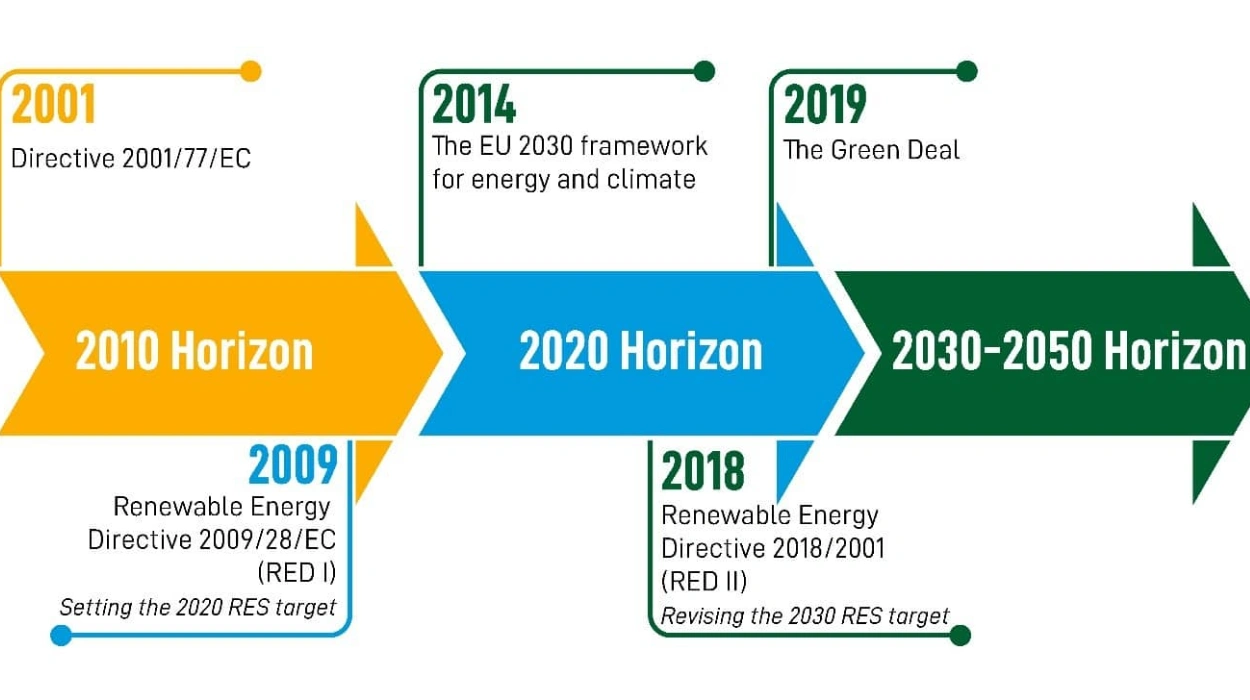
Launched in 2019, the European Green Deal is a comprehensive growth strategy aiming to make Europe the first climate-neutral continent by 2050. It targets net-zero greenhouse gas emissions and emphasizes decarbonizing all sectors, including energy, transport, industry, and agriculture. Renewable energy deployment is a central theme in this plan.
Renewable Energy Directive (RED)
The Renewable Energy Directive establishes common rules for promoting renewable energy within the EU. Since its original adoption in 2009, it has undergone revisions increasing the ambition of renewable energy targets. RED II, legally binding since 2021, set a goal of a 40% share of renewable energy by 2030, with proposals to raise this target to 45%.
The directive also outlines mechanisms like Guarantees of Origin, which certify electricity generated from renewable sources and help verify claims of clean energy consumption.
Progress and Milestones in EU Renewable Energy
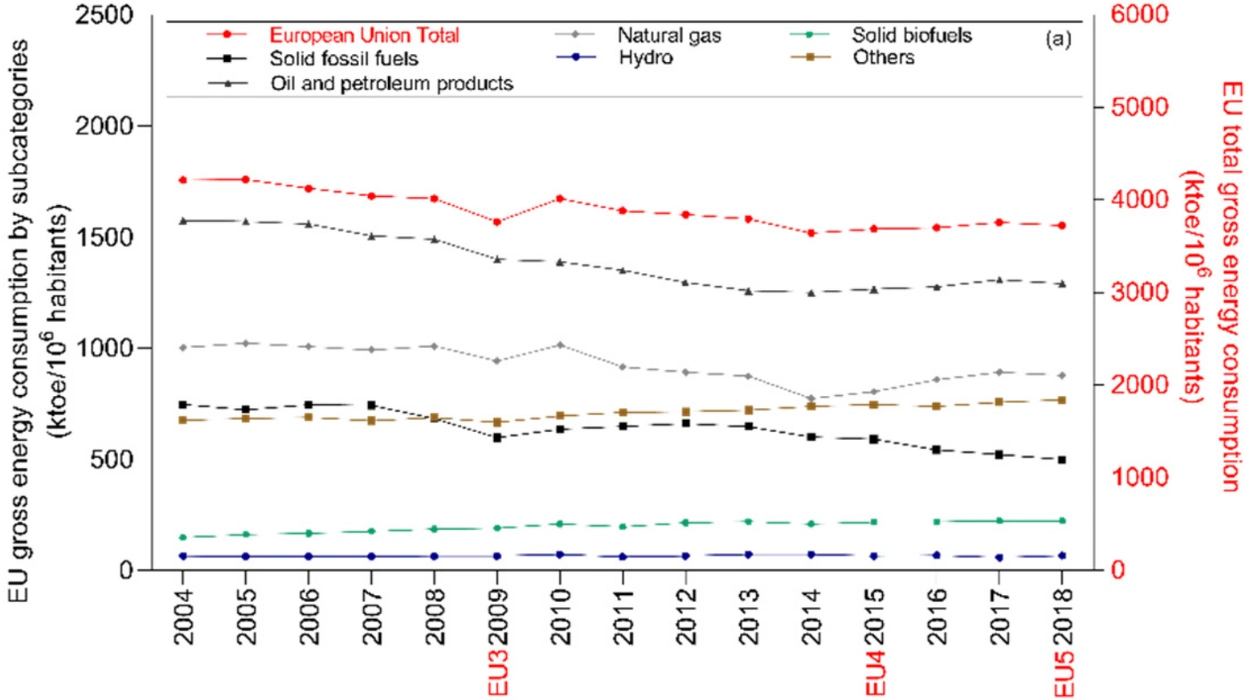
By mid-2024, Europe had made remarkable progress in its energy transition, with nearly half of the European Union’s electricity generated from renewable sources. This milestone represents a fundamental shift away from coal and fossil gas toward cleaner energy such as wind, solar, biomass, and hydroelectric power.
The share of coal in electricity production plummeted to below 10%, marking an historic low and underscoring coal’s rapid decline. For the first time, solar energy surpassed coal in electricity generation, highlighting the rapid growth of solar installations across the continent.
Wind energy maintained its position as the second-largest source of electricity after nuclear power, continuing to outpace fossil gas. Additionally, the EU significantly reduced its dependence on Russian gas, cutting imports from nearly half of total supply in 2021 to under 20% by 2024. These advancements have bolstered Europe’s energy security while driving ambitious reductions in greenhouse gas emissions.
The Role of Member States: Diverse Paces and Approaches
The energy transition across the European Union varies significantly from country to country, influenced by differing political landscapes, economic conditions, and infrastructural capacities. Leading nations such as Denmark, Spain, and the Netherlands have aggressively expanded their offshore wind and solar power capabilities while actively phasing out coal, surpassing the EU’s renewable energy targets with ambitious national commitments.
Conversely, slower-moving countries like France and Sweden face challenges despite their high stated ambitions; France continues to prioritize its nuclear energy sector with less emphasis on renewables, and Sweden has delayed updating its renewable energy targets in recent National Energy and Climate Plans (NECPs).
These NECPs, required by all Member States, serve as crucial policy blueprints for meeting EU climate goals; however, delays in submission, weak commitments, or incomplete plans from some countries undermine the collective progress of the EU’s energy transition.
Policy Instruments Supporting Renewables
EU Member States employ a range of tailored mechanisms to promote renewable energy production suited to their individual circumstances. These include feed-in tariffs (FITs) and feed-in premiums (FIPs), which guarantee fixed prices or provide additional financial incentives to producers of renewable electricity, encouraging investment and stability. Quota obligations and tradable green certificates are also used to motivate energy suppliers to either use or generate a specific portion of their energy from renewable sources.
Competitive tender or auction schemes play a crucial role by allocating subsidies and contracts through competitive bidding, increasing cost-efficiency and transparency. Fiscal incentives such as grants, tax reliefs, and soft loans further support projects related to renewable heating, cooling, and power generation.
To accelerate project deployment, many Member States simplify permitting and regulatory requirements, reducing bureaucratic hurdles and speeding up the integration of renewable technologies into the energy system.
Challenges and Limitations
Despite robust progress, political, regulatory, and infrastructural barriers appear:
- Delays and deficiencies in submitting updated NECPs reflect political hesitations.
- Rising influence of far-right parties in some Member States threatens to roll back environmental regulations.
- Grid infrastructure limitations, permitting bottlenecks, and financing gaps hinder rapid renewable capacity expansion.
- Legal actions by NGOs spotlight insufficient policies and transparency, particularly regarding fossil fuel subsidies and public participation.
The Road Ahead: Future Policy Directions
Europe stands at a critical crossroads in its energy transition, where the success of this monumental shift depends heavily on political determination, strategic investment, and coherent policy coordination across Member States. Strengthening National Energy and Climate Plans (NECPs) to align strictly with legally binding climate targets is essential to maintain momentum and ensure collective progress.
Expanding financial support and infrastructure investment is crucial for modernizing power grids and integrating variable renewable energy sources like wind and solar.
Public engagement and transparency in policymaking must be enhanced to foster trust and inclusivity, enabling the population to better understand and support the transition. Balancing economic competitiveness with ambitious environmental goals is another key factor, ensuring that Europe’s industries can thrive while reducing emissions.
Lastly, guaranteeing equitable access to clean energy technologies and their benefits ensures that all social groups can participate in and benefit from this low-carbon future, making the transition not only effective but also just and sustainable.
With technologies like offshore wind, solar, biomethane, and green hydrogen advancing rapidly, policy frameworks must evolve accordingly to harness Europe’s renewable potential fully.The European renewable energy policy represents a landmark effort to steer the continent toward a sustainable, climate-neutral future.
While significant achievements underline the transition’s momentum, challenges including political shifts, regulatory delays, and uneven Member State progress threaten to slow down its pace.
The coming years will be crucial as the EU seeks to reaffirm its leadership in clean energy through stronger policies, infrastructure upgrades, and inclusive governance. The success of Europe’s renewable ambitions holds global significance, demonstrating how coordinated policy and innovation can tackle climate change and build resilient energy systems.
Dear reader,
Opinions expressed in the op-ed section are solely those of the individual author and do not represent the official stance of our newspaper. We believe in providing a platform for a wide range of voices and perspectives, even those that may challenge or differ from our own. We remain committed to providing our readers with high-quality, fair, and balanced journalism. Thank you for your continued support.