The European Central Bank raised its deposit rate to 2.5 per cent on 10 September, its second increase in three months, and the reason sits in the gas market. A day earlier, Dutch TTF futures briefly cleared €80 per megawatt-hour, a level last seen in January 2023. The week before, on 3 September, the Commission’s Gas Coordination Group had found no immediate risk to supply this winter, and the first reason it gave was increased diversification. Higher import capacity and lower demand came second and third. Those two hold up. The first does not, at least not in the sense Brussels means.
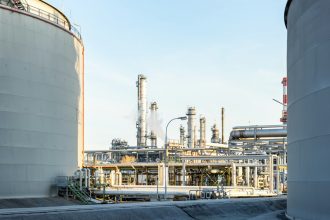
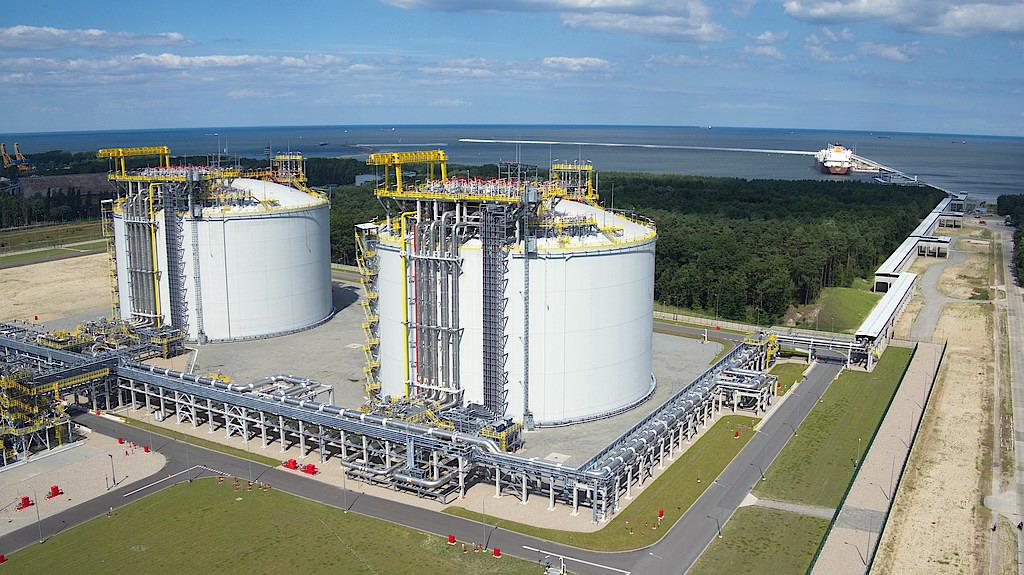
Look at the tanks. EU storage stood at 67 per cent this week against a seasonal norm of 83. German storage, the largest in the Union, was about 53 per cent full on 8 September, the lowest for the date in 15 years of records, down from 71 per cent a year earlier. Goldman Sachs reckons December TTF may need to climb above €100 to pull in enough cargoes if Gulf exports recover only slowly.
The usual complaint is that Europe swapped Russian pipelines for American tankers. A January policy brief from the Clingendael Institute, the Ecologic Institute and the Norwegian Institute of International Affairs warned that diversification cannot mean replacing one dominant supplier with another. The numbers back the warning. The United States supplied 58 per cent of Europe’s LNG in 2025 and 63 per cent in the first quarter of 2026; the Institute for Energy Economics and Financial Analysis (IEEFA) expects two-thirds this year and 80 per cent by 2028 or 2029. Germany already takes 94 per cent of its LNG from American plants.
That critique gets the map right and misreads the danger. Europe’s exposure depends less on the flag of the seller than on the terms of the sale. Gazprom’s long-term, oil-indexed contracts were politically toxic, but they fixed much of the continent’s gas bill years in advance. Almost nothing has replaced them. By mid-June European buyers had signed one new long-term deal with an American supplier this year, against six in 2025. German, Italian and French buyers signed none. One reason they give is the EU’s own climate law: few utilities will commit to 20 years of imports when the bloc has pledged climate neutrality by 2050. Brussels’ climate policy makes long contracts hard to justify, while its security policy assumes the kind of supply only long contracts lock in. The spot market fills the gap.
Spot exposure has a specific shape. In June, when the Asian benchmark averaged $17.33 per mmBtu against $13.19 in Europe, Europe took just under 42 per cent of American LNG exports, its smallest share in two years. August ran the other way. American plants shipped 10.7 million tonnes, Europe took 5.84 million of that, and Asian deliveries fell from 3.32 million tonnes to 2.59 million. Europe found no new gas. It outbid Asia for the same cargoes and paid what that took. Dependence used to mean a valve in Russian hands. Now it means an auction Europe enters with its storage levels published daily.
Brussels knows the auction can be gamed. When lawmakers loosened the storage rules last year, the European Parliament conceded that speculation around the fixed 90 per cent deadline had been driving up refill costs. The amended regulation lets governments hit the target any time between 1 October and 1 December. That softens the deadline. It does nothing about the dashboard.
The strongest objection comes from Italy. Edison holds a 25-year contract with QatarEnergy for 6.4 billion cubic metres a year, exactly the kind of arrangement Europe abandoned with Russia. It did not help. Since the war with Iran began on 28 February, Qatar has exported 18 cargoes in six months against 509 a year earlier, and Edison has lost 29 contracted cargoes, about 3.8 billion cubic metres. Force majeure beats a signature. But look at how Edison coped: it replaced 21 of those cargoes by buying elsewhere, at spot prices. Two damaged Qatari trains, 17 per cent of the emirate’s export capacity, may need three to five years of repairs. The lesson of Ras Laffan is not to sign more 20-year import contracts. It is to need fewer marginal cargoes.
Washington is already using the leverage, and not through tankers. On 14 August it submitted comments demanding that fines under the Corporate Sustainability Due Diligence Directive be calculated only on revenue earned inside the EU. “Now it’s time for the EU to deliver,” wrote Andrew Puzder, the American ambassador to the EU. The methane file shows the method. A US government letter last December called the EU Methane Regulation unworkable; Washington then warned that shipments would go elsewhere if the rules stood, and on 20 July the Commission recommended a three-year delay to penalties on importers. The carbon border levy, in its definitive phase since January, remains on the American list. Behind all of it sits the pledge to buy $750 billion of American energy over three years, against $76 billion of such imports in 2024.
Nor is the Russian exit finished. Russian LNG imports rose 11 per cent year on year in the first quarter and 17 per cent after new contracts were banned in March, with Kpler recording record highs in April and May. Hungary and Slovakia still draw 70 to 80 per cent of their gas from Russia. On Wednesday the European Court of Auditors found that member states had committed €54.3 billion of the €300 billion available under REPowerEU. The plan “has stalled,” said Mihails Kozlovs, the auditor who led the report, “even though several hundred billion euros have been made available.”
The choice facing finance ministries this autumn is about where the money goes. Every euro spent outbidding Asia for December cargoes buys one winter and changes nothing structural. IEEFA calculates that the sum in the purchase pledge could build about 546 gigawatts of solar and wind, nearly matching the 569 gigawatts the EU had installed by the end of 2024. Short of that, the International Energy Agency this week urged governments to hold strategic gas reserves outside the commercial market. EU countries held 12 billion cubic metres in 2025, about 3.5 per cent of annual demand. A jointly financed EU reserve, released only in a declared emergency, would take the most desperate bids off the public dashboard. The unspent REPowerEU money could pay for the grids and heat pumps that cut how many cargoes Europe needs at all.
Households are already paying. Eurozone inflation rose to 3.3 per cent in August, with energy prices up 14.3 per cent on a year earlier. Inflation “is set to remain well above target for an extended period,” Christine Lagarde said after the 10 September decision. Once gas shows up in interest rates, it is a political problem.
The Commission is right that nothing will break this winter. Europe will get its molecules at whatever buyers in Asia and Egypt are prepared to pay, and it will negotiate on trade, methane and corporate law from a position its counterparties can read off a public website. Diversification was meant to end that kind of exposure. Until Europe needs fewer cargoes, it has only changed who collects the premium.