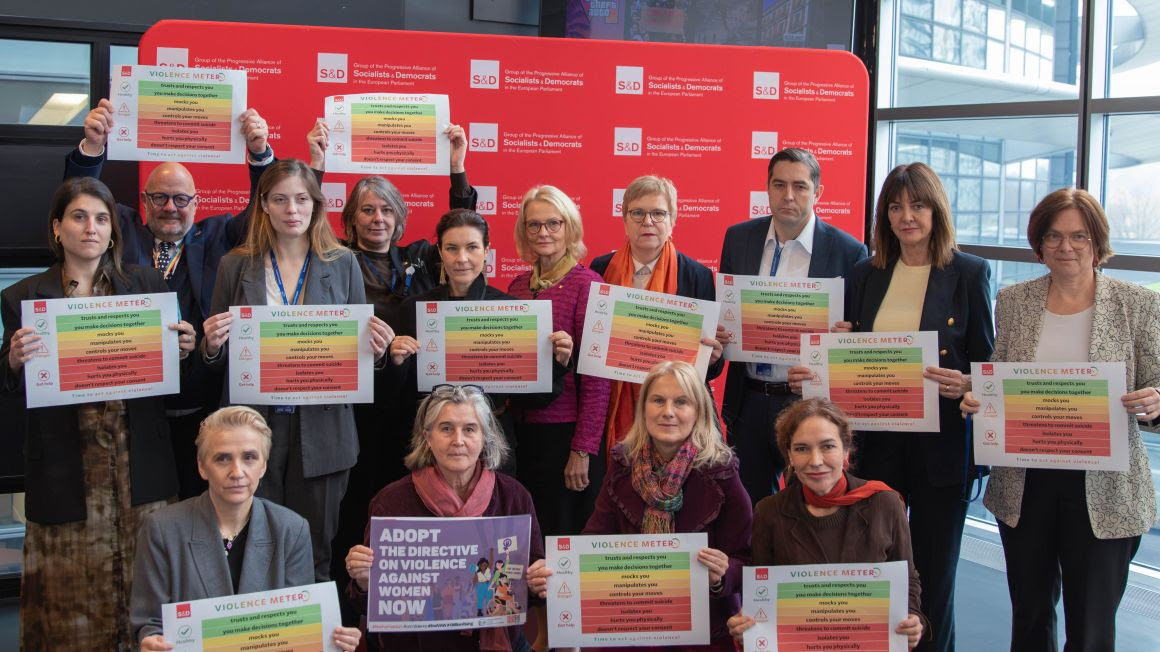
On International Day for the Elimination of Violence against Women (25 November), MEPs have demanded “stronger action” to protect women and girls from all forms of gender-based violence, both online and offline.
Violence against women affects one in three women in the EU, while sexual violence affects one in six.
Digital technologies are creating new ways for perpetrators to threaten, harass and abuse women, ranging from cyberstalking and misogynistic harassment to AI-generated sexual deepfakes and online networks that facilitate sexual violence.
On 25 November 1960, the Mirabal sisters were tragically assassinated for their fight against injustice under Dominican dictator Rafael Trujillo.
Their legacy inspired global action, leading the UN in 1993 to re-define gender-based violence and, in 1999, to establish November 25 as the International Day for the Elimination of Violence Against Women.
The International Day will mark the launch of the UNiTE campaign (Nov 25-Dec 10) and 16 days of activism concluding on Human Rights Day (10 December).
The campaign’s public call to action, “Speak Out. Believe Survivors. Demand Justice”, encourages everyone to challenge “silence and stigma, stand with survivors and demand accountability for violence against women and girls.”
In the EU Parliament, S&D MEPs have used the occasion to demand “effective enforcement” of the Digital Services Act, GDPR and the AI Act, ensuring that platforms act against abuse and victims can report it, have illegal content removed and access to support and justice.
A spokesman for the group, the 2nd biggest in the parliament, said, “We welcome the agreement to ban nudifier apps from 2 December. However, this ban must be effectively implemented and enforced.”
The Group urges member states to implement the directive on combatting violence against women and domestic violence by next June.
“While an important step forward by recognising several forms of cyber violence as criminal offences, the directive falls short of the S&Ds’ demand for a consent-based definition of rape,” added the spokesman.
The S&Ds will continue to press the Commission for EU legislation based on the principle that only yes means yes.”
Swedish MEP Heléne Fritzon, S&D vice-president responsible for a Feminist Europe, said, “Women and girls have the right to participate in public life and be online without fear.
“When harassment drives women out of politics and digital spaces, democracy loses their voices. Technology should empower women, not become a weapon against them,” said the deputy, a former government minister in Sweden.
“Online ‘rape academy’ networks, where perpetrators exchange advice on drugging and sexually assaulting women and share recordings of abuse, demonstrate how digital spaces can facilitate real-world violence. The misuse of smart glasses to film women without their knowledge poses another serious threat to consent and privacy,” added the group’s deputy chair.
“We need platforms to take responsibility and authorities to enforce the rules. The upcoming ban on AI systems that generate non-consensual intimate images must be properly enforced. Above all, we must ensure that rape is criminalised across the EU on the basis of the absence of consent. Women must be free from violence, online and offline,” said Fritzon, an MEP since 2019.
Elsewhere,a joint statement by the EU Commission and EU High Representative Kaja Kallas was equally hard hitting, stating, “Every woman and girl has the right to live free from fear, violence, abuse and harm.
“And yet worldwide, one in three women, including in the EU, has been a victim of gender-based violence.”
It says, “Today is an important reminder to stand together against gender-based violence, so that we can achieve true equality.
“No woman or girl should have to experience sexual and gender-based violence, anywhere. Our mothers, grandmothers, great-grandmothers, and those before them, have suffered and fought against such violence. And yet, it continues to threaten women and girls in every aspect of life.
Gender-based violence doesn’t stop at the physical world but also infects the virtual one. Women face growing threats of online harassment and abuse while technology can amplify misogyny and normalise violence. This is unacceptable and it must stop.”
It goes on, “Some women and girls are more exposed than others. In conflict, displacement and humanitarian crises, the risk of violence multiplies, while access to protection and justice shrinks.
“Discrimination deepens and amplifies these inequalities.
“The EU has, and will continue, to take action to protect women and girls, to prevent sexual and gender-based violence, hold perpetrators accountable and ensure that victims receive the protection, support and access to justice they need and deserve.”
The statement said the Directive on combating violence against women and domestic violence is an important milestone and “reiterates” the urgency for EU countries to transpose it into their national law by the June 2027 deadline.
“Today, we also join forces with the UN and the international community. Under the theme ‘Ensure justice, protect survivors, end impunity’, we will support the global “Orange the World” campaign. Sending a clear message: sexual and gender-based violence must end.”
“Our goal is simple, but the path to achieve it is not. Together we must challenge harmful stereotypes, address structural gender inequalities, tackle multiple and intersecting forms of discrimination and ensure that all women and girls can access effective protection, support and justice.
“Only then can every woman and girl, wherever they are in the world, fully enjoy their right to live free from violence and fear,” it concludes.
A United Nations spokesman said, “Violence against women and girls remains one of the most pervasive human rights violations worldwide. Yet for countless survivors, justice remains out of reach.Too many face barriers to reporting violence, accessing protection and support, or holding perpetrators accountable.”