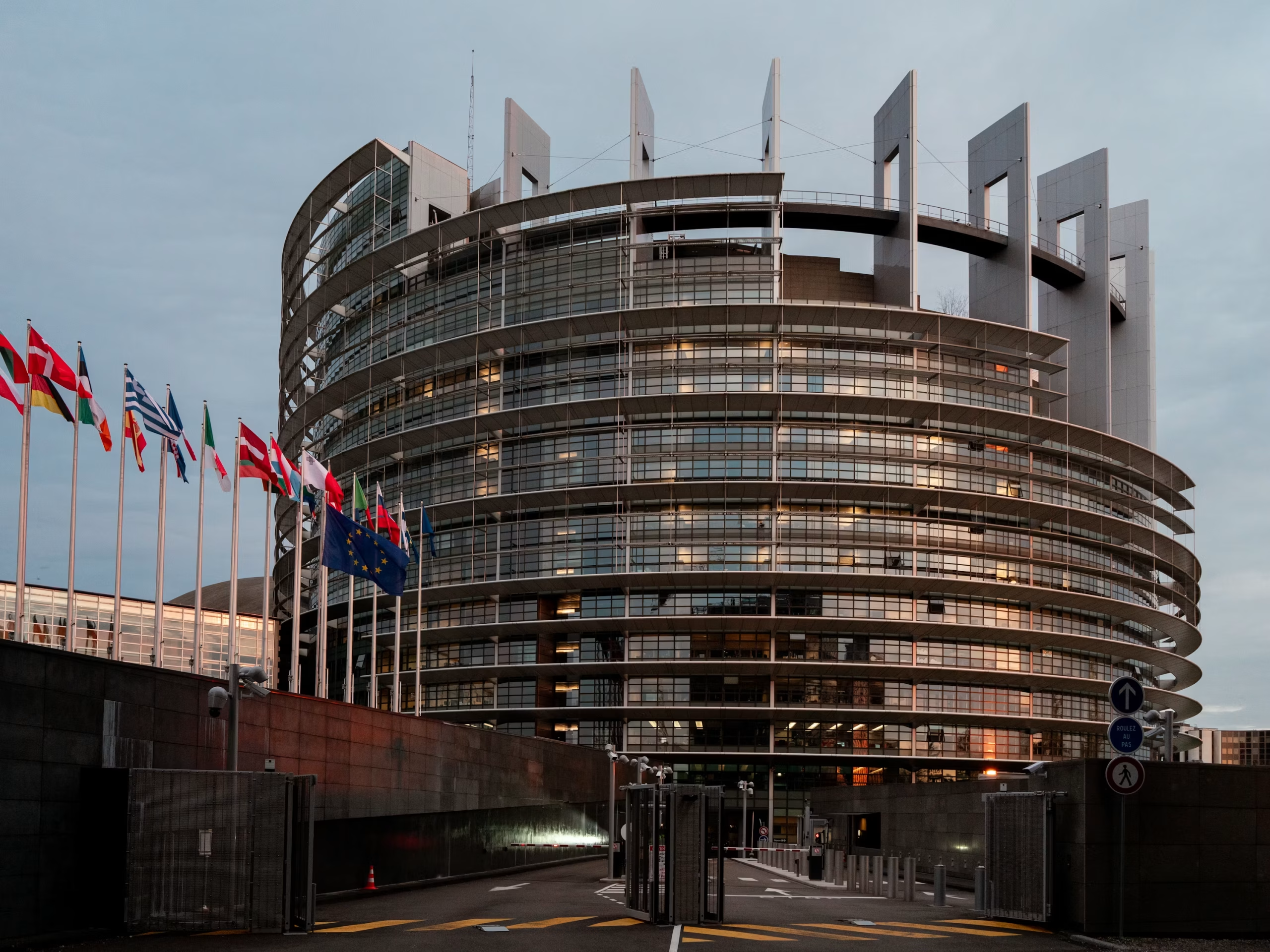

Brussels, 5 October, (Brussels Morning Newspaper) – Brussels is preparing a significant new phase in the European Union’s enlargement strategy as the European Commission examines how EU institutions, policies, finances and decision-making should change before additional countries become members. The EU enlargement reform plans reflect growing pressure for the Union itself to be ready for expansion alongside candidate countries pursuing accession reforms.
The European Commission’s College is scheduled to discuss its communication on pre-enlargement policy reviews on 6 October, moving the debate over the EU’s internal readiness further up the political agenda.
Brussels prepares EU institutions for future expansion
European Commission President Ursula von der Leyen has stressed that enlargement requires preparation on both sides of the accession process.
During a visit to North Macedonia on 2 October, she said: “Candidate countries must be ready to join. But we as a European Union must also be ready to welcome them.”
That distinction is increasingly important as countries including Montenegro, Albania, Ukraine and Moldova advance through different stages of the accession process.
The Commission has been examining the potential consequences of enlargement for EU governance, the Single Market, agriculture and food security, defence, migration, climate and energy policy, economic convergence and the Union’s budget.
Powerful safeguards enter enlargement debate
One of the most sensitive questions is how an expanded Union could continue taking decisions efficiently while protecting democratic standards and the rule of law.
Proposals reported ahead of the Commission’s formal presentation include possible safeguards intended to reduce the risk that future members could obstruct important EU decisions after accession.
Options being considered include arrangements concerning the use of veto powers by new members and mechanisms for responding to serious rule-of-law problems. These remain proposals under discussion rather than agreed changes to EU law.
Transitional arrangements could also be considered in politically sensitive areas such as agriculture and the free movement of workers.
Commission links expansion with wider EU reform
The latest EU enlargement reform plans build on the Commission’s March 2024 communication on pre-enlargement reforms and policy reviews.
That work identified four broad areas requiring attention: EU values, policies, the budget and governance.
The Commission has argued that preparing the Union internally must progress alongside the reforms demanded from accession candidates.
The European Parliament has also supported debate over wider use of qualified-majority voting during parts of the accession process. However, major enlargement decisions continue to require agreement among member states, and accession treaties ultimately require ratification.
Candidate countries still face strict membership conditions
Internal EU reforms do not remove the obligations placed on countries seeking membership.
The accession process remains based on established criteria covering democratic institutions, the rule of law, fundamental rights, functioning market economies and the ability to implement EU legislation.
Brussels has repeatedly described enlargement as a merit-based process, meaning individual countries can progress at different speeds depending on their reforms.
Gradual integration has meanwhile become increasingly important, potentially allowing candidate countries to participate more closely in selected EU programmes and parts of the Single Market before full membership.
Why enlargement reforms matter for Europe
Future expansion could have significant consequences for EU agricultural spending, cohesion funding, institutional representation and the balance of decision-making among member states.
Preparing those systems before additional countries enter the bloc is therefore becoming a central part of the enlargement debate.
For candidate governments, the discussion also matters because future accession agreements could include transitional safeguards affecting how some membership rights and policies initially operate.
What happens next?
The European Commission’s College is expected to discuss the pre-enlargement policy reviews on 6 October 2026, with Enlargement Commissioner Marta Kos expected to present the communication afterwards.
The document should provide greater detail about which changes Brussels believes can be made within existing EU treaties and which issues will require further political negotiations among member states.
The EU enlargement reform plans will not themselves approve new members. Instead, they are intended to prepare the European Union for possible future expansion while candidate countries continue their individual accession negotiations and domestic reforms.