Another year, another EUDR delay. Such is the repeated failure of the European Union to get its anti-deforestation legislation off the ground that the question has to be asked: “Will it ever do so?’
It’s not just the inability to get the IT systems ready or the fact that supply chains for the key commodities are not ready for due diligence checks to demonstrate compliance. These are problems which can be ironed out with time.
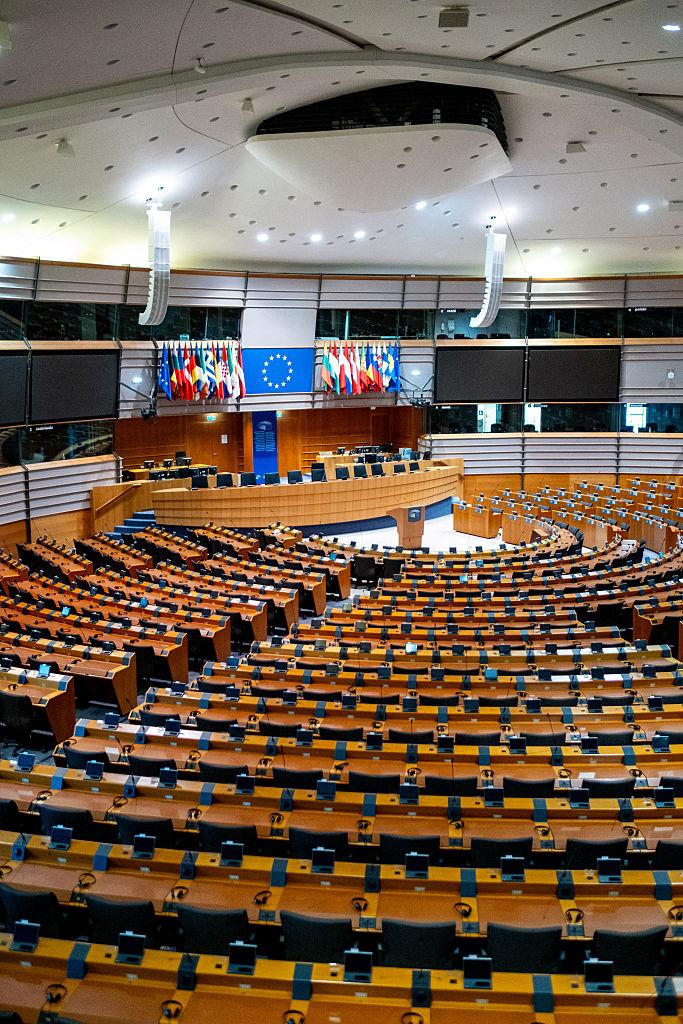
The real problem is the lack of political will in Brussels which has seen nearly 60% of MEPs vote for a postponement of legislation, mainly from the European People’s Party and far-right parties.
Not only do opponents want a delay, they are also calling for the EU Deforestation Regulation (EUDR) to be watered down to a point where it’s no longer acceptable to supporters.
The politicians and policymakers have failed, and it seems likely a key component of the EU Green Deal is not going to happen.
This is a huge blow for campaigners, and anyone who cares about our planet, because EUDR promised to cut global deforestation by 10%.
It would achieve this by forcing companies to show that supplies of key commodities like cattle, cocoa, coffee, palm oil, rubber, soy and wood into the EU were not linked to any forest loss since 2020.
Bear in mind that 86% of global deforestation between 2000 and 2020 can be attributed to crop and cattle production. The world lost around 100 million hectares, roughly the size of Egypt.
In 2022 alone, the Amazon saw record rates of tree degradation with two million hectares of forest cleared, much of it driven by meat production, both for livestock and to grow soybeans for animal feed.
So something had to be done. EUDR would not end deforestation but it would close off a lucrative market to producers who laid waste to much of what still covers 31% of the planet.
The price of EUDR failure can be seen in this month’s decision by soy traders to walk away from a voluntary agreement which has protected the Amazon since 2006.
The Amazon Soy Moratorium has saved millions of acres of tropical forest by getting traders only to purchase soybeans planted in land that had already been cultivated, not in deforested areas.
One study estimated that between 2006 and 2016 the moratorium prevented 9000 sq.kms of forest from being cut down.
But on January 1st a new law eliminating tax benefits for members of the moratorium came into effect in Mato Grosso, the Brazilian state that produces the most soybeans in the country.
It led to soy traders – including multinational firms like Cargill, Bunge and ADM – announcing plans to leave the moratorium in a move that will only put more of the Amazon at risk of deforestation.
But would they have done so if Brussels had implemented its deforestation legislation, closing off Europe to these post-moratorium soybean traders?
The move is of sufficient concern to leading supermarkets – Tesco, Aldi, Lidl, Sainsburys and Asda as well as Marks and Spencer – who have written to traders warning consumer confidence will be damaged if safeguards are not in place to ensure supplies not linked to deforestation.
Cocoa production, too, has been fuelling deforestation in new parts of Africa where decades of dependence on Ivory Coast, the world’s largest exporter of cacao beans, has weakened the soil and forced producers into neighbouring Liberia.
The European Union is the world’s largest importer of cocoa and EUDR could have played a part in introducing better practices among smallholders.
For the producers of coffee and palm oil, the larger companies, with sustainability programmes in place, are well prepared for EUDR.
However, around 70% of coffee is produced by smallholder farmers who would struggle to meet requirements on traceability. But with the average European spending €150 a year on coffee, there would be a clear incentive for the industry to demonstrate EUDR compliance.
Ironically, the industry which used to be the bete noire of environmentalists is now one of the least worst offenders.
From 1990 to 2005 more than half of oil palm expansion in Malaysia and Indonesia happened at the expense of forests.
But the increased scrutiny that came with that has driven tighter regulations and certification within the industry. This means that sustainable palm oil, which is compliant with EUDR, already accounts for 93% of palm oil imports into Europe.
In October Nestle and Ferrero, which use palm oil in their products, wrote to the EU environment commissioner saying postponing EUDR “puts at risk the preservation of forests worldwide”.
Olam Agri, which operates in the rubber and timber sectors, said that not implementing the law “risks penalising companies that have invested in early compliance and could erode trust in the EU’s leadership on sustainability”.
The upshot of the EUDR farce, of course, is that Europeans will now see the price of their lattes and chocolate bars go up as yields decline because of climate change made worse by deforestation.
Dear reader,
Opinions expressed in the op-ed section are solely those of the individual author and do not represent the official stance of our newspaper. We believe in providing a platform for a wide range of voices and perspectives, even those that may challenge or differ from our own. We remain committed to providing our readers with high-quality, fair, and balanced journalism. Thank you for your continued support.