Walk through any European city today and the transformation is visible. Charging stations sprout on street corners. Electric buses glide silently through historic squares. The continent’s green transition is no longer a policy paper ambition – it is being built, street by street, factory by factory.
But inside Europe’s corridors of power, a different mood prevails. Anxiety. The surge of competitive Chinese electric vehicles (EVs) has set off alarm bells from Berlin to Brussels. The European Commission’s anti-subsidy duties – which reached up to 35.3% before transitioning to a framework of price undertakings – are not merely a trade dispute. They express a deeper, existential fear: that Europe might lose the automotive industry that has defined its middle class and economic identity for a century.
That fear deserves to be taken seriously. But the defensive response Europe is contemplating – tariff walls, stringent localisation rules, and looming restrictions in the Industrial Accelerator Act – risks fighting the wrong battle with the wrong tools. The real question is not how to keep Chinese EVs out. It is how to embed Chinese technology, capital, and supply chains inside Europe’s industrial renewal, on European terms, for the benefit of European workers and climate goals.
Chinese EV competitiveness is not simply a story of state subsidies. It reflects a decade-long strategic bet on battery chemistry, mineral processing, and vertically integrated supply chains. While Brussels refined regulations, Beijing built an ecosystem. Today, European battery manufacturing costs remain roughly 30% higher than in China. According to research published in Nature Energy, Europe’s domestic battery production is projected to meet at best 50–60% of its 2030 demand, with the EU’s 90% self-sufficiency target “feasible but far from certain”.
Europe’s structural bottlenecks – high energy costs, glacial permitting for gigafactories, and dependency on imported critical minerals – cannot be solved by a customs agent at the port of Zeebrugge. At best, tariffs buy time for legacy management. At worst, they raise consumer prices, slow EV adoption, and undermine the European Green Deal.
A quieter, more pragmatic path is already underway on European soil. In Hungary, Chinese battery titan CATL is building a €7.3 billion plant to supply Mercedes-Benz and BMW, with mass production slated for late 2025 and an annual capacity of 100 gigawatt-hours. BYD is on track to begin vehicle production in Szeged this year, choosing to build inside the single market rather than wage an external trade war. In Spain, Stellantis and CATL have joined forces on a €4.1 billion, 50 gigawatt-hour battery plant in Zaragoza, with production targeted for late 2026. France has welcomed Envision AESC in Douai, a €1.3 billion gigafactory now employing 900 workers and supplying batteries for the Renault 5.
These are not extractive projects. They are deep co-investments – creating thousands of skilled local jobs, fostering regional supplier ecosystems, and anchoring technology transfer inside Europe’s borders.
This is not a new or uniquely Chinese strategy. It is precisely how Germany rebuilt its industrial might after 1945. The Wirtschaftswunder – the economic miracle – was not built behind protectionist walls, but through the systematic licensing of foreign technologies, the deliberate attraction of foreign capital, and the absorption of best-practice manufacturing know-how, which German engineers then refined and often surpassed. Korean and Japanese automakers followed a similar playbook in the 1970s and 1980s, learning inside foreign markets before becoming global competitors. Europe today has the same opportunity: integrate Chinese battery and production expertise now, internalise it, and lead tomorrow.
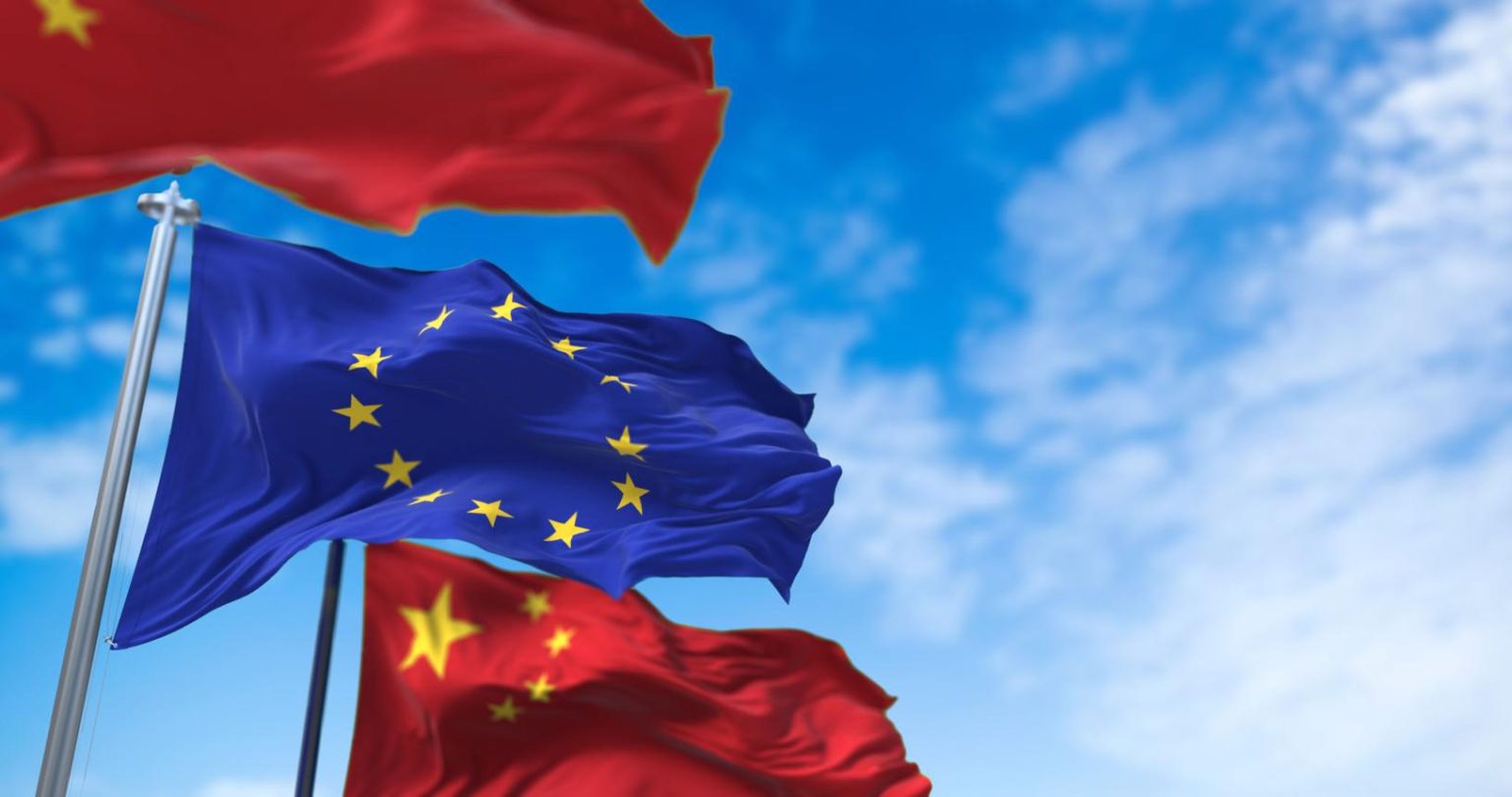
This ad-hoc reality needs a formal European framework. Rather than a zero-sum choice between naive free trade and self-defeating protectionism, the EU should pursue a negotiated “Green Investment and Trade Partnership” with China. The bargain is straightforward: the EU provides predictable market access for Chinese EV manufacturers that commit to local hiring, local component sourcing, and joint R&D. In return, China opens its domestic market further to advanced European green exports – automotive software, precision engineering, carbon management systems, and high-end design.
This is not geopolitical charity. European luxury brands already depend heavily on Chinese consumers, and German engineering firms are deeply integrated into Chinese supply chains. These are not competing visions – they are mirror images of the same globalised industrial reality.
The true explosion in EV demand will happen in the Global South – Southeast Asia, Latin America, Africa, and South Asia. If the EU and China exhaust their political and economic capital in a destructive tariff war, neither will have the capacity to set global standards, build charging networks, or supply the affordable vehicle platforms the developing world needs. That vacuum will be filled by climate chaos and economic fragmentation. Closer cooperation could instead map out the global green mobility architecture for a generation.
The EU has long prided itself on multilateralism, climate leadership, and a rules-based order. It must act consistently with those values now – not by succumbing to economic nationalism, but by designing frameworks that make strategic interdependence work. The tools already exist: investment screening, conditional market access, joint R&D mandates, technology-sharing agreements. What is missing is the political imagination to use them proactively.
Europe’s auto industry is not a fragile relic to be sealed behind glass. It remains a repository of engineering talent, world-class design, and brand power. Coupled with Chinese manufacturing velocity and battery expertise, it can co-author the next chapter of human mobility – electrified, intelligent, and affordable. The EV is not a threat to Europe’s industrial soul. It is the vehicle through which that soul can be renewed – if Europe chooses partnership over panic.