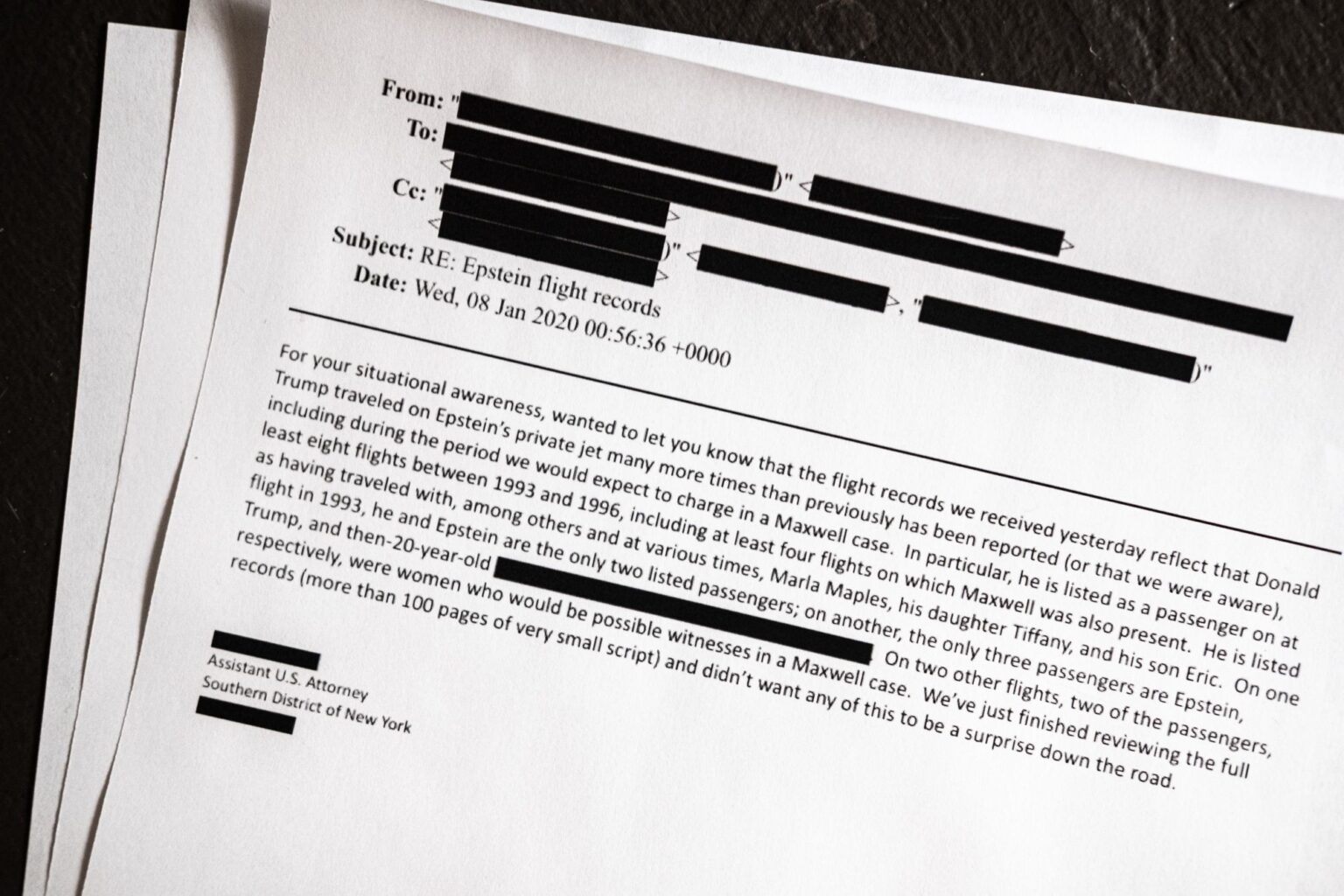
Brussels, Belgium — February 4, 2026 (Brussels Morning Newspaper) — The Epstein file release issued by the U.S. Justice Department has reignited international attention around one of the most disturbing scandals of the modern era, with Europe now at the center of renewed political, institutional, and ethical scrutiny. The release of millions of pages of documents has reshaped public debate across the continent, drawing focus to how convicted financier Jeffrey Epstein maintained access to elite networks long after his criminal conviction became public knowledge.
While the material does not present new criminal charges against European figures, the scale and detail of the disclosures have prompted widespread examination of judgment, accountability, and the norms governing relationships between public officials and wealthy private individuals.
Scope and Content of the Newly Disclosed Material
The documents include extensive correspondence, contact directories, flight records, calendars, and internal investigative notes. Together, they offer a granular view of Epstein’s interactions across borders, highlighting how social proximity often replaced formal authority as a pathway into influential circles.
The Epstein file release has proven significant not for what it accuses, but for what it reveals about access. Political analysts note that sustained contact itself has become a reputational risk in an era where ethical standards are increasingly defined by perception as much as legality.

United Kingdom Revisits Standards of Political Judgment
In the United Kingdom, renewed focus has fallen on figures who maintained contact with Epstein after his 2008 conviction. Among the names receiving attention is Peter Mandelson, a senior Labour figure and former European commissioner.
Correspondence cited in the files shows long-running communication and social interactions during periods when Mandelson held influential roles. While no evidence of unlawful conduct has emerged, the Epstein file release has reignited debate over ethical awareness and the responsibilities that accompany public office.
One former ethics adviser to a UK parliamentary committee said,
“Public trust depends not only on legality, but on the judgment leaders exercise once serious misconduct is known.”
Royal Accountability Debated in Northern Europe
Northern Europe has seen particularly intense discussion surrounding references to Crown Princess Mette-Marit of Norway. The files indicate multiple meetings with Epstein after his conviction, largely framed as informal or social in nature.
Norway’s royal household acknowledged the encounters and expressed regret, stating that fuller awareness would have altered decisions. Though the monarchy holds no governing power, the Epstein file release has fueled national debate over transparency, privilege, and the symbolic influence of public figures.
A Norwegian political sociologist observed,
“Royal institutions function on public confidence, and even symbolic misjudgments can have lasting impact.”
Central Europe Experiences Direct Political Fallout
In Central Europe, the consequences have been more immediate. In Slovakia, a senior government adviser resigned after repeated references to his name appeared in Epstein-linked correspondence.
The official confirmed email exchanges but denied improper conduct. His departure underscored how politically sensitive even indirect associations have become. The Epstein file release has intensified pressure on governments operating in environments where institutional trust remains fragile.
Preventive Reviews Launched Across the Continent
Several governments have responded proactively. In Poland, authorities confirmed a formal review of the documents to determine whether any officials, intermediaries, or institutions appear within the material.
While initial assessments suggest most references are incidental, officials emphasized transparency. Similar reviews are underway elsewhere, reflecting a shared recognition that the Epstein file release demands visible accountability measures.
Timing Raises Deeper Ethical Questions
What has amplified the European response is timing. Many interactions documented occurred well after Epstein’s conviction, when his status as a convicted sex offender was widely known.
For European leaders, the Epstein file release raises questions not about criminal culpability, but about ethical thresholds and risk awareness within elite environments where informal diplomacy often occurs beyond public oversight.
Proximity as Influence in Elite Networks
Analysts reviewing the material emphasize that Epstein’s power stemmed from proximity rather than formal authority. By cultivating relationships with politicians, diplomats, and royals, he positioned himself as a facilitator of access.
The Epstein file release illustrates how reputational endorsement can emerge unintentionally through repeated social contact, blurring boundaries between private association and public legitimacy.
Legal Reality Versus Public Expectation
Officials across Europe have stressed a critical distinction: being named in documents does not equate to involvement in criminal activity. Legal experts consistently note that the files constitute records, not findings of guilt.
Public opinion, however, has applied a different standard. The Epstein file release has reinforced expectations that leaders must demonstrate moral clarity, particularly when associations carry foreseeable reputational risk.
Calls for Stronger Ethical Frameworks
Civil society organizations and governance experts argue that the disclosures reveal systemic gaps in ethical oversight, especially in informal diplomatic and social contexts.
The Epstein file release has become a catalyst for renewed discussion around disclosure rules, conflict-of-interest standards, and the monitoring of unofficial engagements involving public officials.
Elite Scandals and Reform in Europe
Europe has faced similar moments in the past, where revelations involving elite misconduct led to structural reforms. From financial transparency laws to lobbying registers and ethics commissions, institutional change has often followed public exposure.
The Epstein file release fits within this historical pattern, highlighting how scrutiny has repeatedly driven governance improvements across the continent.
Long-Term Political Implications
Whether the current moment produces lasting reform remains uncertain. Some figures may recover, while others could face enduring reputational consequences.
What is clear is that the Epstein file release has accelerated conversations about ethical leadership at a time when democratic legitimacy faces growing pressure across Europe.

A Moment of Institutional Reckoning
As European institutions continue reviewing the material, attention is shifting from individuals to systems. The debate now centers on how access is granted, how judgment is exercised, and how public trust is maintained.
A senior European governance researcher summarized the moment by saying,
“This is less about one individual and more about the structures that allowed influence to persist without accountability.”
Beyond One Scandal
The Epstein file release has forced Europe’s political and social elite into an uncomfortable but necessary reckoning. Beyond the names and documents lies a broader question about standards, transparency, and responsibility in modern governance.