
New York, United States, February 7, 2026 — Brussels Morning Newspaper notes that a sharp Bitcoin price drop dominated global financial discussions on Thursday as cryptocurrency markets faced renewed selling pressure during early U.S. trading hours. The decline unfolded amid heightened volatility, heavy trading volumes, and cautious investor sentiment, underscoring how digital assets remain sensitive to shifting economic and policy signals in 2026.
Market participants in New York described fast-moving price swings that erased recent gains, placing Bitcoin back at the center of debates around risk, regulation, and long-term value.
Early Market Moves Set the Tone
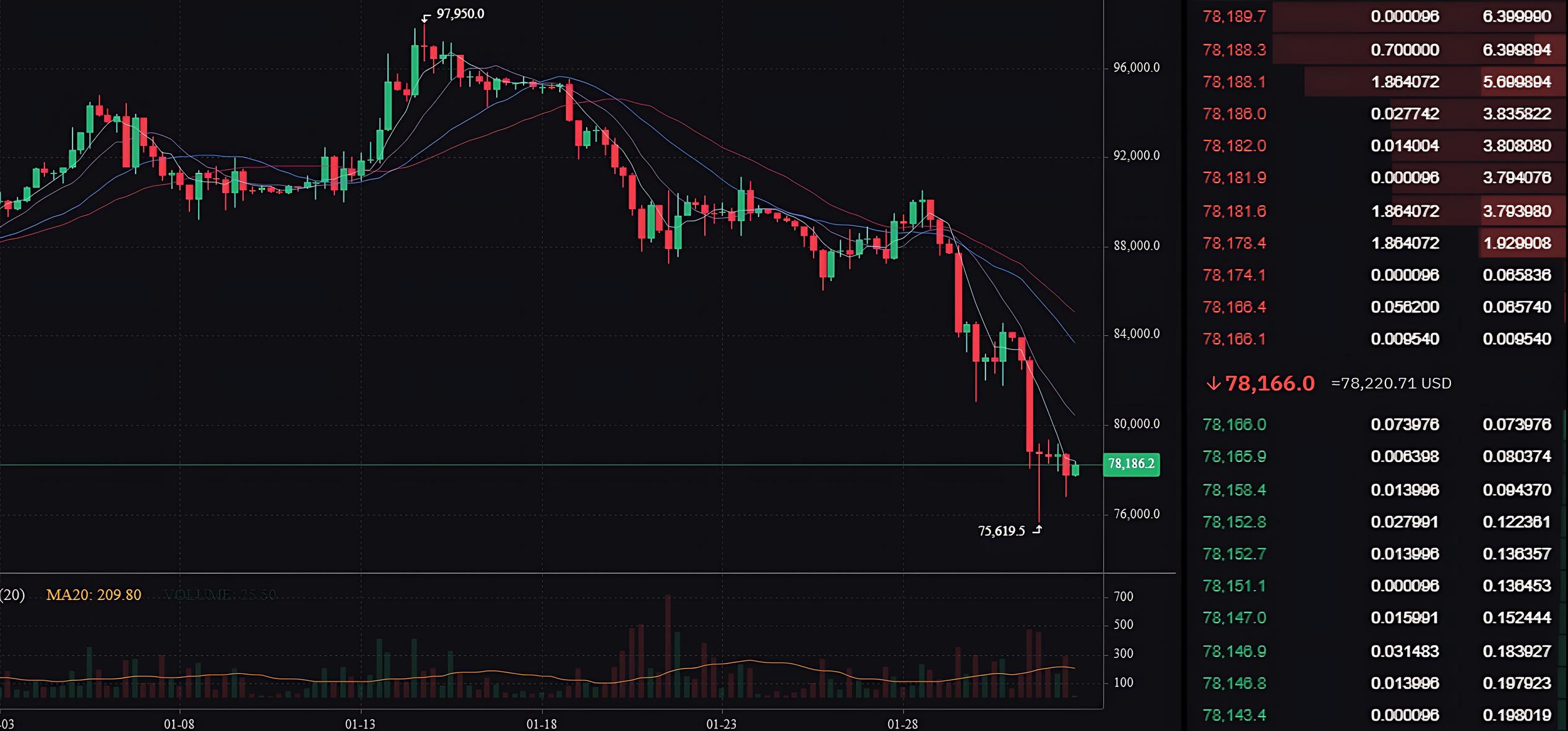
The trading day opened with Bitcoin under pressure, slipping lower within minutes of the opening bell. Analysts said the Bitcoin price drop accelerated once key technical thresholds were breached, triggering automated trades and stop-loss orders across major platforms.
Liquidity thinned as volatility increased, amplifying price movements. By mid-morning, the downturn had spread across global exchanges, reinforcing Bitcoin’s role as a bellwether for the broader crypto market.
Global Markets React to Digital Asset Weakness
Asian and European markets responded cautiously as news of the Bitcoin price drop circulated. Crypto-linked equities and funds traded lower, reflecting concerns that digital asset weakness could spill into related sectors.
Traders said correlations between cryptocurrencies and other risk assets have strengthened, making Bitcoin’s movements increasingly relevant for traditional market participants monitoring global sentiment.
Drivers Behind the Sudden Decline
Market analysts cited a convergence of factors behind the downturn. Expectations of tighter monetary conditions, mixed economic data, and unresolved regulatory questions combined to pressure speculative assets. In this environment, the Bitcoin price drop mirrored a broader pullback from high-risk investments.
Some strategists pointed to profit-taking after recent rallies, while others highlighted uncertainty surrounding policy direction in major economies.
Investor Psychology Shifts Toward Caution
Sentiment indicators showed a marked shift as prices fell. Fear gauges rose sharply during the Bitcoin price drop, reflecting growing unease among short-term traders.
Longer-term holders appeared more restrained, with some viewing the decline as part of Bitcoin’s historical volatility cycle. Still, the speed of the move unsettled many participants accustomed to relative stability in recent months.
Ripple Effects Across the Crypto Sector
The downturn extended beyond Bitcoin. Major altcoins followed lower, often posting steeper percentage losses. The Bitcoin price drop reinforced its influence over the entire digital asset ecosystem.
Decentralized finance platforms reported reduced activity, while stablecoin inflows increased as investors sought temporary shelter. These shifts highlighted how quickly capital can rotate during periods of uncertainty.
Technical Analysis Highlights Fragile Support
From a chart perspective, the decline carried significance. Analysts noted that the Bitcoin price drop pushed prices below key moving averages, weakening short-term momentum.
Volatility indicators widened, suggesting continued instability ahead. While some technical signals hinted at oversold conditions, analysts cautioned that sustained recovery would require renewed confidence and buying interest.
Regulatory Signals Weigh on Confidence
Regulation remained a central theme in market commentary. Ongoing discussions around oversight and compliance added another layer of uncertainty. For many traders, the Bitcoin price drop underscored concerns that evolving rules could reshape market structure.
Although clearer regulation is often viewed as beneficial in the long run, short-term reactions frequently reflect anxiety about potential constraints on innovation and liquidity.

Institutional Versus Retail Behavior
Institutional investors appeared more measured during the selloff. Some funds reportedly used the Bitcoin price drop to reassess exposure rather than exit positions entirely.
Retail traders, particularly those using leverage, reacted more sharply. Exchange data showed increased liquidations as prices fell, illustrating how different market segments respond under stress.
One strategist said,
“Volatility reminds everyone that digital assets still demand disciplined risk management.”
A Look Back at Market Cycles
Bitcoin has experienced numerous sharp corrections since its inception. Past cycles show that periods of rapid growth are often followed by steep pullbacks. The current Bitcoin price drop fits within this historical pattern, though each downturn reflects unique conditions.
Earlier corrections were shaped by adoption challenges and technological hurdles. Today’s environment is influenced more heavily by macroeconomic forces and regulatory debate, giving the current phase a distinct character.
Economic Context Shapes Market Direction
Global economic conditions continue to influence digital assets. Inflation trends, interest rate expectations, and currency movements all play a role in shaping demand. As these factors evolve, the Bitcoin price drop highlights how closely crypto markets are tied to broader financial dynamics.
Analysts note that Bitcoin’s narrative as an alternative asset is increasingly tested during periods of global uncertainty.
Media and Public Discourse Intensifies
Coverage of the downturn expanded rapidly across financial media. The Bitcoin price drop became a focal point for discussions about risk, resilience, and the future of cryptocurrencies.
Public interest surged as retail investors sought clarity on whether the decline marked a temporary setback or a more prolonged shift in market structure.
Technology and Network Fundamentals Remain Stable
Despite price weakness, blockchain data showed that network activity remained relatively steady. Transaction volumes and hash rates did not show signs of stress, suggesting that the Bitcoin price drop was driven more by market sentiment than by underlying technical issues.
Supporters argue that these fundamentals provide a foundation for longer-term stability, even as prices fluctuate.
Policy Makers Monitor Market Developments
Regulators and policy makers are closely watching market behavior. The Bitcoin price drop has renewed discussions about investor protection, transparency, and systemic risk.
Officials in several jurisdictions emphasized the importance of balanced oversight that addresses risks without stifling innovation.
What Analysts Are Watching Next
Looking ahead, traders are monitoring key price levels, macroeconomic indicators, and regulatory announcements. Whether the market stabilizes or extends losses will depend on how confidence evolves following the Bitcoin price drop.
Volatility is expected to remain elevated in the near term, with investors bracing for continued swings as new data emerges.

A Unique Moment for Market Reflection
Beyond immediate price action, the latest Bitcoin price drop serves as a moment of reflection for the crypto industry. As digital assets mature, market participants are increasingly focused on sustainability, governance, and integration with traditional finance.
How the market absorbs this episode may influence sentiment and strategy well beyond 2026.
A Test of Resilience and Confidence
The events in New York this week underline how quickly momentum can change in cryptocurrency markets. The Bitcoin price drop has challenged assumptions, tested investor resolve, and reignited debate about the role of digital assets in global finance.
As markets adjust, the coming weeks will reveal whether this decline marks a temporary correction or a deeper reassessment of value in an increasingly complex financial landscape.