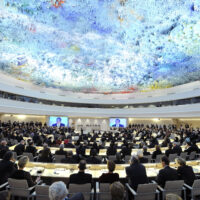
Gaza City, February 7, 2026 — Brussels Morning Newspaper highlights scenes unfolding across Gaza where Displaced Palestinians gather at aid points in growing numbers, waiting for clean water and warm meals as the humanitarian situation continues to strain daily life. With infrastructure damaged and essential services stretched thin, survival routines now define mornings, afternoons, and nights for families living in temporary shelters across the territory.
From the outskirts of Gaza City to central districts, queues form before sunrise, reflecting both scarcity and resilience in a place where basic needs have become increasingly difficult to secure.
Humanitarian Pressure Mounts Across Gaza
The humanitarian environment in Gaza has steadily deteriorated, placing unprecedented pressure on civilians forced from their homes. Many Displaced Palestinians now reside in overcrowded schools, makeshift camps, or damaged residential buildings lacking stable water and electricity supplies.
Aid agencies operating in the region describe a fragile system struggling to meet demand. Fuel shortages have disrupted desalination plants, while damaged pipelines limit water distribution. Food supply chains remain unpredictable, making regular meal access uncertain for thousands of families.
Water Scarcity Shapes Daily Survival
Securing clean water has become one of the most urgent challenges facing Displaced Palestinians. At communal taps and water trucks, families wait for hours with plastic containers, uncertain whether supplies will last through the day.
Health workers warn that reduced access to potable water threatens hygiene standards, increasing the risk of illness in densely populated shelters. Limited water availability also affects cooking, sanitation, and personal care, placing additional burdens on already vulnerable households.
One local volunteer explained,
“Water has become more valuable than anything else here, because without it, nothing in daily life can continue.”
Food Distribution Becomes a Central Lifeline
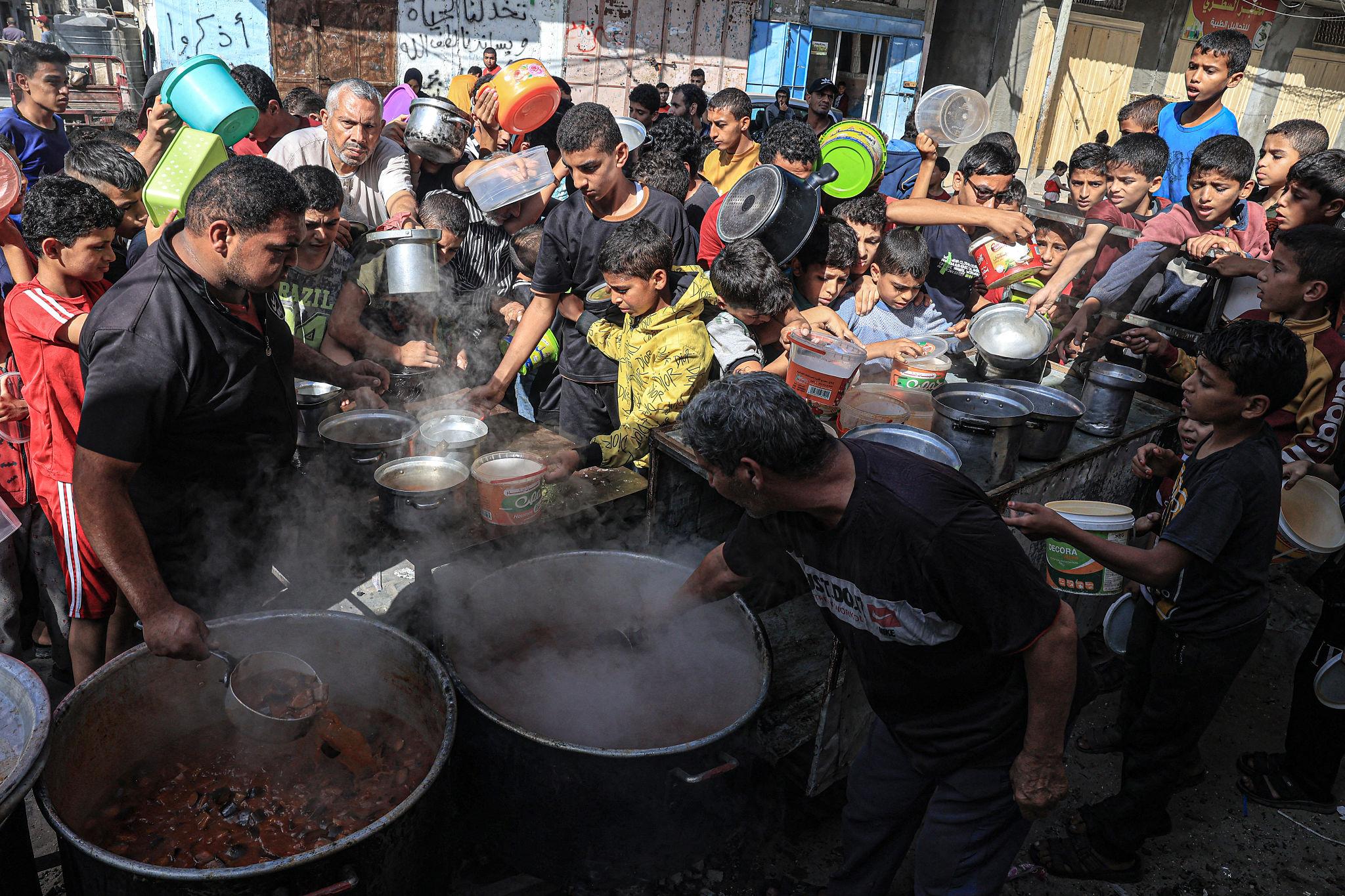
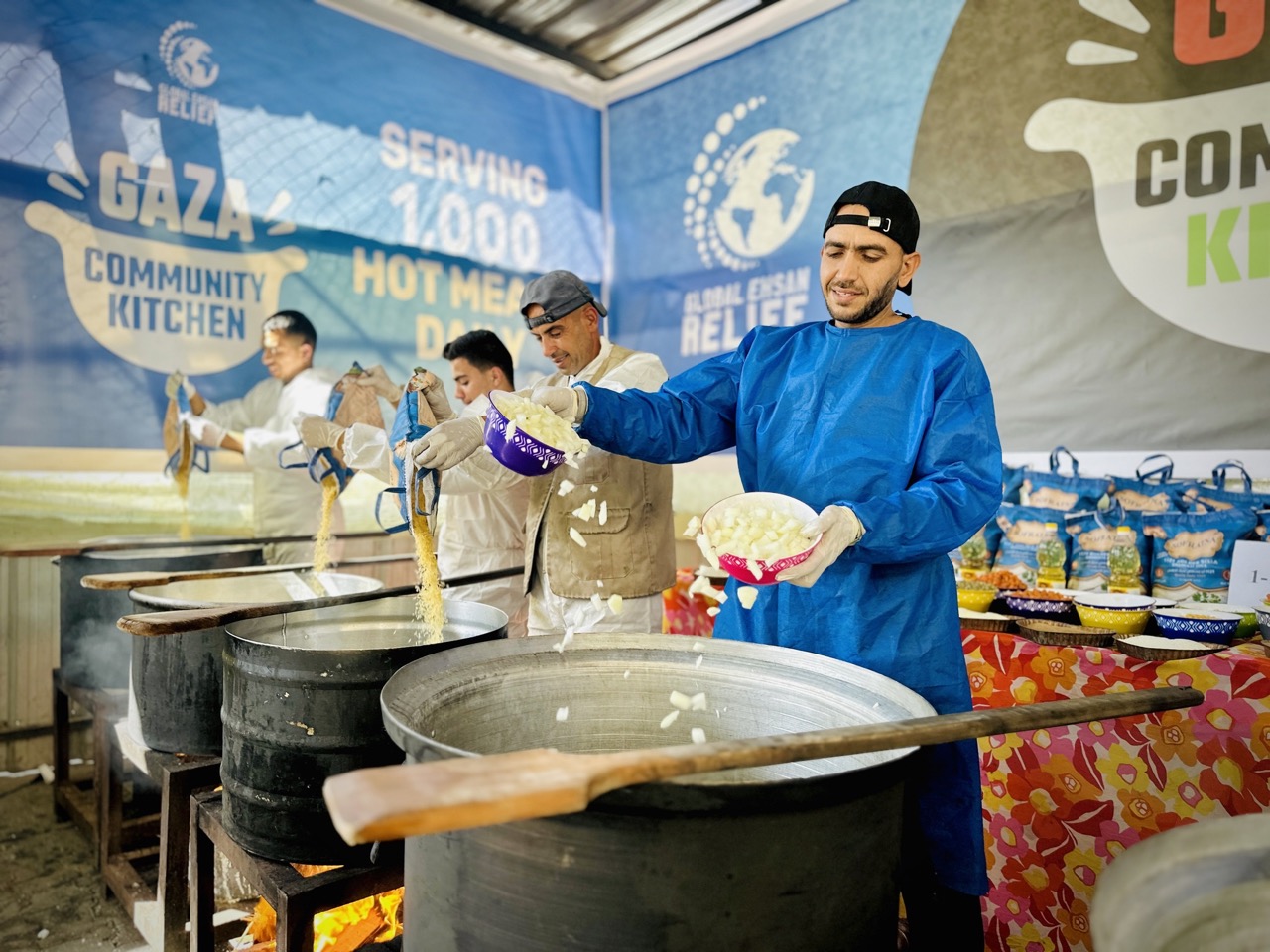
Community kitchens and humanitarian food points have emerged as essential lifelines for Displaced Palestinians. Large cooking pots line improvised kitchens where volunteers prepare simple meals designed to feed as many people as possible with limited resources.
For many families, these meals represent their only reliable source of nutrition. Parents often ensure children and elderly relatives eat first, even if it means skipping meals themselves. Aid coordinators stress that while food assistance prevents immediate hunger, it does not address long-term nutritional needs.
An international aid worker noted,
“These kitchens are holding communities together, but they were never meant to replace a functioning food system.”
Children and Elderly Face Heightened Risks
Children make up a large proportion of Displaced Palestinians, and humanitarian groups report rising concerns over malnutrition, interrupted education, and psychological stress. With schools damaged or repurposed as shelters, many children have not attended classes for months.
Elderly residents face additional hardships, particularly those with limited mobility. Standing in long lines for water or meals can be physically exhausting, prompting volunteers to assist by delivering supplies directly to shelters when possible.
A medical coordinator working in central Gaza said,
“The youngest and the oldest are paying the highest price for prolonged displacement.”
Aid Operations Under Constant Strain
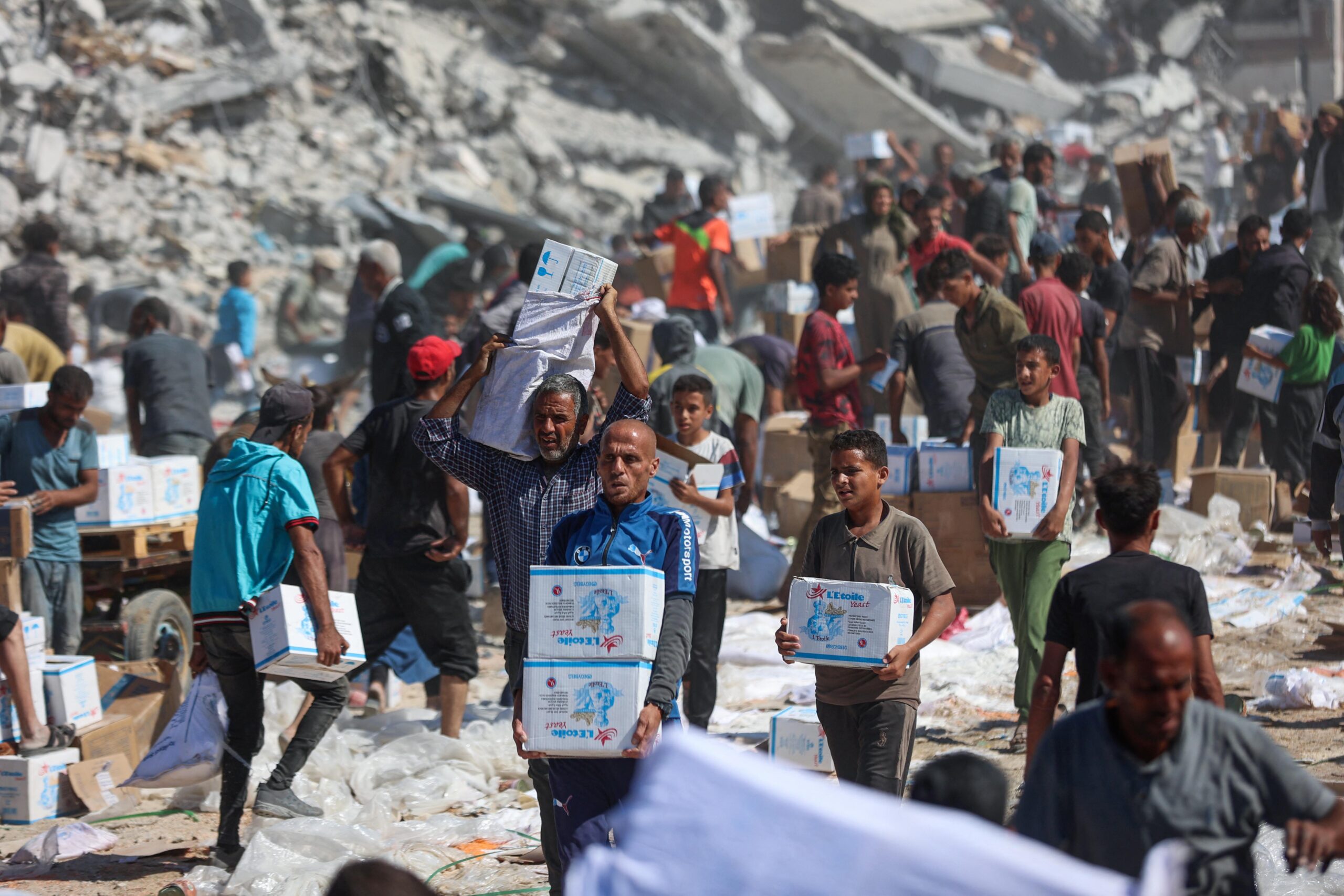
Organizations providing assistance to Displaced Palestinians operate under constant logistical and security challenges. Restricted access routes, limited funding, and fluctuating supply levels affect the consistency of aid deliveries.
Despite these obstacles, local and international groups continue to coordinate water distribution, food assistance, and emergency healthcare services. Mobile clinics and temporary aid stations have been established to reach populations unable to travel to central distribution points.
Community Resilience Amid Uncertainty
Even under extreme pressure, Displaced Palestinians continue to demonstrate resilience through community cooperation. Neighbors share information about aid schedules, volunteers help manage queues, and families pool resources to support one another.
Informal networks have become critical to survival, compensating for gaps in formal assistance. While these efforts cannot replace large-scale humanitarian support, they provide emotional stability and practical help during prolonged uncertainty.
Regional and International Attention
Calls for increased humanitarian access and sustained international engagement have intensified as conditions for Displaced Palestinians remain fragile. Aid agencies emphasize the need for uninterrupted supply routes and long-term funding commitments.
Observers warn that without coordinated action, temporary displacement risks becoming a prolonged reality, further eroding social and economic stability within Gaza.
Health Concerns Grow in Overcrowded Shelters
Overcrowded living conditions have heightened health risks among Displaced Palestinians. Limited ventilation, insufficient sanitation facilities, and scarce medical supplies create an environment vulnerable to disease outbreaks.
Healthcare providers report rising cases of respiratory infections, skin conditions, and stress-related illnesses. Emergency medical teams work to provide basic care, but resources remain limited compared to growing needs.
Economic Disruption and Loss of Livelihoods
Displacement has also disrupted economic activity for Displaced Palestinians, many of whom lost access to workplaces, farms, or small businesses. With limited income opportunities, families depend almost entirely on aid.
Economists caution that prolonged economic inactivity may have lasting consequences, reducing recovery prospects even if stability improves.
A History of Repeated Civilian Uprooting
The current crisis affecting Displaced Palestinians echoes earlier periods of displacement in Gaza’s history, where cycles of conflict repeatedly forced civilians from their homes. Over decades, temporary shelters often became semi-permanent, shaping urban landscapes and social structures.
Historians note that each wave of displacement compounds existing vulnerabilities, making recovery increasingly difficult. The present situation reflects not a single event but an accumulation of unresolved humanitarian challenges.
The Psychological Toll of Prolonged Displacement
Mental health professionals working with Displaced Palestinians report rising levels of anxiety, depression, and trauma-related symptoms. Uncertainty about the future, combined with daily survival pressures, weighs heavily on families.
Psychosocial support programs have been introduced in some shelters, focusing on children and caregivers. However, access remains limited relative to the scale of need.
Education Interrupted Across a Generation
For young Displaced Palestinians, disrupted education represents one of the most significant long-term risks. Temporary learning spaces operate in some shelters, but overcrowding and resource shortages limit effectiveness.
Educators warn that prolonged interruptions could lead to increased dropout rates, reducing future opportunities for an entire generation.
Infrastructure Damage Compounds the Crisis
Damaged roads, power lines, and water systems continue to affect service delivery for Displaced Palestinians. Repairs are slow due to material shortages and access restrictions, leaving many areas reliant on temporary solutions.
Infrastructure experts stress that humanitarian aid alone cannot resolve these challenges without broader reconstruction efforts.
Women Bear Disproportionate Burdens
Women among Displaced Palestinians often shoulder increased responsibilities, including securing food and water, caring for children, and supporting elderly relatives. Aid groups highlight the need for gender-sensitive assistance programs that address these added pressures.
Environmental Strain Adds to Hardship
Environmental factors such as waste accumulation and water contamination further complicate living conditions for Displaced Palestinians. Limited waste management services in overcrowded areas pose additional health risks.
Aid Coordination and Local Leadership
Local committees formed by Displaced Palestinians have emerged to help coordinate aid distribution and resolve disputes at collection points. These grassroots efforts improve efficiency and reduce tensions during distributions.
The Road Ahead Remains Uncertain
As 2026 progresses, the future for Displaced Palestinians remains unclear. Humanitarian agencies stress that while emergency aid prevents immediate catastrophe, it cannot substitute for lasting solutions that restore stability and dignity.
Without improved access, sustained funding, and broader political efforts, displacement may continue to define daily life across Gaza.
Survival Lines as a Symbol of the Crisis
Queues for water and warm meals have become a defining image of Gaza’s humanitarian reality. For Displaced Palestinians, these lines symbolize both vulnerability and endurance, reflecting a population striving to survive under extraordinary circumstances.
As international attention fluctuates, families continue to wait — for water, for food, and for a future beyond survival.