The well-known Chinese online fast-fashion seller Shein opened its first physical store on Wednesday in Paris — a world first. In November, a total of six brick-and-mortar stores are set to open: first in the BHV Marais department store in Paris, then “gradually” five more inside Galeries Lafayette stores in Dijon, Reims, Grenoble, Angers, and Limoges.
On the very same day, French authorities opened an investigation into Shein for selling sex dolls with a childlike appearance. The French government has now suspended the company’s operations until the Chinese firm complies with local laws.
Shein has partnered on this project with Société des Grands Magasins (SGM), a real-estate company that owns and operates the BHV Marais and Galeries Lafayette store chains.
“This alliance is more than a market launch: it is a commitment to revitalizing city centers across France, renewing department stores, and creating opportunities for French ready-to-wear,” Shein said in a statement. The company also promises to “create 200 direct and indirect jobs in France within SGM.”
Not everyone is pleased with this move. Galeries Lafayette had already expressed its
“deep disagreement with this decision [by SGM], given the status and practices of this fast-fashion brand, which conflict with its offering and values,”
the statement said. Galeries Lafayette says it has informed SGM of its position and promises it will block the partnership with Shein.
A flood of Chinese goods
Galeries Lafayette is far from the only player worried about the Chinese company’s expansion. Shein has long been associated not only with a vast product range, but also with suspiciously low prices, aggressive marketing, and unfair practices that clearly violate the rules of fair competition.
I’ve said before that this company exploits current European rules that exempt small parcels from customs duties, and many of its products don’t meet EU standards at all. As a result, Europe is now drowning in a wave of cheap packages. In recent years, ever more small items ordered via online platforms have been coming into the EU.
According to e-commerce data held by the European Commission, a total of 4.6 billion low-value items (worth up to €150) were imported into the EU in 2024. That’s 12 million parcels a day. The year before, there were 2.3 billion such shipments, and in 2022 there were 1.4 billion.
This exponential growth is mainly linked to the rise of Chinese online sellers like Temu and Shein. The Commission’s report says that last year, 91% of all e-commerce parcels worth up to €150 came from China.
Chinese platforms use—or rather abuse—the “de minimis” loophole for imports into Europe. Under this rule, any parcel worth less than €150 is exempt from customs duties. Companies like Shein and Temu have been exploiting this gap for a long time.
They send millions of orders directly to consumers instead of bulk deliveries that could be checked. Overloaded customs officers cannot possibly inspect billions of micro-shipments. The tax exemption itself creates a huge price advantage. It allows Chinese platforms to undercut European competitors and distort the market.
Unsafe products
It’s not just about the lost tax and duty revenue. Sometimes consumers’ health—or even lives—are at risk, especially children. Tests have repeatedly confirmed safety problems with goods from these sellers. Not only European manufacturers, who rightly feel disadvantaged, but also consumer protection groups are sounding the alarm.
Measures must therefore include compliance with health and safety standards, especially for cosmetics and toys. It was found that as many as 80% of toys tested and bought on Asian online platforms did not meet EU safety rules. There have also been cosmetics and children’s toys containing high levels of toxins and carcinogens.
Even more alarming are failures in products meant to save lives. There have been cases of smoke detectors that stay silent, helmets that can shatter, and electronics that can ignite on their own. These products should never be sold on European shelves. And yet, billions of them enter stores every day without proper checks.
Our data is at risk
In France, Shein faces a €150 million fine for illegally storing website cookies even after users refused. Temu goes even further, collecting biometric data, location history, and even accessing the microphone—without clear consent.
These aren’t small violations. They are systematic abuses of customer trust. And yet Shein and Temu remain closer to consumers than the nearest physical store. With just a few clicks, unchecked goods are on their way to European buyers.
Let’s stay in France for a moment
Compared to the practices above, another case may seem minor: this year in France, the Chinese giant Shein was already supposed to pay a €40 million fine (about 986 million CZK) for deceptive commercial practices.
According to the French competition authority, the company misled customers with fake discounts—showing lots of crossed-out prices and “ongoing promotions” even when there were no real discounts.
More than half of the ads checked offered no price cut at all, nearly one fifth promised smaller discounts than advertised, and in 11% of cases the price was even higher!
Consumers lose, European firms lose, while China’s Shein and Temu can still laugh. Shein’s revenue jumped from $3 billion in 2019 to $38 billion last year, with double-digit growth each year. Temu’s growth has been even steeper—from $3 million in 2022 to an expected $71 billion this year.
What is the EU doing?
The European Commission now proposes a handling fee of €2 for every parcel entering the EU. It also sketches measures to strengthen enforcement of product-safety rules. A further benefit of the new rules and fees is that sellers would have to register for VAT in the EU, or at least in one member state.
Europe must act now
Both European businesses and ordinary people are hurting. Retailers and manufacturers struggle with unfair practices by Chinese competitors; consumers face unsafe products that threaten our health. Cheap products may not be so cheap in reality.
Behind every parcel from China, we must see a threat to our economy with broad social impacts, violations of consumer rights, health risks—especially for children—and, of course, poor working conditions in some Asian factories.
We can say that every “cheap package” from Shein or Temu that reaches Europe helps China’s effort to gain economic control of Europe. It’s high time for the European Union to act—and fast!
Do we really want seemingly cheap goods that endanger the health and safety of our children? How much longer will we tolerate loopholes that give Chinese sellers an unfair advantage and harm European ones?
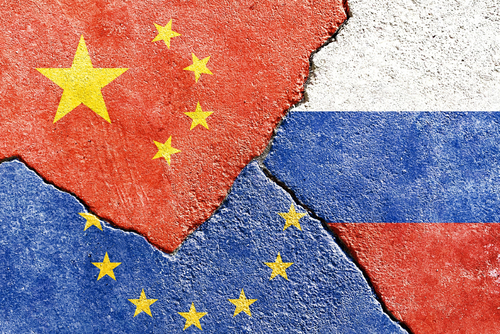
We face two threats at once
On one side is Russia, which tries to seize foreign territory by force and influence public opinion in Europe with propaganda. Most European countries have already found ways to respond to that kind of threat.
China’s threat is very different. At first glance, it looks far more subtle. That makes it even more dangerous if we keep ignoring it or respond only with slow, timid steps.
China is advancing economically—and we must admit we still don’t know how to defend against that effectively. It’s high time to change this. Europe must show it can stand up to the Chinese dragon on the economic battlefield.
Dear reader,
Opinions expressed in the op-ed section are solely those of the individual author and do not represent the official stance of our newspaper. We believe in providing a platform for a wide range of voices and perspectives, even those that may challenge or differ from our own. We remain committed to providing our readers with high-quality, fair, and balanced journalism. Thank you for your continued support.