Ottawa January, 2026 — According to Brussels Morning Newspaper, that policymakers, economists, and international observers are assessing a significant re-calibration in bilateral relations as Canada China tariffs become central to a new phase of engagement between the two countries. The coordinated decision to ease duties on electric vehicles and canola signals a shift away from prolonged economic friction toward a more managed and pragmatic approach. Set against a backdrop of global trade uncertainty, the move reflects how both governments are responding to domestic pressures while navigating an increasingly complex international environment.
This development comes at a time when major economies are reassessing the costs of protectionism. For Canada and China, the tariff adjustment marks a calculated step to stabilize key sectors without addressing deeper political disagreements directly.
Long Standing Trade Friction and Its Evolution
The economic relationship between Canada and China has experienced cycles of cooperation and strain over the past decade. Diplomatic disagreements, regulatory disputes, and retaliatory measures gradually spilled into commerce, affecting agriculture and advanced manufacturing alike. As Canada China tariffs accumulated over time, businesses on both sides faced rising costs, disrupted supply chains, and reduced confidence.
These measures did not emerge from a single incident but rather from a sequence of political and economic disagreements. Each new restriction reinforced perceptions of mistrust, making de-escalation increasingly difficult until economic pressures forced reconsideration.

Electric Vehicles as an Economic and Strategic Focus
Electric vehicles represent a convergence of industrial policy, environmental ambition, and technological competition. Tariffs targeting EVs were initially framed as protective steps, yet industry leaders warned that prolonged barriers could undermine innovation. When Canada China tariffs affected this sector, manufacturers reported delays in investment decisions and higher production costs.
The easing of duties suggests recognition that cooperation in green technology may better serve long-term interests. Both governments have emphasized climate commitments, and restoring smoother trade in EVs aligns with broader sustainability goals while supporting employment in high-growth industries.
Agricultural Stakes and the Role of Canola
Canola remains one of Canada’s most valuable agricultural exports, with China historically a major destination. Trade restrictions disrupted this relationship, forcing producers to seek alternative markets often at lower margins. As Canada China tariffs on canola are reduced, farming communities anticipate renewed demand and improved price stability.
Agricultural economists highlight that food security considerations also play a role. Stable access to staple commodities benefits consumers and reinforces the interconnected nature of global food systems, where disruptions can have ripple effects far beyond national borders.
Diplomatic Signaling and Policy Messaging
Beyond immediate economic relief, the tariff adjustment carries symbolic significance. It reflects a willingness to compartmentalize disputes and prioritize economic stability. Analysts note that easing Canada China tariffs allows both governments to project flexibility without appearing to compromise on core political positions.
The messaging surrounding the decision emphasized pragmatism and continuity. Officials described the move as an adjustment rather than a reversal, framing it within existing institutional processes to reassure domestic audiences.
Market Response and Business Outlook
Financial markets responded with measured optimism. Shares linked to agriculture and clean technology recorded modest gains, reflecting expectations of improved trade conditions. For businesses, the easing of Canada China tariffs reduces uncertainty and supports longer-term planning in sectors that rely on predictable cross-border flows.
Industry associations welcomed the development, stressing that stable trade rules are essential for investment and innovation. While challenges remain, the reset has injected cautious confidence into bilateral commerce.
Domestic Political Pressures in Both Countries
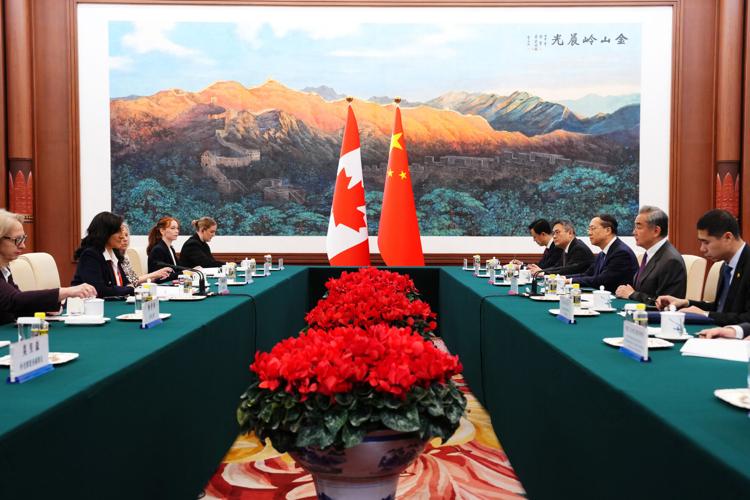
The decision to adjust tariffs was shaped by internal dynamics. In Canada, agricultural producers and provincial leaders called for relief as export opportunities narrowed. In China, manufacturers sought improved access to North American markets amid slowing global demand. Addressing Canada China tariffs allowed policymakers to respond to these pressures while maintaining a firm public stance.
Balancing economic needs with political considerations remains delicate. Officials on both sides emphasized that the move does not signal a shift in broader strategic positions.
A Voice from the Moment
Midway through the announcement in Ottawa, one senior trade official summarized the rationale behind the shift, stating,
“We are choosing economic stability and constructive engagement to support long-term growth.”
The comment encapsulated the pragmatic tone adopted by both governments as Canada China tariffs were re-calibrated to ease immediate pressures.
Regional and Global Trade Implications
The adjustment is being closely watched by other economies managing trade disputes. As major players re-calibrate, the easing of Canada China tariffs offers a potential example of de-escalation through negotiation rather than escalation.
Trade analysts suggest that such steps could help reinforce multilateral norms at a time when unilateral measures have proliferated. The decision may encourage similar reassessments elsewhere, particularly in sectors tied to sustainability and food security.
Institutional Continuity and Policy Frameworks
Officials emphasized that the tariff changes fit within established legal and institutional frameworks. Rather than signaling a policy overhaul, Canada China tariffs are presented as adjustable tools responsive to economic conditions.
This framing underscores continuity in governance, reassuring stakeholders that adjustments are guided by process rather than ad hoc decision-making.
Societal and Employment Considerations
Trade policy has tangible effects on communities. In Canada, easing restrictions supports rural economies dependent on agriculture, while in China, improved market access benefits manufacturing employment. As Canada China tariffs ease, these local impacts reinforce the broader economic rationale behind the decision.
Labor groups and regional leaders have highlighted the importance of sustained engagement to ensure that benefits are widely shared.
Strategic Patience and Long-Term Engagement
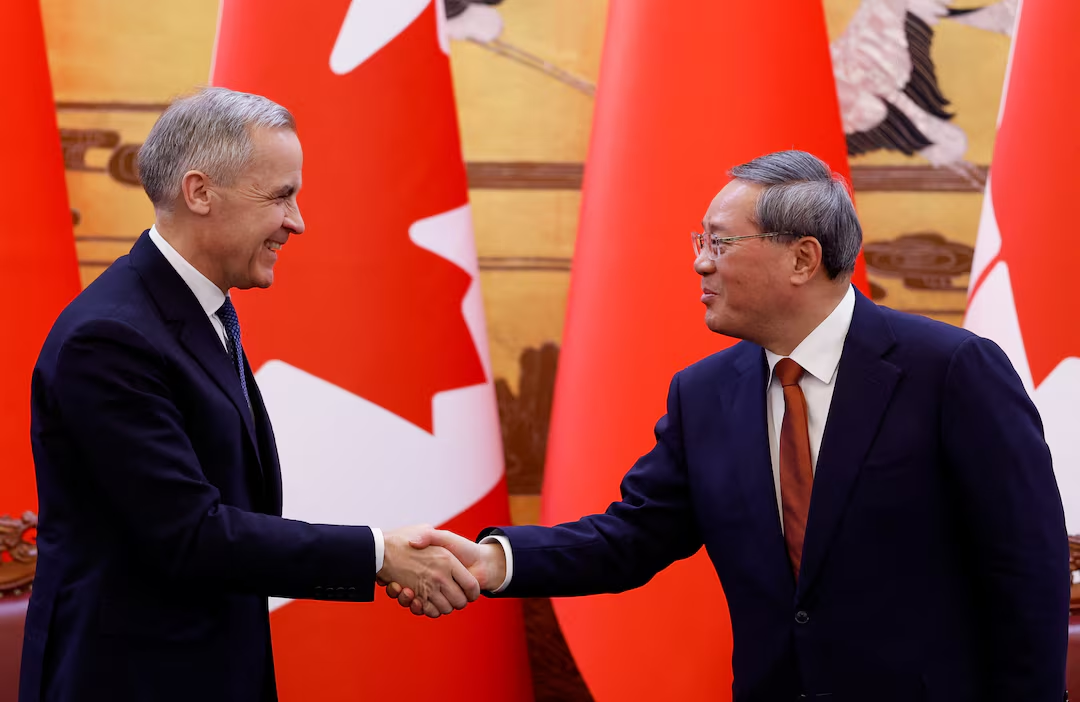
Analysts caution against viewing the tariff rollback as a definitive resolution. Structural differences and geopolitical tensions persist, and future disputes remain possible. Still, easing Canada China tariffs provides a foundation for incremental rebuilding of trust if accompanied by consistent dialogue.
Strategic patience, observers note, will be essential to translating short-term adjustments into durable cooperation.
A Calculated Reset in a Fragmented World
The coordinated reduction of duties on electric vehicles and canola marks a notable moment in bilateral relations. It illustrates how economic interdependence can motivate re-calibration even amid political strain. As Canada China tariffs are adjusted, both countries signal a preference for stability and managed cooperation within an increasingly fragmented global trade landscape.
Whether this shift evolves into lasting normalization will depend on sustained engagement and mutual confidence. For now, the move stands as a pragmatic response to shared economic realities in 2026.