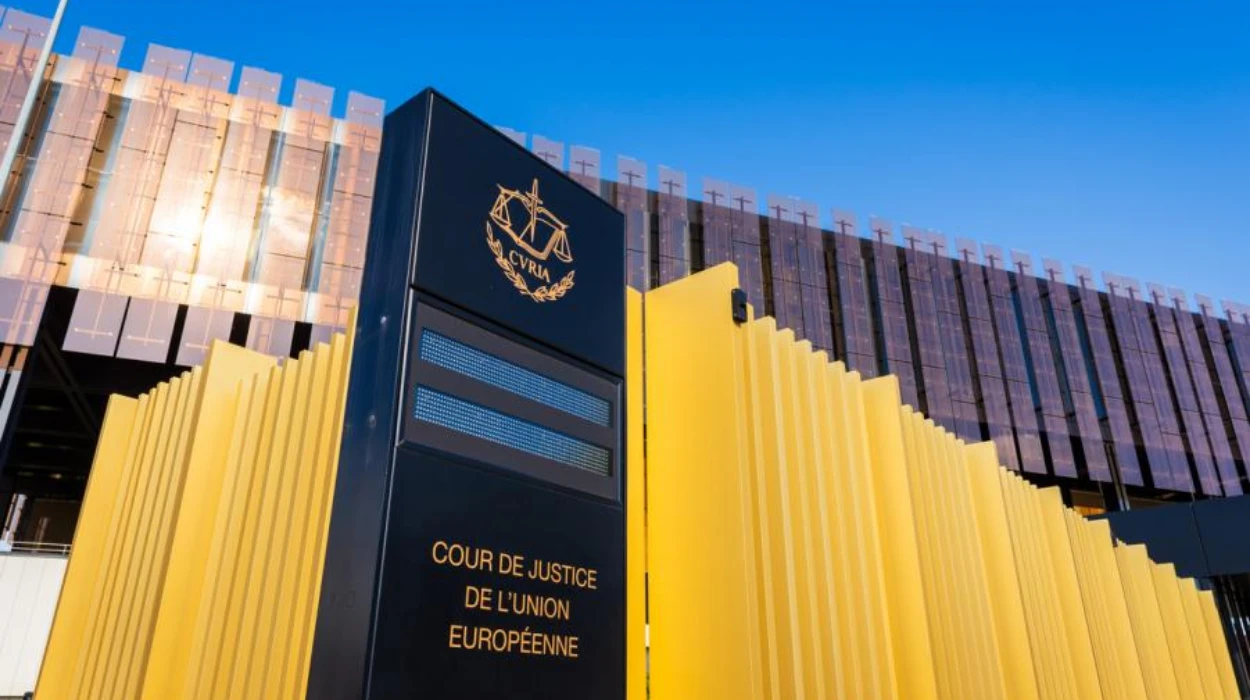
Open Society Foundations has welcomed what it hails as a “landmark judgment” from the Grand Chamber of the Court of Justice of the European Union.
The EU’s top court was asked to give guidance on a law, passed in Denmark in 2018, which campaigners assert allows the government to reduce public housing in neighbourhoods where most residents are from “non-Western” backgrounds.
Denmark’s government has said the law was meant to help people integrate better by breaking up “parallel societies.
The court, according to media reports, said Danish courts would have to determine whether the
“criterion establishes a difference in treatment based on the ethnic origin of the majority of the inhabitants of those areas, thus resulting in the inhabitants of those areas being treated less favourably”.
Danish courts would have to determine, added the ECJ, whether the law, although worded in a “neutral manner”, actually leads to
“persons belonging to certain ethnic groups being placed at a particular disadvantage”.
Open Society Foundations says the ruling represents “a victory” for residents of Mjølnerparken, Copenhagen, whose case was brought with support from the Open Society Justice Initiative.
The residents filed their challenge against the Danish Ministry of Social Affairs and Housing in May 2020, arguing that the legislation
“constitutes unlawful racial discrimination.”
James Goldston, executive director of the Open Society Justice Initiative, said,
“This case was never about housing alone; it was always about pernicious discrimination rooted in racism and xenophobia. The ruling vindicates the residents who have stood firm in demanding their rights, even as they watched their neighborhoods stigmatized and their families forced from homes they’ve lived in for decades. We are proud to have supported their fight for justice.”
“The Court’s decision sends a message that governments cannot stigmatize, segregate, or dispossess people on the basis of who they are or where their families come from,”
said Goldston.
“This judgment matters beyond Denmark’s borders. We’re witnessing a disturbing pattern across Europe where similar policies are being considered or implemented, targeting neighborhoods under the banner of urban development while actually punishing residents for who they are.”
Further comment came from Susheela Math, Head of Legal at Systemic Justice and formerly Senior Managing Litigation Officer at Open Society Justice Initiative, who said,
“It has been obvious from the very beginning – back in 2018 – that this law is explicitly and egregiously racially discriminatory.”
“Nobody should ever have had to fight as long and as hard as the residents have done. Denmark has ignored warning after warning from European and UN legal bodies, as well as its own domestic watchdog.
“As a result, people have lost treasured, decades-long family homes, as well as communities, networks and memories,”
said Math.
“There is absolutely no excuse for Denmark to wait for a loss in the domestic courts: the legislation should be repealed; the categorisation of ‘non-Western immigrants and descendants’ abolished; and all victims of this discrimination afforded effective redress.”
Systemic Justice is assisting residents in affected areas in Denmark including Mjølnerparken.
Muhammad Aslam, a plaintiff and Chairman of the Residents’ Board of Mjølnerparken, said,
“After many years of suffering the consequences of this discriminatory legislation, such as losing our homes, community and peace, with the court’s decision we are one step closer to having justice restored. We have no doubts in our hearts that the “ghetto legislation” is a discriminatory and stigmatising law, and we will continue our fight for our rights and justice,”
said Aslam.
According to news reports the Danish government is now carefully considering the guidance from the ECJ.