
According to Brussels Morning Newspaper, Jorge Rodríguez US talks have emerged at a moment when Venezuela’s leadership is under renewed legal scrutiny and mounting economic strain, raising questions about whether Caracas is quietly reassessing its long-frozen relationship with the United States.
- A Relationship Defined by Rupture and Sanctions
- Jorge Rodríguez’s Central Role in Power and Messaging
- Legal Developments and the Question of Timing
- Economic Pressures Driving Diplomatic Calculations
- Implications for Bilateral Relations
- Regional Dynamics and Diplomatic Ripple Effects
- Analyst Perspective on Diplomatic Signaling
- The Mechanics of Quiet Diplomacy
- Domestic Political Constraints in Venezuela
- Washington’s Calculated Silence
- What Comes Next Remains Uncertain
- Beyond Rhetoric, a Test of Intent
The remarks have drawn international attention not because they signal immediate change, but because they come from one of the government’s most senior political figures during a period of heightened pressure.
A Relationship Defined by Rupture and Sanctions
Relations between Venezuela and the United States have remained largely severed since 2019, when Washington withdrew diplomatic recognition from President Nicolás Maduro following disputed elections and imposed sweeping sanctions targeting Venezuela’s government, financial institutions, and oil industry.
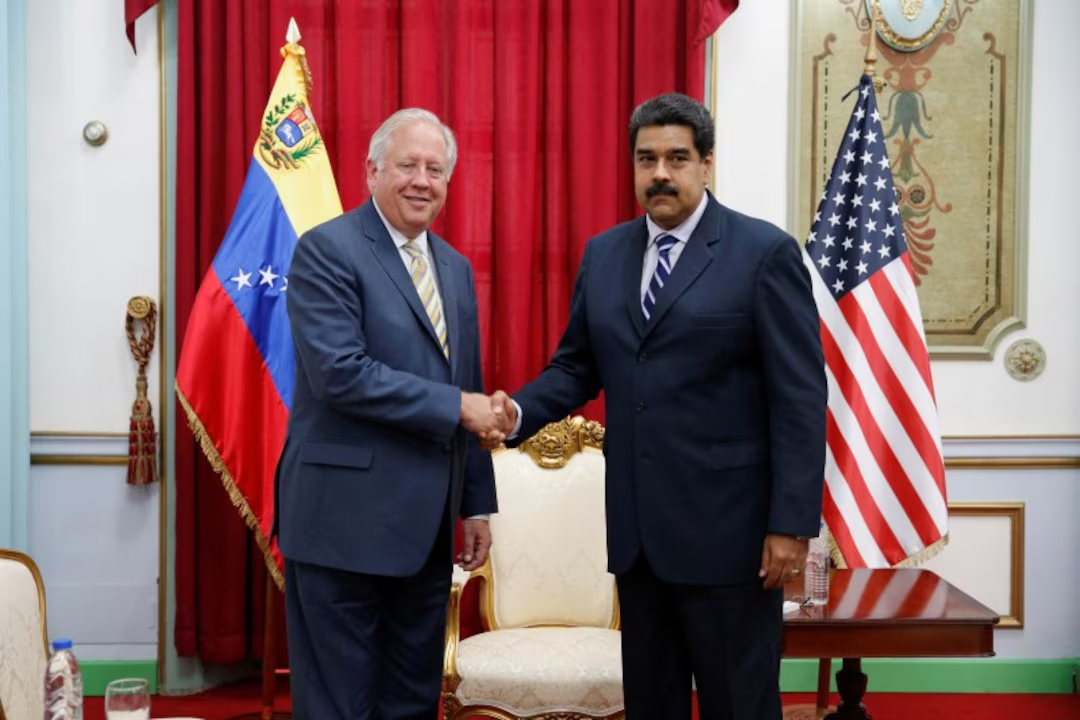
Since then, formal diplomatic engagement has been minimal. Contact has largely occurred through intermediaries or in narrowly defined contexts, such as humanitarian coordination, migration issues, or limited energy market discussions. Against this backdrop, renewed attention to Jorge Rodríguez US talks has stood out as a rare public signal emerging from Venezuela’s governing structure.
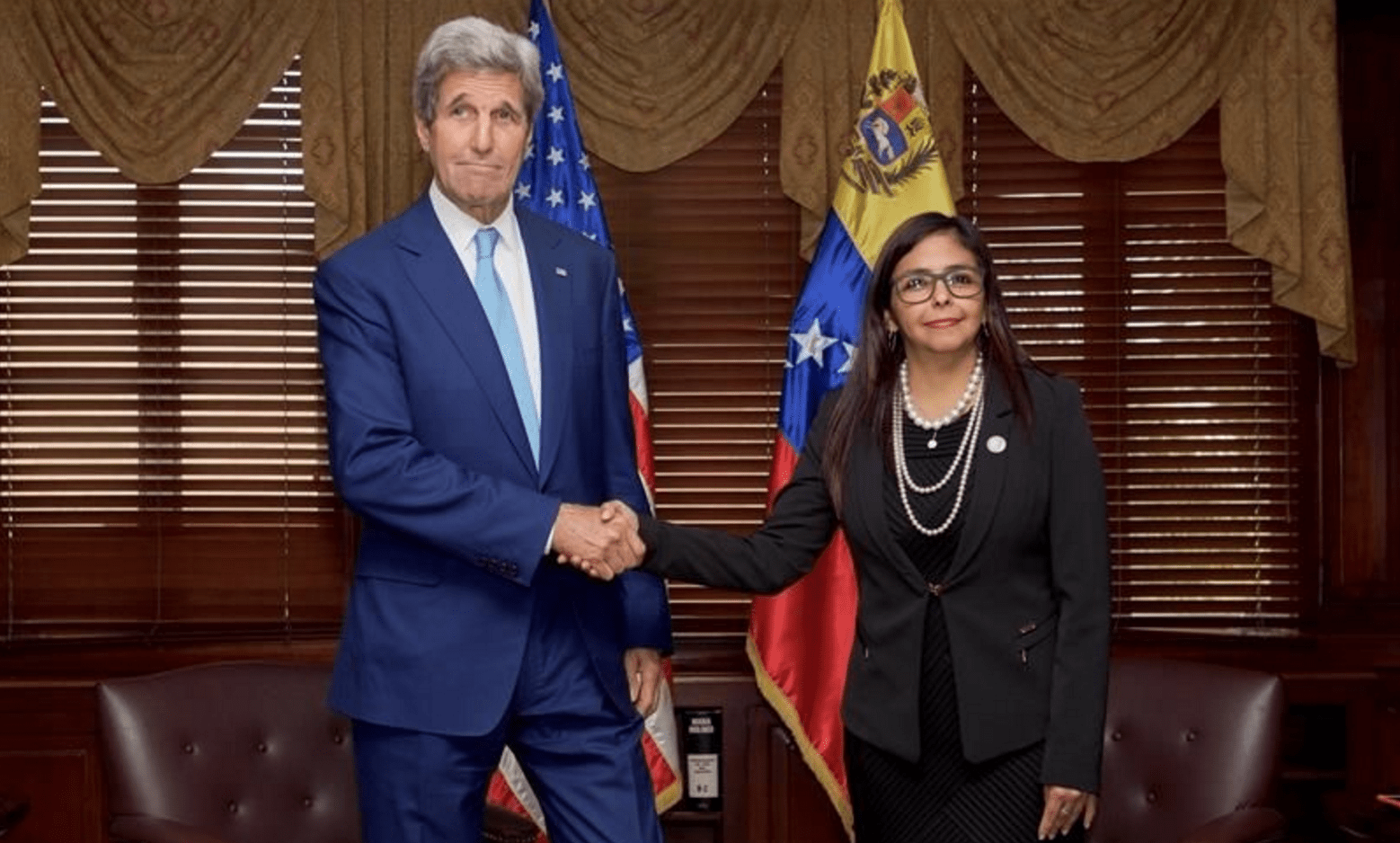
Jorge Rodríguez’s Central Role in Power and Messaging
As president of the National Assembly and a long-standing political strategist, Jorge Rodríguez occupies a central role in shaping Venezuela’s internal and external messaging. He has previously acted as a lead negotiator in talks with opposition groups and as a trusted interlocutor in sensitive political discussions.
Observers say references to Jorge Rodríguez US talks are unlikely to be spontaneous. Instead, they are widely interpreted as carefully calibrated signals aligned with broader government strategy, designed to test diplomatic boundaries while preserving internal political cohesion.
Legal Developments and the Question of Timing
The diplomatic messaging has coincided with increased legal attention involving Venezuela’s leadership. Government officials have framed recent judicial developments as routine and consistent with domestic law, while international observers argue that their timing carries symbolic importance.
The emergence of Jorge Rodríguez US talks alongside these developments has fueled speculation that Caracas is attempting to project institutional stability and procedural normalcy to international audiences at a time when scrutiny remains intense.
Economic Pressures Driving Diplomatic Calculations
U.S. sanctions continue to weigh heavily on Venezuela’s economy, particularly the oil sector, which remains the country’s primary source of foreign revenue. Although limited licenses have allowed certain energy-related transactions, broader economic recovery has remained constrained by financing restrictions, infrastructure deterioration, and limited access to global markets.
Within this environment, Jorge Rodríguez US talks are frequently interpreted as an effort to explore whether selective diplomatic engagement could eventually ease economic pressure or create narrowly defined pathways toward sanctions relief.
U.S. officials have repeatedly stated that any policy adjustment would depend on measurable progress in electoral transparency, institutional accountability, and democratic safeguards.
Implications for Bilateral Relations
From a broader perspective, Jorge Rodríguez US talks highlight the tension between economic necessity and political legitimacy. Engagement offers potential benefits for Caracas, including reduced isolation and limited economic flexibility, but it also carries risks for both governments.
For Washington, dialogue risks legitimizing a government it has long criticized. For Venezuela, engagement without tangible outcomes risks reinforcing skepticism among domestic audiences and international partners who remain doubtful of meaningful reform.
Regional Dynamics and Diplomatic Ripple Effects
Across Latin America, several governments have increasingly called for dialogue, arguing that prolonged isolation has failed to resolve Venezuela’s political crisis and has contributed to regional instability, migration pressures, and humanitarian challenges.
In this context, Jorge Rodríguez US talks may influence broader regional discussions on energy security, migration management, and diplomatic engagement. European governments have echoed similar calls for dialogue while maintaining concerns over governance and human rights.
International organizations have emphasized that engagement should be accompanied by clear benchmarks rather than rhetorical gestures.
Analyst Perspective on Diplomatic Signaling
“Developments surrounding Jorge Rodríguez US talks suggest both sides are testing diplomatic boundaries without committing to immediate policy shifts,” said a regional political analyst familiar with Latin American diplomacy.
The analyst noted that such signaling often precedes indirect communication or confidence-building measures rather than formal negotiations.
The Mechanics of Quiet Diplomacy
Diplomatic observers say that any progress linked to Jorge Rodríguez US talks is likely to unfold slowly and largely out of public view. Initial steps could involve indirect contacts, technical discussions, or narrowly focused cooperation on issues such as migration, sanctions compliance, or energy logistics.
History suggests that such engagements, when they occur, are incremental and reversible, reflecting caution on both sides rather than momentum toward normalization.
Domestic Political Constraints in Venezuela
Inside Venezuela, diplomatic engagement carries domestic political risks. Any perception of concession to foreign pressure could provoke criticism from within the ruling coalition, while failure to deliver tangible economic benefits could deepen public frustration.
For this reason, analysts say Jorge Rodríguez US talks may be intended as a low-cost signal rather than a commitment, allowing the government to gauge international response without altering internal power dynamics.
Washington’s Calculated Silence
U.S. officials have responded cautiously, offering no immediate endorsement or rejection of the diplomatic overtures. Previous statements from Washington indicate openness to dialogue under clearly defined conditions, but also emphasize that sanctions policy remains tied to political reforms.
As a result, Jorge Rodríguez US talks are being evaluated not as a breakthrough, but as a data point in a long-running diplomatic stalemate.
What Comes Next Remains Uncertain
Diplomatic observers expect that any movement stemming from Jorge Rodríguez US talks will depend on parallel developments within Venezuela, including legal proceedings, electoral planning, and economic governance decisions.
Without substantive follow-through, analysts caution that dialogue alone is unlikely to alter the trajectory of bilateral relations or significantly ease economic constraints.
Beyond Rhetoric, a Test of Intent
The emergence of Jorge Rodríguez US talks reflects a moment of cautious recalibration rather than a decisive shift in Venezuela’s international posture. While recent signals suggest openness to engagement, lasting change will depend on whether diplomatic messaging is matched by concrete political and economic actions.
For now, the situation represents a test of intent on both sides. One shaped more by pragmatism and pressure than optimism.