
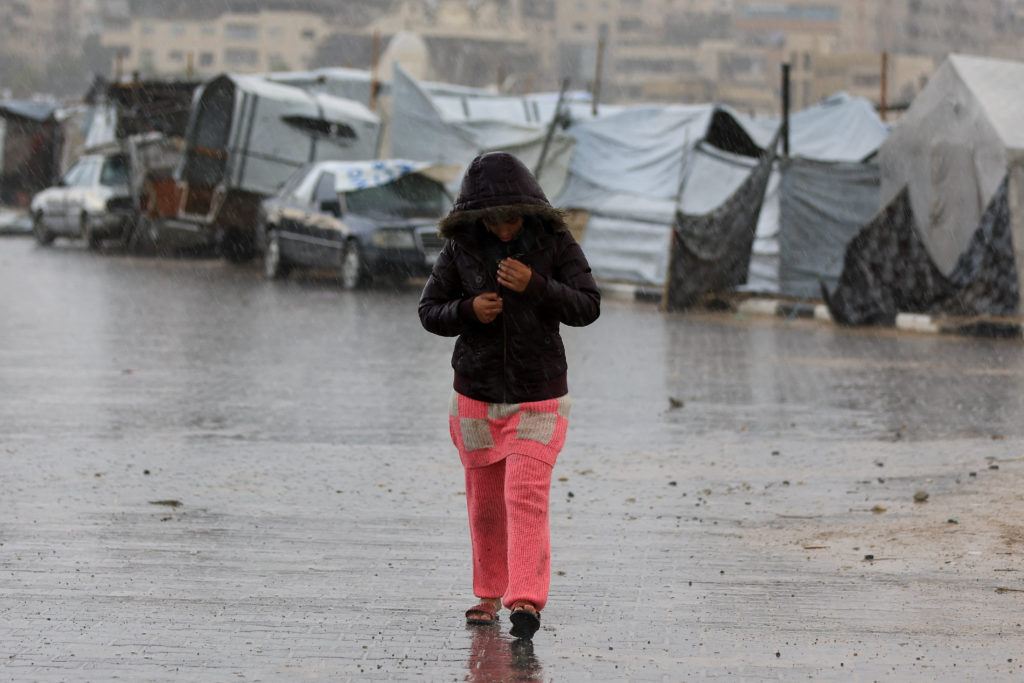
Brussels Morning Newspaper begins coverage as Gaza civilians winter storms intensify across the enclave, turning makeshift tent settlements into flooded camps and exposing thousands to cold rain and strong winds. For families already displaced by conflict, the arrival of winter weather has transformed daily survival into a relentless struggle against exposure, illness, and scarcity. Aid workers warn that the storms are not an isolated event but part of a seasonal pattern that threatens to worsen conditions for months.
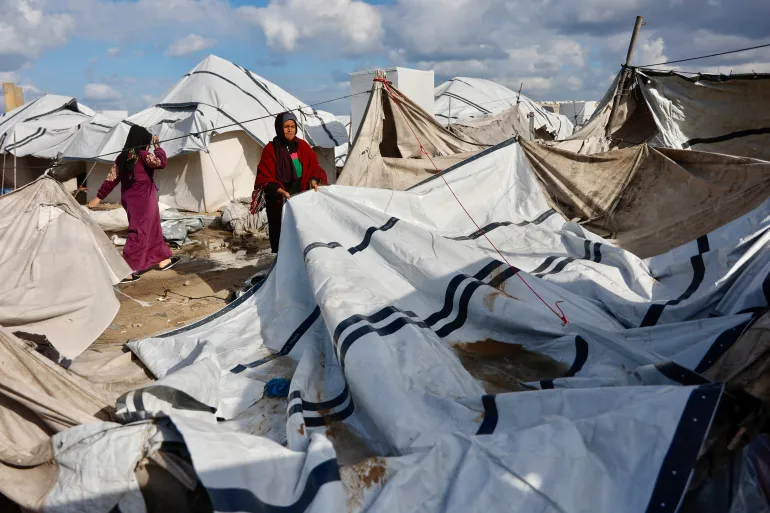
Across the territory, plastic sheets flap violently in the wind while muddy ground absorbs steady rainfall. As Gaza civilians winter storms continue, shelters fail under pressure, leaving families scrambling to protect children and the elderly from dropping temperatures.
Displacement Meets Seasonal Weather
Years of instability have forced repeated displacement, pushing civilians into temporary shelters built with limited materials. Winter storms now expose the fragility of those arrangements. Without insulation, proper drainage, or stable foundations, tents collapse or flood within hours of heavy rain.
Humanitarian observers note that Gaza civilians winter storms are compounding vulnerabilities created by overcrowding. With many families sharing tight spaces, moisture and cold spread illness quickly, overwhelming already strained medical services.
Life Inside Flooded Camps
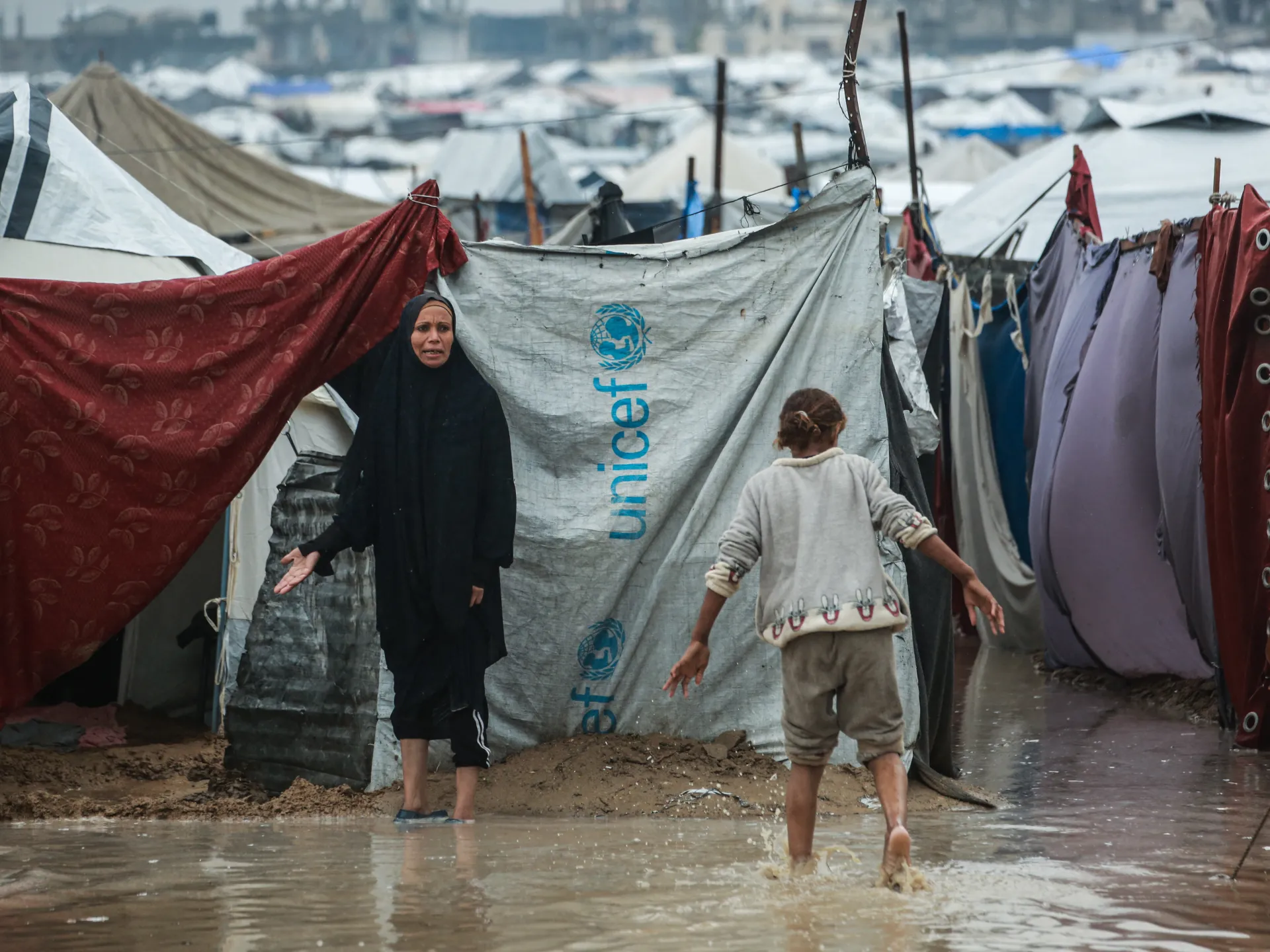
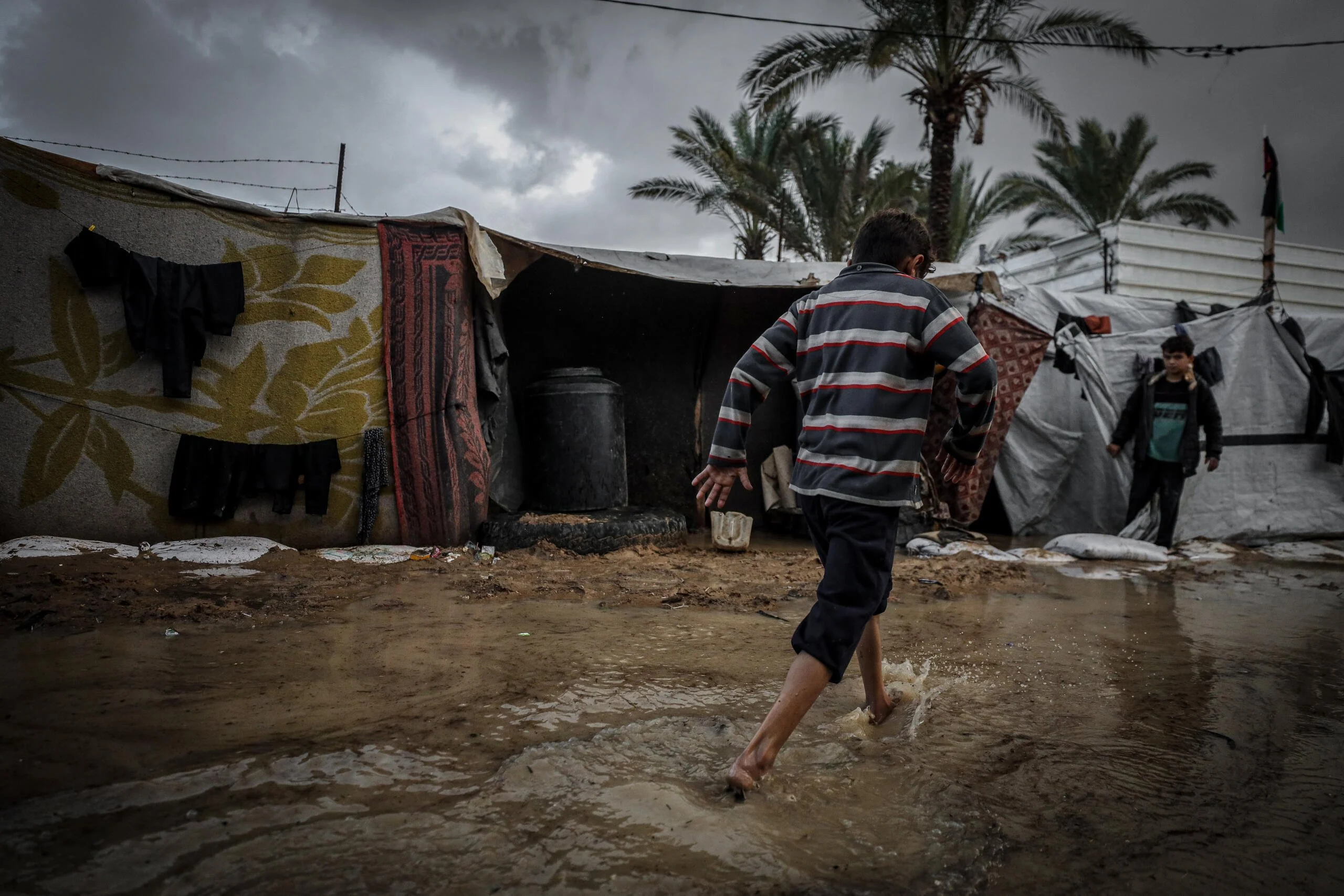
Inside the camps, standing water collects around sleeping areas. Blankets and clothing remain damp for days, increasing the risk of respiratory infections. Parents describe sleepless nights spent holding children above puddles or reinforcing tent walls with scraps of wood.
As Gaza civilians winter storms persist, sanitation deteriorates. Latrines overflow and clean water sources become contaminated, heightening the risk of disease outbreaks in densely populated areas.
Children Bear the Brunt
Children are among the most affected. Many lack adequate footwear or warm clothing, and malnutrition has weakened immune systems. Pediatric volunteers report rising cases of pneumonia, skin infections, and dehydration linked to exposure.
Medical teams emphasize that Gaza civilians winter storms threaten long term health outcomes for young people. Missed schooling, trauma, and chronic illness could shape an entire generation if conditions do not improve.
Elderly and Disabled at High Risk
Older adults and people with disabilities face severe challenges navigating flooded terrain and unstable shelters. Limited mobility makes evacuation during storms difficult, and access to medication is inconsistent.
For these groups, Gaza civilians winter storms are life threatening events rather than temporary inconveniences. Community volunteers attempt to prioritize assistance, but resources are insufficient.
Aid Efforts Struggle Against the Weather
Relief agencies race to distribute winterization supplies such as tarps, blankets, and heaters. However, damaged roads and ongoing security concerns slow deliveries. Storage facilities are limited, and demand far exceeds supply.
As Gaza civilians winter storms continue, aid workers stress that emergency kits offer only partial relief. Durable shelter solutions are urgently needed, yet construction materials remain scarce.
Economic Strain Worsens Survival Prospects
Winter storms also disrupt informal economies that many displaced families rely on. Street vending, day labor, and small trade become impossible during heavy rain, cutting off vital income.
This economic pressure means Gaza civilians winter storms do more than cause physical discomfort. They remove the few coping mechanisms families have to secure food and essentials.
Water and Sanitation Emergency
Rainfall overwhelms fragile water systems. Flooding mixes wastewater with rain runoff, contaminating wells and storage tanks. Clean drinking water becomes harder to obtain with each storm.
Public health officials warn that Gaza civilians winter storms could trigger outbreaks of waterborne disease if preventive measures are not scaled up rapidly.
Mental Health Impact Intensifies
Living through repeated storms in unsafe shelters takes a psychological toll. Anxiety rises as weather forecasts predict more rain. Parents describe constant fear of tents collapsing at night.
Mental health specialists report that Gaza civilians winter storms amplify trauma from displacement and violence, contributing to depression and post traumatic stress across communities.
International Attention and Advocacy
Images of flooded camps and soaked families have circulated globally, prompting renewed calls for humanitarian access and protection of civilians. International organizations urge faster delivery of winter aid and expanded shelter programs.
Despite statements of concern, Gaza civilians winter storms highlight the gap between awareness and effective action. Aid agencies emphasize the need for sustained support rather than short term responses.
Local Resilience and Community Support
Amid hardship, communities organize mutual aid. Neighbors share dry clothing, reinforce shelters together, and create drainage channels to divert water. These efforts offer moments of dignity and solidarity.
Such resilience shows how Gaza civilians winter storms are faced collectively, even when resources are scarce and risks are high.
Environmental Factors and Climate Stress
Meteorologists note that seasonal storms are becoming more intense, increasing rainfall totals and wind speeds. Climate variability adds another layer of unpredictability to an already fragile situation.
As Gaza civilians winter storms grow stronger, planning for climate resilience becomes essential, yet remains difficult under current constraints.
Legal and Humanitarian Obligations
International humanitarian standards call for protection of civilians, including access to adequate shelter. Legal experts argue that exposure to harsh weather without proper housing raises serious concerns.
The reality that Gaza civilians winter storms continue to displace and endanger families underscores the urgency of upholding those obligations.
Outlook for the Winter Months Ahead
Forecasts suggest additional storms are likely. Without significant improvements in shelter and infrastructure, conditions are expected to worsen as temperatures drop further.
For now, Gaza civilians winter storms remain a defining feature of daily life, shaping survival strategies and deepening the humanitarian emergency.
Weather as a Multiplier of Crisis
Winter storms in Gaza reveal how environmental factors can magnify human suffering during conflict and displacement. Rain and cold transform vulnerability into acute danger.
As Gaza civilians winter storms continue, the need for comprehensive shelter solutions, health support, and sustained humanitarian access becomes ever more urgent. The coming weeks will test not only the resilience of civilians but the commitment of the international community.
Storm Damage Reveals Infrastructure Collapse
As winter storms continue, the damage extends beyond tents. Roads connecting displacement camps become impassable due to flooding and mud, cutting off access to food distribution points and medical clinics. Emergency vehicles struggle to reach vulnerable areas, delaying urgent care for those injured or ill.
In many locations, Gaza civilians winter storms have exposed the near total collapse of basic infrastructure. Drainage systems no longer function, power remains unreliable, and clean water access deteriorates with each rainfall. These conditions create cascading effects that worsen daily survival prospects.
Health System Under Extreme Pressure
Medical facilities face growing demand while operating with limited supplies. Doctors report shortages of antibiotics, pain medication, and basic diagnostic tools. Patients suffering from exposure related illnesses wait hours or days for treatment.
Health workers warn that winter conditions significantly increase disease transmission. Respiratory infections spread rapidly in overcrowded shelters, while contaminated water raises the risk of gastrointestinal illness. The health impact of Gaza civilians winter storms may continue long after weather conditions improve.
Pregnant Women and Newborn Risks
Pregnant women face unique dangers during winter storms. Access to prenatal care is limited, and emergency transportation during labor is often unavailable. Midwives describe delivering babies in tents under cold and wet conditions, increasing risks for both mothers and infants.
As Gaza civilians winter storms persist, neonatal complications linked to hypothermia and infection remain a serious concern. Humanitarian agencies stress the urgent need for specialized maternal health support.
Education Disrupted by Weather and Displacement
Schooling has been largely interrupted for displaced children. Temporary learning spaces, when they exist, often close during storms. Books and supplies are damaged by rain, and children struggle to concentrate while coping with cold and hunger.
Educators warn that prolonged disruption caused by Gaza civilians winter storms threatens long term educational outcomes. Without consistent learning opportunities, children face lasting setbacks that extend beyond the immediate crisis.
Looking Ahead
As winter progresses, the outlook for displaced families in Gaza remains deeply uncertain. Weather forecasts indicate additional rainfall and fluctuating temperatures in the weeks ahead, conditions that could further weaken already fragile shelters. Without significant improvements in housing materials and drainage, many camps are likely to face repeated flooding.
Humanitarian agencies are prioritizing winterization efforts, but access constraints and supply shortages continue to limit impact. Aid planners warn that even modest delays could have serious consequences, particularly for children, older adults, and those with chronic health conditions. The coming period will test whether emergency response systems can adapt quickly enough to changing conditions on the ground.
Beyond the immediate weather threat, longer term concerns are emerging. Prolonged displacement during winter increases the risk of lasting health complications, educational disruption, and psychological trauma. Recovery from these effects will require sustained support well beyond the current season.
International attention may intensify as conditions worsen, but relief organizations emphasize that attention alone is not enough. Coordinated action, reliable humanitarian access, and durable shelter solutions will be critical to preventing further loss of life.
Looking ahead, the situation underscores a broader reality. Environmental stressors such as winter storms can rapidly magnify humanitarian crises when populations lack basic protection. How the coming weeks unfold will shape not only survival through winter, but also the longer term resilience of Gaza’s civilian population.