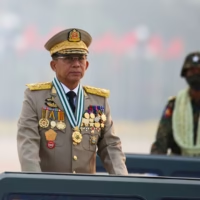
The latest Brazil judiciary action has intensified scrutiny of the country’s legal and political systems after a court ordered house arrest for several individuals identified as close allies of former president Jair Bolsonaro. The ruling represents a decisive step by judges who argue that restrictive measures are necessary to safeguard investigations into alleged efforts to undermine democratic institutions. For many observers, the decision marks a turning point in Brazil’s post election accountability process.
The case has captured national attention because it sits at the intersection of law, politics, and democratic stability. While the suspects have not been convicted, the court emphasized that precautionary measures are justified when there is credible risk of interference, obstruction, or renewed political agitation. This moment has placed the judiciary firmly at the center of Brazil’s democratic reckoning.
Background to the Legal Case
Brazil’s political environment has remained highly polarized since the end of Bolsonaro’s presidency. Investigators began examining the activities of political networks accused of encouraging unrest, spreading disinformation, and coordinating actions aimed at destabilizing state institutions. Federal police gathered digital records, financial data, and testimony pointing to organized efforts rather than isolated acts.
This broader context explains why the Brazil judiciary action gained momentum. Prosecutors argued that leaving suspects unrestricted could allow them to influence witnesses or destroy evidence. Judges agreed that immediate restrictions were necessary to preserve the integrity of the legal process.
Why the Court Chose House Arrest
House arrest was selected as a preventive measure designed to limit risk without imposing pretrial imprisonment. Judges stated that the individuals involved maintained access to communication channels and political networks capable of interfering with investigations.
Through this Brazil judiciary action, the court sought to strike a balance between public safety and individual rights. The ruling stressed that house arrest is temporary and subject to periodic review, depending on compliance and cooperation with authorities.
Legal Framework Supporting the Decision
Brazilian law permits courts to impose precautionary measures when there is evidence of potential obstruction or threats to public order. In this case, judges cited constitutional provisions and criminal procedure statutes allowing restrictions on movement and communication.
Legal experts say the Brazil judiciary action aligns with established legal standards because it does not represent a judgment of guilt. Instead, it reflects a procedural step aimed at protecting democratic institutions while investigations continue.
Reaction from Bolsonaro’s Support Base
Supporters of Bolsonaro quickly criticized the ruling, accusing the judiciary of political bias. Social media campaigns and public statements framed the decision as an attempt to silence opposition voices rather than enforce the law.
Despite these claims, officials reiterated that the Brazil judiciary action is grounded in evidence and legal procedure. Authorities warned that misinformation surrounding the case could inflame tensions and urged respect for judicial independence.

Response from Brazil’s Political Establishment
Reactions within Brazil’s political class have been mixed. Many lawmakers praised the court for acting decisively to defend democratic norms, arguing that institutional resilience requires firm responses to organized threats.
Others cautioned that the Brazil judiciary action could deepen polarization if not communicated carefully. Calls for transparency and restraint accompanied expressions of support for the rule of law.
Role of the Supreme Federal Court
Brazil’s highest court has played a prominent role in recent years by overseeing politically sensitive cases. Its assertive stance reflects lessons from past crises when delayed judicial responses allowed instability to escalate.
Observers note that the Brazil judiciary action underscores the court’s willingness to intervene when democratic norms appear endangered. This posture has reshaped perceptions of judicial power in Brazil’s constitutional system.
International Reaction and Democratic Signals
International democracy watchdogs and foreign governments closely followed the ruling. Many described it as evidence that Brazil’s institutions remain capable of enforcing accountability despite intense political pressure.
The Brazil judiciary action has been cited abroad as an example of judicial independence in a region often challenged by political interference in legal systems. Analysts emphasize that such actions send important signals about democratic resilience.
Impact on Ongoing Investigations
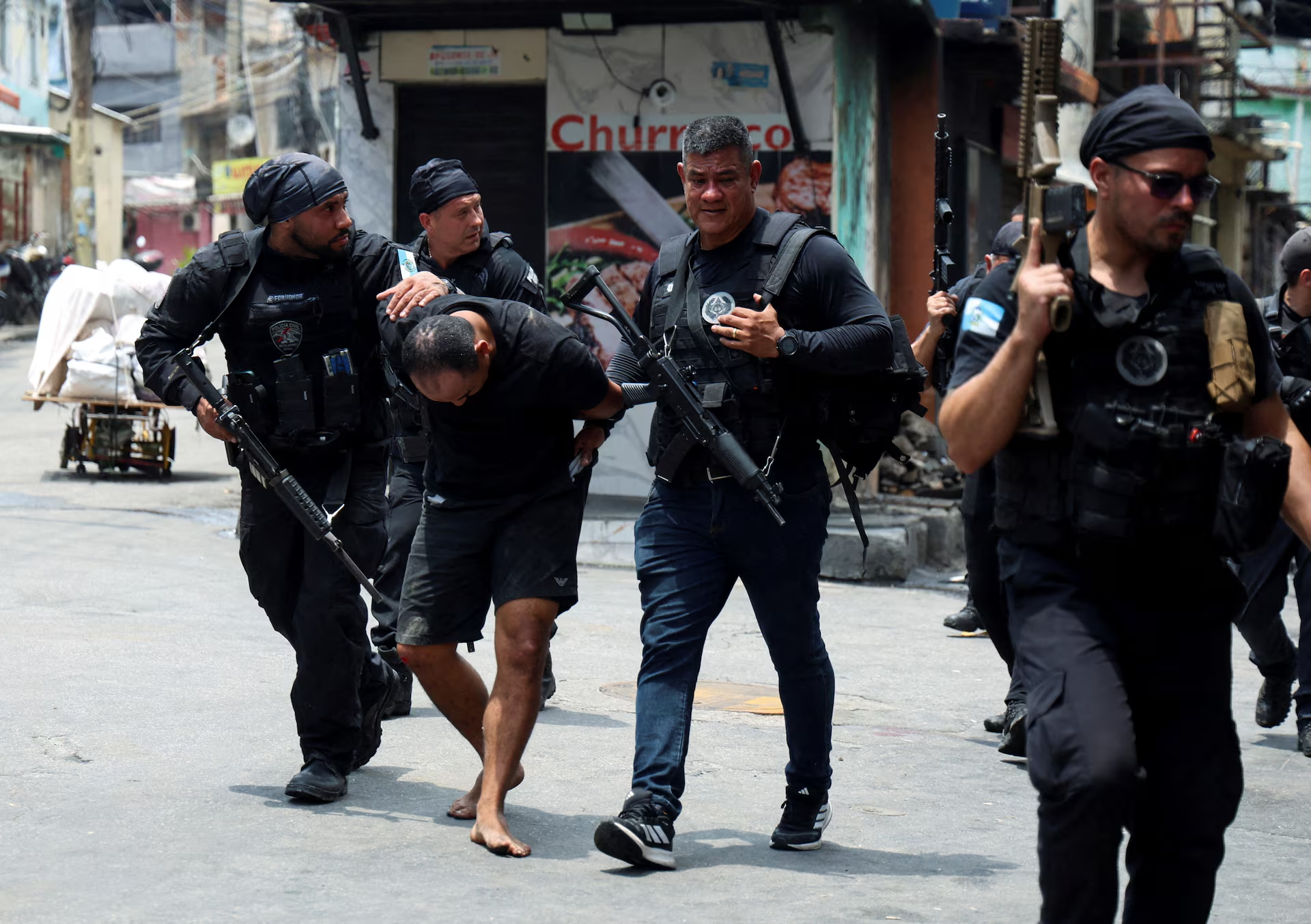
House arrest limits travel, public engagement, and communication, which prosecutors say reduces the risk of obstruction. Authorities continue to analyze financial transactions and coordination patterns linked to the suspects.
According to legal analysts, the Brazil judiciary action may accelerate investigative progress by ensuring that evidence and witness testimony remain protected from undue influence.
Implications for Bolsonaro’s Legal Exposure
Although Bolsonaro himself was not directly subject to this ruling, the actions of his allies are closely tied to broader investigations involving his political movement. The case adds pressure as multiple inquiries related to his presidency continue.
Some experts argue that the Brazil judiciary action increases the likelihood of expanded legal scrutiny for higher level figures if evidence supports broader responsibility.
Public Opinion and Trust in Institutions
Public reaction across Brazil has been divided. Surveys suggest growing concern about political extremism alongside fears of judicial overreach.
For many citizens, the Brazil judiciary action represents a test of whether institutions can enforce accountability without sliding into political retaliation. Public trust will depend on transparency and consistent application of the law.
Media Coverage and Information Challenges
Brazilian media devoted extensive coverage to the ruling, publishing analyses of court documents and expert commentary. At the same time, false narratives circulated online, complicating public understanding.
Journalists emphasized that the Brazil judiciary action is a procedural measure, not a final verdict. Accurate reporting has been highlighted as essential to preventing misinformation and maintaining social stability.
Possible Legal Developments Ahead
Appeals and further motions are expected as cases progress. Courts may adjust restrictions depending on compliance, cooperation, and new evidence.
The precedent established by the Brazil judiciary action could influence how future cases involving coordinated political extremism are handled, potentially reshapin g Brazil’s legal landscape.
Long Term Effects on Brazilian Politics
The ruling may alter political behavior by signaling that coordinated efforts against democratic institutions carry tangible consequences. Political parties are reassessing strategies and rhetoric in response.
Over time, the Brazil judiciary action could contribute to redefining boundaries between lawful political activism and actions deemed harmful to constitutional order.
Brazil’s Democratic Trajectory
Brazil’s democracy has faced repeated stress tests over the past decade. Institutional responses to unrest play a critical role in shaping perceptions of resilience and legitimacy.
The Brazil judiciary action reflects an effort to reinforce constitutional norms and deter future challenges to electoral outcomes through legal accountability.
Lessons for Other Democracies
International observers note that Brazil’s experience offers lessons for other democracies confronting disinformation and political extremism. Judicial independence and timely intervention are often cited as crucial factors.
In this context, the Brazil judiciary action resonates beyond national borders as part of a broader global discussion on protecting democratic systems.
Balancing Law and Politics
Courts must carefully navigate the boundary between legal enforcement and political perception. Transparency, proportionality, and adherence to procedure are essential to maintaining legitimacy.
Supporters argue that the Brazil judiciary action reflects this balance by applying established legal standards without preempting trial outcomes.
The Importance of Due Process
Judges repeatedly emphasized that house arrest does not imply guilt. Defendants retain the right to legal defense, appeals, and fair trial protections.
This emphasis on due process has been central to justifying the Brazil judiciary action as a necessary but restrained response to credible risks.
The decision ordering house arrest for Bolsonaro’s allies marks a defining moment in Brazil’s ongoing effort to confront threats to democratic stability. Through this Brazil judiciary action, courts have asserted their role as guardians of constitutional order amid intense political pressure.
As investigations continue, the ruling’s impact will extend beyond individual defendants to the broader health of Brazil’s democracy. Whether it ultimately strengthens institutional trust or deepens political division will depend on how legal processes unfold and how political actors respond in the months ahead.