
The formation of the Belgian colony in Congo is a significant and complex episode in the history of European colonialism in Africa. It marks a unique tale of imperial ambition, personal enterprise, international diplomacy, and profound human tragedy. This article delves into the origins of Belgian control over Congo, tracing the journey from exploration and the Congo Free State under King Leopold II to the formal annexation by the Belgian government and the subsequent colonial administration that lasted until Congolese independence.
- Early Exploration and European Interest in the Congo Basin
- The Berlin Conference and the Creation of the Congo Free State
- Leopold II’s Rule and Exploitation in the Congo Free State
- International Outcry and the End of Leopold’s Personal Rule
- Transition to Belgian Congo and Colonial Administration
- Economic Impact and Social Changes During Colonial Rule
- Road to Independence and Legacy
Early Exploration and European Interest in the Congo Basin
Until the late 19th century, much of the Congo Basin, a vast region in Central Africa, remained largely unexplored by Europeans due to difficult geography, dense rainforests, swamps, and tropical diseases like malaria and sleeping sickness. However, growing European ambitions spurred renewed interest in Africa’s interior, part of the broader “Scramble for Africa.”
King Leopold II of Belgium, ascending the throne in 1865, was particularly keen on acquiring overseas territories to bolster Belgium’s stature. Frustrated by the Belgian government’s initial reluctance to back overseas colonies, Leopold pursued colonial ambitions independently.
He established the International African Association in 1876, a facade ostensibly dedicated to humanitarian and scientific efforts but primarily serving as Leopold’s vehicle for territorial acquisition.
Leopold hired the famed explorer Henry Morton Stanley to chart the Congo River region, secure territorial claims through treaties with local chiefs, and establish posts along navigable waterways. Stanley’s expeditions, concluding in 1878, laid the groundwork for European claims to the region, setting the stage for Leopold’s personal control.
The Berlin Conference and the Creation of the Congo Free State
European competition for territories in Africa reached a critical juncture at the Berlin Conference (1884–1885). Convened by German Chancellor Otto von Bismarck, the conference aimed to regulate European colonization and trade in Africa to prevent conflict among powers.
Though the conference did not explicitly award territorial sovereignty, it established rules favoring effective occupation. Using diplomatic skill and political maneuvering, Leopold emerged victorious in securing international recognition for his claim to the Congo Basin.
By May 29, 1885, the vast territory was declared the Congo Free State, a personal possession of King Leopold II rather than a Belgian national colony. This entity covered an area roughly the size of Western Europe and was eighty times larger than Belgium itself.
Leopold II’s Rule and Exploitation in the Congo Free State
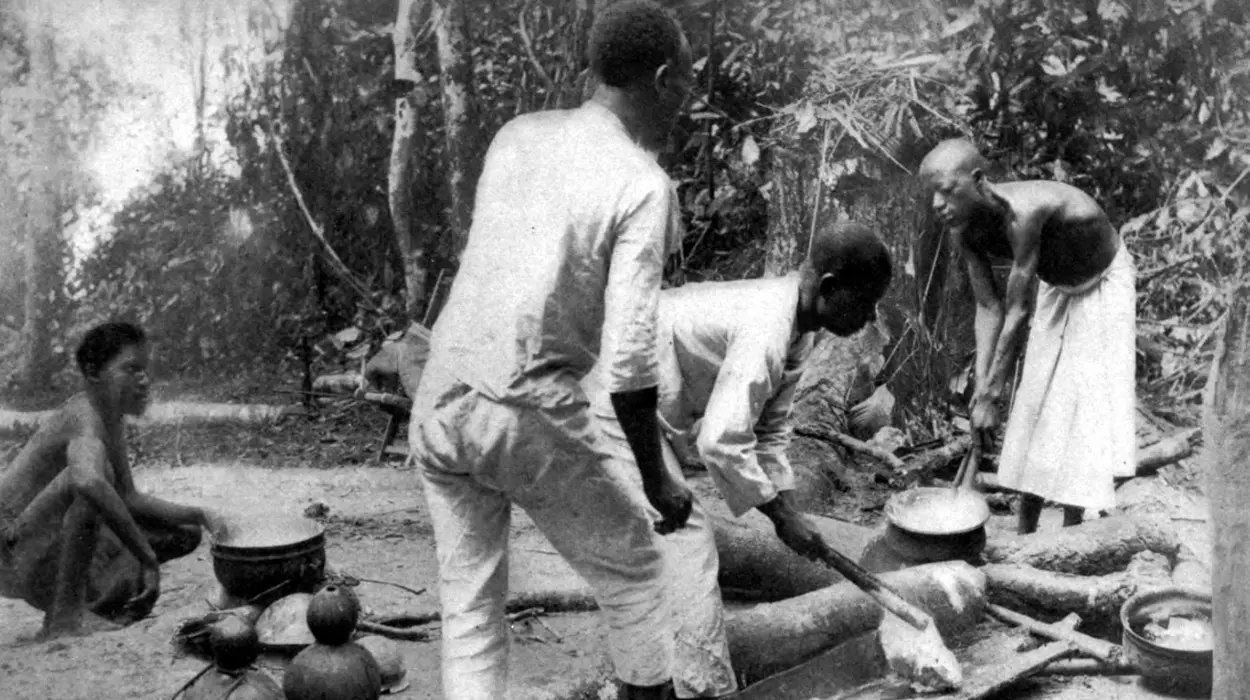
Leopold’s regime in the Congo Free State operated as a corporate state, controlled through the International African Association and later the Congo Free State entity. Publicly portrayed as a philanthropic mission to abolish the slave trade and civilize Africa, the reality was starkly different.
The colonial administration, leveraging a private army called the Force Publique, instituted brutal systems of forced labor, particularly to collect ivory and rubber critical for burgeoning European industries such as automobile manufacturing.
Widespread atrocities were committed against the indigenous population, including torture, mutilations (notoriously severing hands as punishment or terror), mass killings, and destruction of villages.
The lack of reliable population records makes precise figures elusive, but estimates suggest that millions of Congolese died, either from violence, overwork, famine, or new diseases introduced by European contact.
International Outcry and the End of Leopold’s Personal Rule
Reports of abuses began to leak to Europe and America by the early 20th century, largely due to the courageous testimony of missionaries, journalists, and diplomats. The 1904 Casement Report, compiled by British consul Roger Casement, detailed widespread human rights violations, shocking the global conscience.
Pressure mounted from humanitarian groups such as the Congo Reform Association, founded by figures like Edmund Dene Morel, advocating international intervention. Amplified by print media and early human rights campaigns, these revelations eroded Leopold’s standing.
Consequently, facing mounting diplomatic and public backlash, Leopold was compelled to relinquish personal control. In 1908, Belgium’s parliament formally annexed the Congo, transforming it into the Belgian Congo colony, thereby deposing Leopold’s private ownership.
Transition to Belgian Congo and Colonial Administration
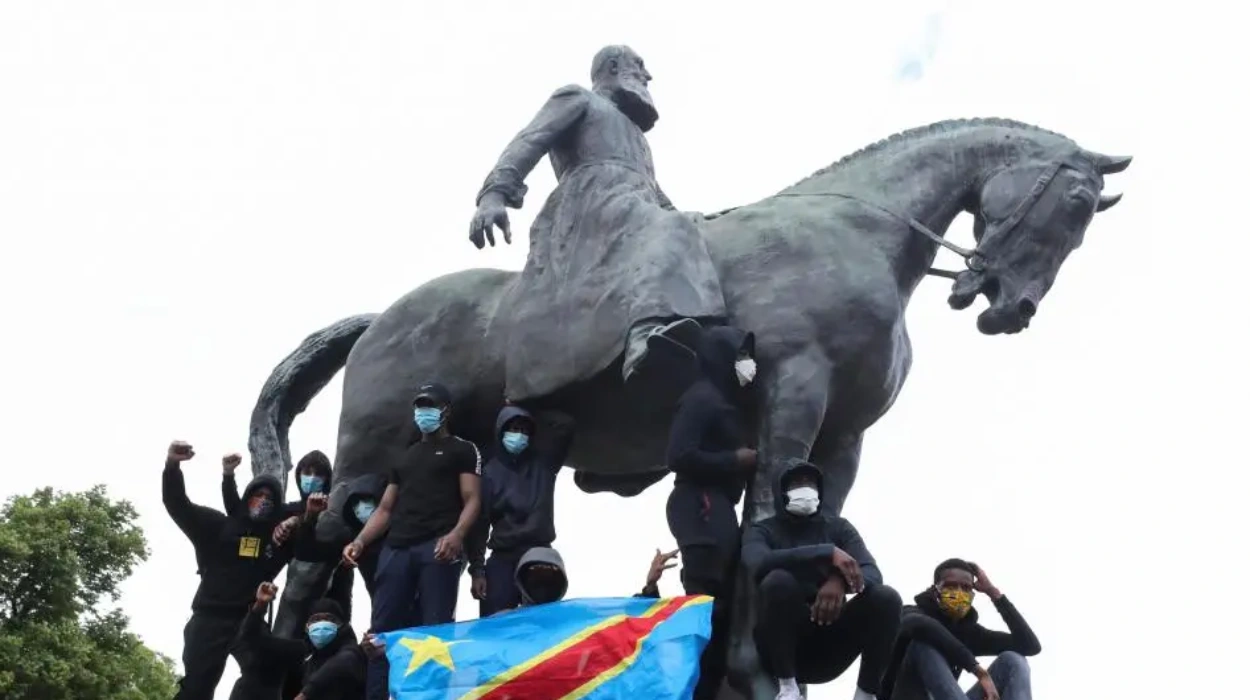
The annexation marked a new era. Official Belgian administration promised reforms, including curtailing outright violence and ending some of the more egregious abuses. However, colonial rule remained exploitative and racially segregated, maintaining economic extraction priorities over Congolese welfare.
The Belgian colonial government operated according to the “colonial trinity” state, missionary, and private company interests closely intertwined in shaping policies. The colony was divided into provinces, districts, and territories governed by Belgian officials, while traditional authorities were subordinated and controlled rather than integrated.
Forced labor persisted, though in less brutal forms, maintained to support resource extraction sectors like rubber, minerals, and plantation agriculture. Large infrastructure projects, such as railways and ports, primarily facilitated resource export rather than local development.
Economic Impact and Social Changes During Colonial Rule
Belgian Congo became a significant source of raw materials for European industries, attracting substantial foreign capital investment. During the 1940s and 1950s, urbanization intensified, giving rise to an emergent class of Europeanized African “évolués” in cities Congolese who adopted European cultural norms and gained limited social mobility.
Despite this, social inequalities deepened, and access to education and healthcare remained severely limited for the majority. The colonial government’s focus on economic exploitation left Congolese traditional economies disrupted, and social structures profoundly altered.
Road to Independence and Legacy
Widespread resistance and a growing nationalist movement culminated in the Belgian Congo’s independence in 1960, ushering in new political realities but also resulting in the Congo Crisis a period marked by political instability and foreign intervention.
The legacy of Belgian colonialism in the Congo is complex, incorporating infrastructural development but overshadowed by human rights abuses and economic extraction. Understanding how Congo became a Belgian colony sheds light on both the mechanisms of European imperialism and the lasting impacts on African societies.
Dear reader,
Opinions expressed in the op-ed section are solely those of the individual author and do not represent the official stance of our newspaper. We believe in providing a platform for a wide range of voices and perspectives, even those that may challenge or differ from our own. We remain committed to providing our readers with high-quality, fair, and balanced journalism. Thank you for your continued support.