

Understanding the intricate structure of Europe’s political and economic entities is essential for grasping the continent’s governance and monetary systems. Two terms often used interchangeably—but meaning very different arrangements—are the European Union (EU) and the Eurozone. While they share many member countries and governance frameworks, their purposes, membership, and operational mechanisms are distinct.
This article provides a clear, detailed overview of the differences between the Eurozone and the EU, their origins, functions, member states, and economic significance.
What is the European Union (EU)?
The European Union is a political and economic union of 27 European countries that collaborate on a wide range of policies including trade, agriculture, environment, and justice. Established through treaties primarily aimed at promoting peace, stability, and prosperity after World War II, the EU represents a unique supranational governance model.
The EU operates through several institutions including:
- The European Commission (executive)
- The European Parliament (legislative)
- The Council of the European Union
- The European Court of Justice (judicial)
EU member states cooperate on single market policies, common external tariffs, and freedom of movement of people, goods, services, and capital. Each member retains sovereignty but agrees to abide by EU laws in agreed policy areas.
Economically, the EU is one of the largest economies globally, with a combined GDP exceeding $17 trillion, representing a significant share of global trade, innovation, and political influence.
However, the EU members retain individual currencies unless they join the Eurozone, the group that adopted the single currency, the euro (€).
What is the Eurozone?
The Eurozone, officially known as the euro area, is a monetary union of EU member states that have adopted the euro as their primary currency and legal tender. It is the most advanced stage of the broader Economic and Monetary Union (EMU) process.
Launched on January 1, 1999, with 11 member states, the Eurozone began with a shared monetary policy governed by the European Central Bank (ECB) and the Eurosystem comprised of the ECB and the central banks of Eurozone members. Physical euro banknotes and coins were introduced in 2002.
Currently, 20 EU countries form the Eurozone, including major economies like Germany, France, Italy, and Spain. These countries have relinquished independent monetary policies, including setting interest rates and currency issuance, to the ECB.
Eurozone members are part of the EU but not all EU members are part of the Eurozone. Some members have opt-outs or have not yet met criteria to adopt the euro.
Key Differences Between the Eurozone and the EU
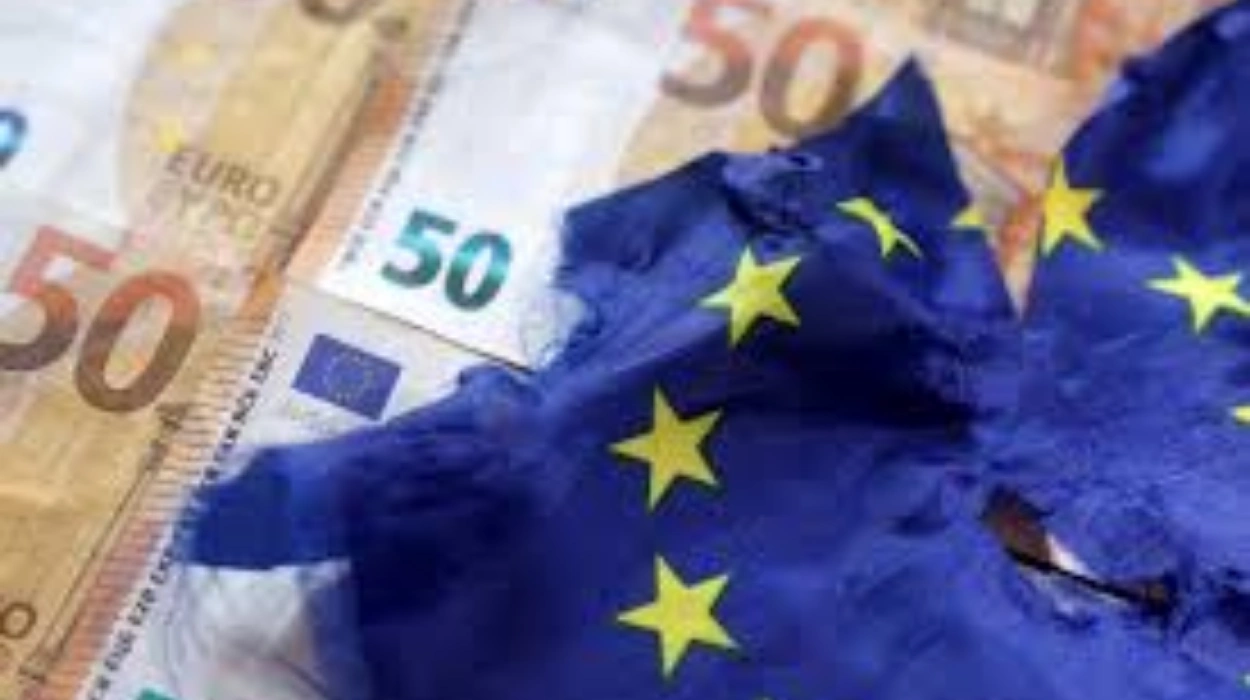
Currency and Monetary Policy
The primary distinction lies in currency management. The Eurozone uses the euro as a common currency controlled by the ECB, responsible for setting interest rates, monetary policy, and ensuring price stability across the union.
The EU, by contrast, is a political and economic union without a single currency requirement. Some members retain their own currencies and control their national monetary policies.
For example, Denmark and Sweden are EU members but have not adopted the euro, retaining their own currencies (Danish krone and Swedish krona) and monetary authorities.
Membership Scope
- EU Membership: Comprises 27 member states. Countries like Poland, Hungary, and Romania are current EU members but not (yet) Eurozone members.
- Eurozone Membership: Includes 20 of these countries that have adopted the euro after fulfilling economic and convergence criteria. Bulgaria is set to join as the 21st Eurozone member soon.
Therefore, the Eurozone forms a subset within the larger EU, with shared membership on economic and political matters but distinct monetary governance.
Economic Integration
Both entities pursue economic integration, but the Eurozone features deeper integration in monetary matters. Eurozone members hand over sovereignty on monetary policy, giving up individual control of exchange rates and inflation targeting.
EU members outside the Eurozone fully participate in the EU’s single market but maintain independent national currencies and monetary authorities.
Fiscal policy, such as taxation and government spending, remains largely controlled by national governments in both the EU and Eurozone, though Eurozone members have additional fiscal rules and oversight aimed at monetary union stability.
Institutions and Governance
- The European Central Bank (ECB) governs monetary policy in the Eurozone.
- The European System of Central Banks (ESCB) includes all EU member central banks but the ECB controls the Eurozone monetary policy.
- The Eurogroup is an informal body comprising finance ministers of Eurozone countries, coordinating economic policies relevant to the monetary union.
- EU-wide institutions deal with broader political and economic matters affecting all member states, including those outside the Eurozone.
Eurozone members have representation in Eurogroup meetings and the ECB, while non-Eurozone members participate in EU institutions but do not directly shape Eurozone monetary decisions.
Currency Use Beyond EU Borders
Several non-EU countries use the euro either by formal agreements (e.g., Monaco, San Marino, Vatican City, Andorra) or unilaterally (e.g., Kosovo, Montenegro). However, these countries do not have voting rights or representation in the ECB or Eurogroup.
The EU’s external monetary influence is thus extended beyond its membership through the Eurozone’s currency adoption but without political integration.
The History and Evolution of the Eurozone

The idea of a single European currency emerged to foster economic stability, facilitate trade, and strengthen political unity. The 1992 Maastricht Treaty laid the foundation for the Economic and Monetary Union (EMU), setting criteria countries must fulfill to join the Eurozone, known as convergence criteria. These include:
- Price stability (inflation rate control)
- Sound public finances (moderate government deficits and debt)
- Stable exchange rates
- Long-term interest rate convergence
The Eurozone began with 11 founding members meeting these criteria. Since then, additional countries have joined gradually, with Bulgaria approved as the newest member effective 2026.
The Eurozone faces complex challenges, including economic disparities and fiscal policy limitations, which have spurred ongoing discussions on deeper integration or reforms.
Membership Status of Key Countries
Twenty EU member states currently form the Eurozone, including Austria, Belgium, France, Germany, Italy, Spain, and the Netherlands. Countries like Bulgaria, the Czech Republic, Poland, Romania, and Sweden are EU members but have not yet adopted the euro.
Denmark holds an opt-out from euro adoption, while others plan to join once they meet the economic criteria.
Why the Difference Matters: Implications for Citizens and Economies
Understanding the difference between the Eurozone and the European Union (EU) is essential for several reasons. For citizens of Eurozone countries, the shared currency—the euro—not only facilitates travel and cross-border business but also eliminates the risks and costs associated with exchanging currencies within member nations.
This seamless currency use streamlines transactions and simplifies economic integration.
On the economic policy front, Eurozone members surrender their individual control over monetary parameters such as interest rates and inflation management to the European Central Bank (ECB).
This relinquishment of monetary sovereignty means these countries cannot independently adjust their national monetary policies to respond to local economic conditions. Instead, monetary policy is designed and implemented centrally for the entire Eurozone, affecting all member states collectively.
Fiscal constraints represent another critical difference. Eurozone countries are subject to stricter fiscal oversight and coordination compared to non-euro EU members. They must comply with agreements like the Stability and Growth Pact and the Fiscal Compact, which set rules on government deficits and debt levels, aiming to maintain economic stability within the union.
This imposes closer scrutiny on national budgets and limits the scope for independent fiscal policy maneuvers.
Politically, Eurozone members have direct influence over monetary policy decisions through their representation in Eurozone-specific institutions such as the ECB and the informal Eurogroup of finance ministers.
Non-Eurozone EU countries participate fully in EU political processes but lack direct say in the governance of the common currency.
For the non-Eurozone EU members, the benefits of EU membership—including access to the single market and political cooperation—coexist with the retention of their own national currencies and full control over their monetary policies. This structure presents different trade-offs between economic integration and national sovereignty in monetary affairs.
Economic Metrics of the Eurozone
Currently, the Eurozone accounts for a nominal GDP of approximately €14.4 trillion, with a population nearing 351 million. Major economies like Germany and France dominate, collectively contributing nearly half of the Eurozone’s economic output.
The area experiences an average inflation rate around 2.4% and unemployment rates near 6.2%, illustrating the complex economic dynamics within the monetary union.
The European Union and the Eurozone represent two overlapping yet distinct European frameworks. The EU is a broad political and economic union of 27 countries collaborating on multiple policy areas while maintaining national currencies in some cases.
In contrast, the Eurozone is a subset of EU members sharing a common currency, the euro, and unified monetary policy through the European Central Bank.
Understanding these differences clarifies how Europe manages economic integration, monetary policy, and political governance.
As the EU continues to evolve and new members join the Eurozone, these frameworks will remain central to shaping Europe’s future cohesion and economic stability.
Dear reader,
Opinions expressed in the op-ed section are solely those of the individual author and do not represent the official stance of our newspaper. We believe in providing a platform for a wide range of voices and perspectives, even those that may challenge or differ from our own. We remain committed to providing our readers with high-quality, fair, and balanced journalism. Thank you for your continued support.