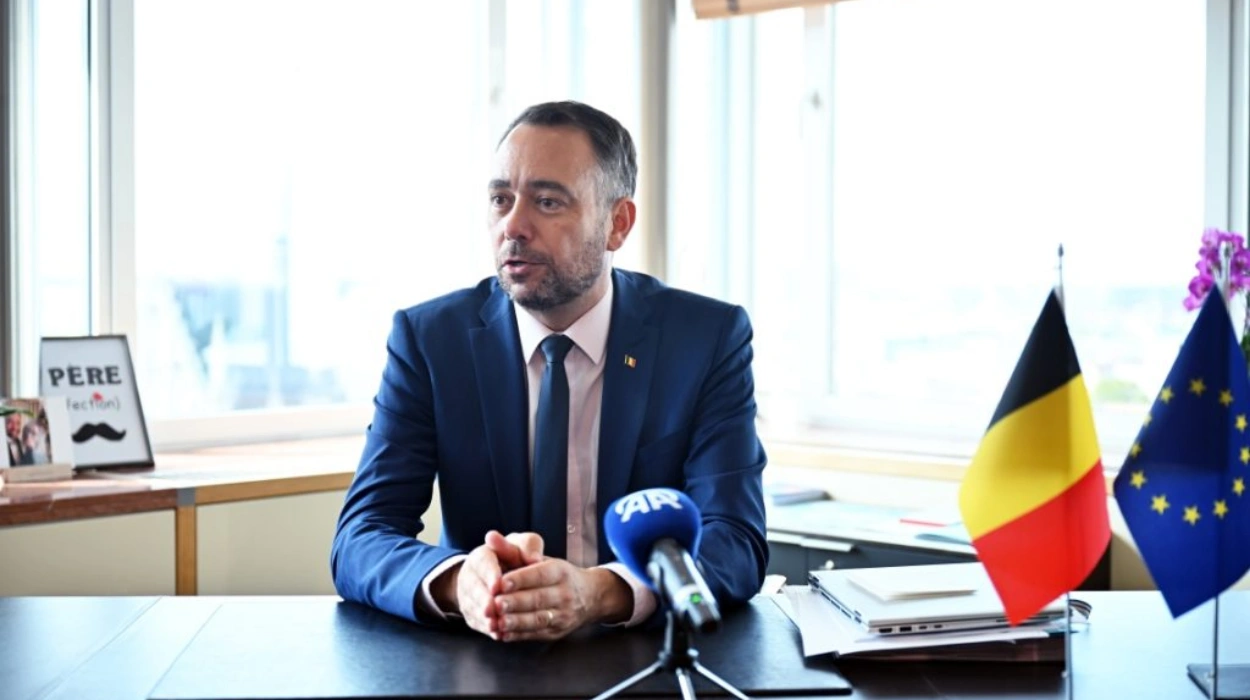
Brussels (Brussels Morning Newspaper) – Belgian Foreign Minister Maxime Prevot on Wednesday reaffirmed Belgium’s concerns about the EU’s proposal to lend profits from frozen Russian assets to Ukraine, emphasizing that these concerns are not sufficiently addressed.
The European Commission is likely to submit proposals this week to leverage the frozen Russian assets held by the securities depository Euroclear in Brussels as collateral for a loan to Ukraine. They are considering giving an initial approval for the European Commission’s €140 billion “reparation loan” to back Kyiv’s war effort.
“We have the frustrating feeling of not having been heard; our concerns are being downplayed. The text the Commission will table today does not address our concerns in a satisfactory manner,”
Prevot briefed reporters ahead of NATO’s foreign ministers gathering in Brussels.
What concerns does Belgium raise about financial and legal exposure?
Prevot said that Belgium considers
“the option of the reparations loan the worst of all, as it is risky. It has never been done before. The reparation loans scheme entails consequential economic, financial and legal risks,”
he said, also saying that the commission’s proposals do not manage Belgium’s concerns.
“It is not acceptable to use the money and leave us alone facing the risks.”
How will the EU structure loans backed by Russian assets?
The Russian Central Bank’s assets are currently frozen abroad for about $300 billion. A significant portion—around $229 billion—is held in Europe, primarily through the Belgian clearing house Euroclear.
Ukraine would be given access to the money as an interest-free loan that would be
“repaid once Russia has compensated Ukraine for the damage”
caused by the conflict. The majority of the funds are kept in Belgium (about 194 billion euros as of June), Japan (about $50 billion), and the United States, United Kingdom, and Canada (lesser amounts).
What guarantees does Belgium want before approving the loan?
Belgium’s Prime Minister Bart De Wever previously stated he would
“do everything in my power”
to block the EU’s proposed new loan for Ukraine, unless he receives adequate guarantees from EU partners regarding financial and legal risks.
He called for a comprehensive sharing of risks associated with using immobilised Russian assets. Additionally, he urged other EU members to offer financial guarantees if repaying Moscow becomes necessary and encouraged collaboration with Belgium through the use of frozen Russian sovereign assets.