
Brussels, the capital of Belgium and the de facto capital of the European Union, is known not only for its political significance but also for its uniquely complex political environment. This complexity arises from Belgium’s intricate federal structure, linguistic diversity, and historical tensions between linguistic communities.
To understand political parties in Brussels explained is to delve into a political system shaped by language, culture, and socio-economic divides, which produces a highly segmented, multilingual, and coalition-driven political sphere.
Belgium’s Political System: A Linguistic and Federal Overview
Belgium’s long-established federal system divides powers across three language-based communities—Dutch-speaking Flanders, French-speaking Wallonia, and the German-speaking Community—and three regions—Flanders, Wallonia, and Brussels-Capital. Brussels itself is officially bilingual (French and Dutch), adding another layer of complexity.
Electoral rights and party membership are heavily influenced by linguistic communities, with political parties divided primarily into Flemish (Dutch-speaking) and Francophone (French-speaking) blocs. This division impacts Brussels directly, where both communities are represented but often maintain separate party systems reflecting their cultural and linguistic identities.
Since no single party can typically secure majority control, coalition governance is the norm both in Brussels and at the federal level, requiring extensive alliance-building and pragmatic compromises.
The Flemish Parties in Brussels
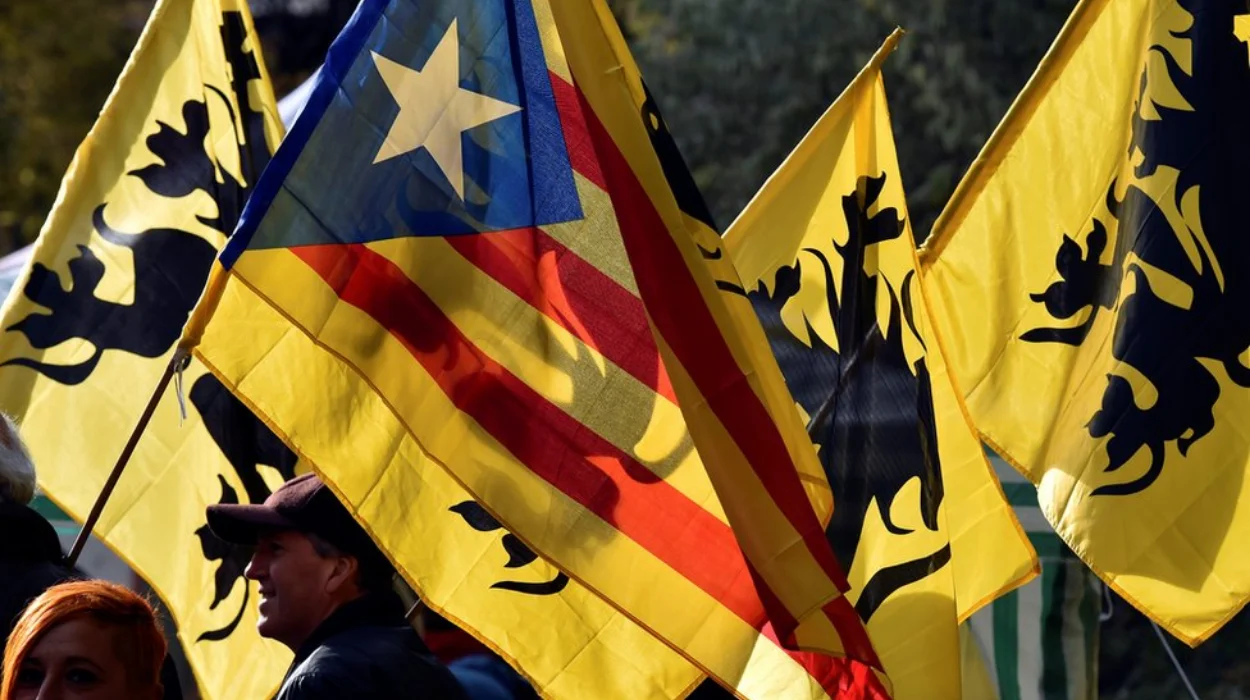
Flemish political parties represent the Dutch-speaking population in Brussels and surrounding areas. Key Flemish parties active in Brussels include:
- Nieuw-Vlaamse Alliantie (N-VA): The New Flemish Alliance is a centre-right to right-wing Flemish nationalist party advocating for greater Flemish autonomy and, ultimately, independence. Led by Bart De Wever, N-VA supports economic reforms centered on devolution of powers within Belgium’s federalist structure.
- Christen-Democratisch en Vlaams (CD&V): The Christian Democratic and Flemish party bases its ideology on Christian democracy, emphasizing social solidarity with a centrist to centre-right positioning. CD&V advocates for balanced socio-economic policies with respect to regional autonomy.
- Open Vlaamse Liberalen en Democraten (Open VLD): Open VLD is a centre-right liberal party focusing on free-market economics, individual freedoms, and moderate conservatism. It appeals widely to business owners, professionals, and educated voters.
- Groen: The Flemish green party prioritizes environmental sustainability, social justice, and progressive policies. Groen has grown in influence, particularly among younger voters and urban populations.
- Vooruit: A social democratic party with roots in the labour movement, Vooruit focuses on social equity, workers’ rights, and welfare policies. It is among the major left-centrist parties in Flemish politics.
The Francophone Parties in Brussels
Francophone parties represent the French-speaking population in both Brussels and Wallonia, often reflecting ideological counterparts to Flemish parties but addressing unique linguistic and regional concerns. One of the dominant parties in this group is the Parti Socialiste (PS), a centre-left to left-wing socialist party.
The PS supports state intervention in the economy, the expansion of social welfare programs, and progressive taxation. Led by Paul Magnette, the party has been a key player in regional and federal governments, shaping social and economic policies to benefit working-class and vulnerable populations.
The Mouvement Réformateur (MR) serves as the main centre-right liberal party among Francophone voters, promoting free enterprise, fiscal conservatism, and social liberalism. MR appeals primarily to middle-class businessmen and professionals and often collaborates with other liberal and Christian democratic factions to form alliances.
Environmental concerns are championed by Ecolo, a green party representing the Francophone community that focuses on ecological sustainability, social progressivism, and human rights. Ecolo has seen significant growth as public concern around climate change and social justice issues has increased.
Les Engagés, formerly known as cdH, is a centrist to centre-right party with Christian democratic roots. The party emphasizes humanist values, social cohesion, and moderate policy reforms, seeking to bridge societal divides while maintaining core traditional principles.
DéFI (Défi Fédération Intégrité) is a centrist regionalist party based in Brussels, dedicated to advocating for the rights and cultural identity of French-speaking residents within the bilingual capital. Their platform focuses on defending language rights and tackling urban issues through a blend of liberal and progressive policies.
Together, these Francophone parties play crucial roles in shaping the political landscape of Brussels and Wallonia, balancing regional identity with broader social and economic goals.
Bilingual and Community-wide Parties
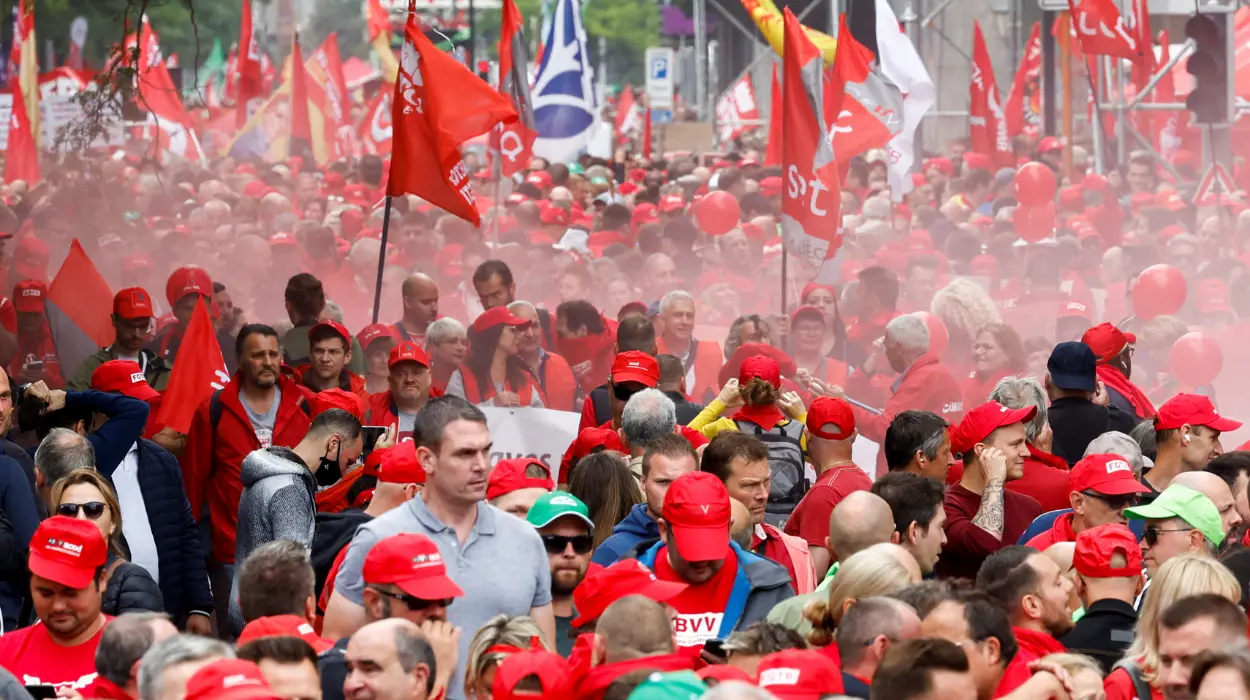
Besides the linguistic divides in Brussels politics, there are parties that strive for bilingual and pan-Belgian representation, often aligning with broader leftist ideologies capable of uniting voters across language lines. The most prominent among these is the Workers’ Party of Belgium (PVDA/PTB), a far-left Marxist party that uniquely bridges linguistic divisions by representing both Flemish and Francophone voters.
The PVDA/PTB advocates a modern socialism that emphasizes wealth redistribution, social justice, and the expansion of public healthcare and pensions, seeking to challenge austerity policies and promote an inclusive welfare state across Belgium. Similarly, the green political movement in Brussels is represented by two separate parties—the Flemish Groen and the Francophone Ecolo—which, despite their separate organizational structures, closely coordinate their efforts.
Together, these green parties campaign vigorously on environmental and social justice issues, transcending linguistic barriers to address shared concerns related to climate change, sustainability, and progressive governance. This cross-linguistic cooperation highlights the potential for political collaboration beyond Belgium’s often rigid language divisions.
Regionalist and Nationalist Movements
Regionalist parties that emphasize distinct community interests or autonomy play a significant role in Brussels politics, often seeking greater devolution within Belgium or advocating outright independence for their respective linguistic groups. Among the most influential Flemish nationalist parties are the Nieuw-Vlaamse Alliantie (N-VA) and Vlaams Belang.
The N-VA adopts a pragmatic centre-right approach aimed at defending Flemish cultural identity and promoting regional sovereignty. In contrast, Vlaams Belang represents a far-right, anti-immigration stance, strongly advocating for Flemish independence while maintaining a hardline position on cultural and immigration issues.
On the Francophone side, the Union des Francophones (UF) serves as an electoral alliance of French-speaking parties. Its primary focus is to advocate for the interests of Francophone voters residing in the Flemish region around Brussels, emphasizing protections for linguistic rights and cultural recognition in a predominantly Dutch-speaking area.
Representing the smaller German-speaking community in Belgium, ProDG is a regionalist party that emphasizes cultural preservation and regional autonomy. It advocates for safeguarding the linguistic heritage and political rights of the Germanophone population, ensuring their voice is heard within Belgium’s federal and multilingual context.
These regionalist parties significantly shape Brussels’ political landscape by championing their communities’ unique identities and pushing for greater self-governance, reflecting Belgium’s broader commitment to accommodating its linguistic and cultural diversity in government.
Coalition Politics and Government Formation
Electoral outcomes in Brussels typically do not yield outright majorities for any party. Consequently, coalition governments are essential at regional and federal levels. Coalitions often span ideological lines but respect linguistic community affiliations due to institutional exclusivity.
Belgium’s federal and Brussels regional governments are characterized by multi-party coalitions encompassing liberals, Christian democrats, socialists, and greens. These coalitions underscore the necessity of consensus-building and political pragmatism in a complex multilingual polity.
Political Financing and Regulations
Belgian political parties are publicly funded based on election results while private donations are strictly limited. Campaign expenditures are regulated, ensuring transparency and preventing undue influence by private interests. This funding structure supports party operations and electoral competition within clearly defined legal frameworks.
Understanding political parties in Brussels explained requires appreciation of the city’s linguistic diversity, historical divisions, and federal governance. Brussels’ political landscape is shaped by distinct Flemish and Francophone parties reflecting their respective communities’ interests, alongside bilingual and national parties striving for broader appeal. Coalition politics, regionalist movements, and stringent financing rules further define the political environment.
Navigating this complexity is essential to comprehending how Brussels governs itself and its interaction with Belgian and European institutions, illuminating one of the most linguistically and politically pluralistic capitals in the world.
Dear reader,
Opinions expressed in the op-ed section are solely those of the individual author and do not represent the official stance of our newspaper. We believe in providing a platform for a wide range of voices and perspectives, even those that may challenge or differ from our own. We remain committed to providing our readers with high-quality, fair, and balanced journalism. Thank you for your continued support.