
The European Green deal is the umbrella term to refer to a set of policy initiatives that were taken in 2020 by the European Commission, to act together in order to reach the objective of having the EU a climate-neutral continent by 2050.
The Deal aims at phasing out the emission of greenhouse gases even radically and improving sustainable economic growth and innovation without rendering any of its member states behind, through the shifting of the economy off fossil fuel.
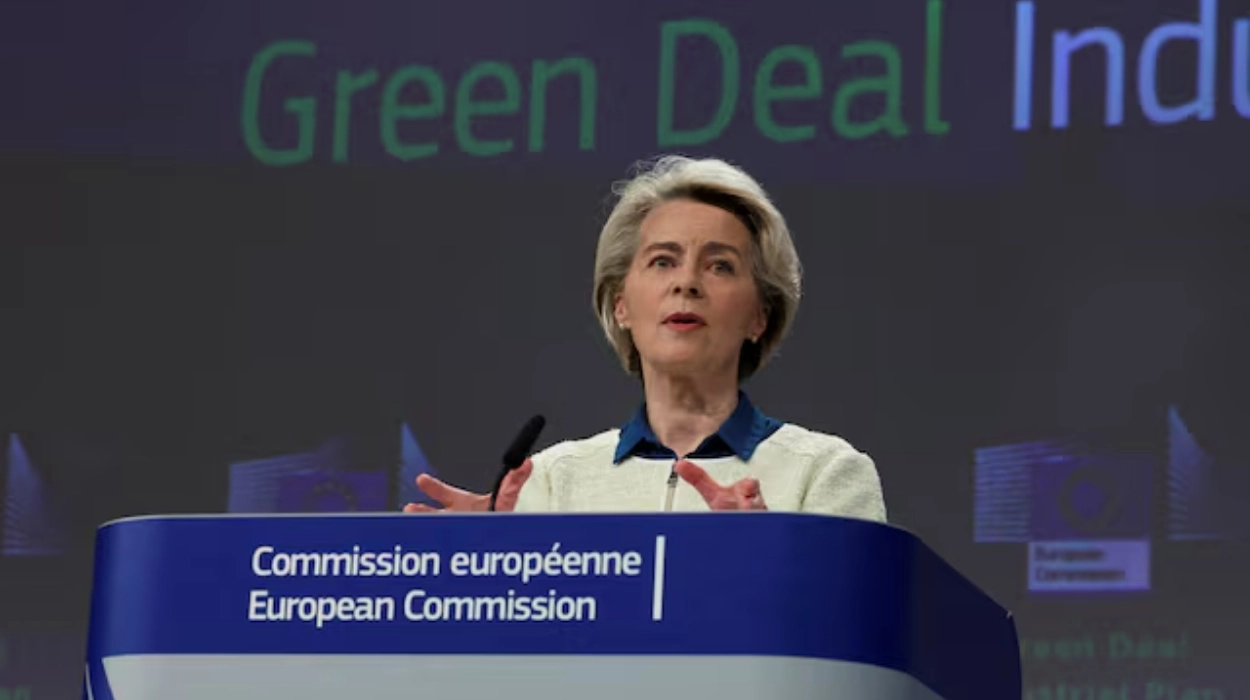
European Commission President Ursula von der Leyen famously said it is Europe’s man on the moon moment, the historic scale of the challenge and opportunity . The Deal is an ambitious plan that goes back to the current legislation but looks at it through a climate perspective and implements new laws to cover key sectors including energy, construction and agriculture, transport, biodiversity, and a circular economy.
When Was the European Green Deal Signed?
Important political events are:
- December 2019: The European Council formally agreed to enact the European Green Deal under which certain countries such as Poland have been granted an opt-out over their dependence on fossil energy.
- In January 2020, the European Parliament voted in favour of the Deal, even higher climate ambitions were called upon.
- Late July 2021: The EU unveiled its launch of a body of proposed legislation referred to as the Fit 55 package, including plans to cut emissions by 55% by 2030 as compared to 1990 levels.
The Green Deal is a supplement to the international climate commitments, like the Paris Agreement and it enhances the European leadership in sustainable development.
The European Green Deal key goals and targets
Covering 100 percent of climate Neutrality by 2050
The fundamental objective is a net-zero greenhouse gas, that is greenhouse gas emission stabilization by removing any released greenhouse gas emissions primarily through natural and/or innovative technologies, by 2050.
Emission Reductions by 2030
The Deal places an intermediate goal of achieving a 55 percent reduction in emissions by 2030, and greatly increases the tempo of reduction relative to past rates.
Circular Economy and Resource Efficiency
Transforming to a circular economy, which targets to find ways to lower waste, increase recycling and make a more sustainable product lifecycle.
Sustainable Mobility and Energy
Plans include:
- Gradually wind down over dependence on fossil fuel
- Creating clean energy markets,
- Encouraging zero-emission cars (e.g. all new cars sold are zero emissions by 2035)
- Smart, green public transport,
Biodiversity and Ecosystem Restoration
Protecting 30 per cent of the EU territory and 30 per cent of the EU waters, planting three billion trees, restoring rivers, reducing the use of pesticides, and improving organic farming .
Farm to Fork Strategy
Enhancing sustainability of food production and consumption, decreasing pesticides and fertilizers, more organic agriculture and minimizing food wastage .
How Will the European Green Deal Be Funded?
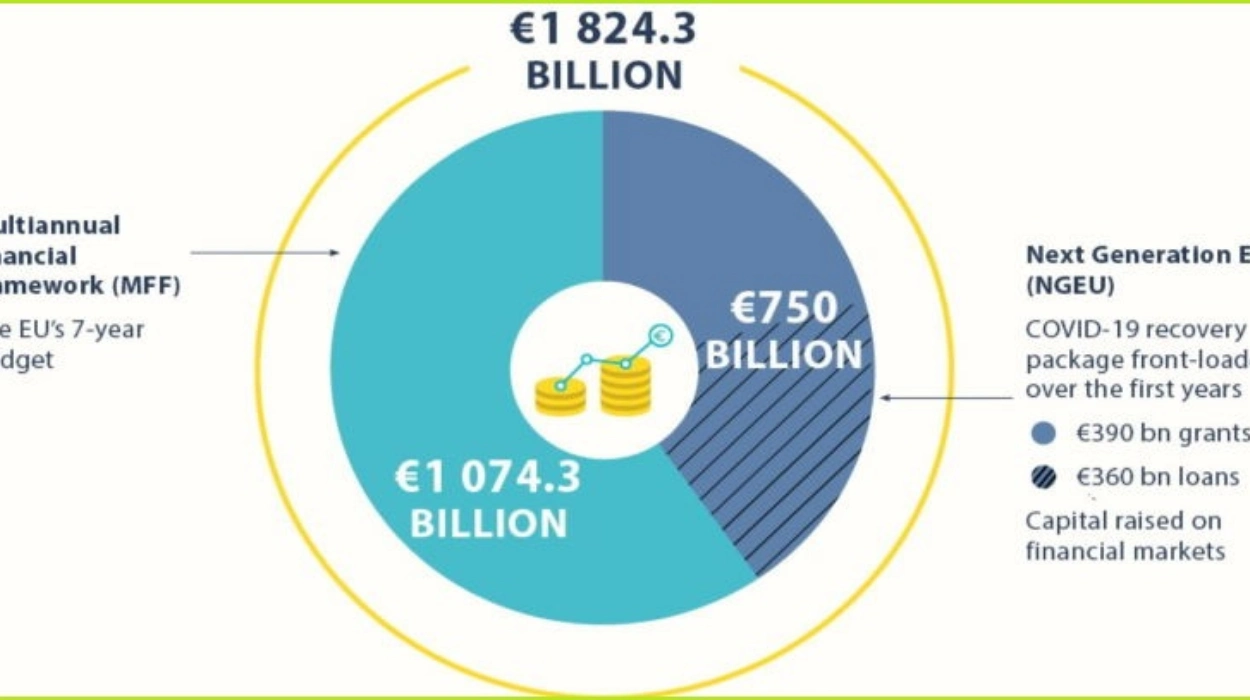
It is estimated that the transition will cost roughly 260 billion a year by 2030 in investments . The InvestEU program by the EU proposes to facilitate sustainable investments worth at least a trillion euros.
The central plan of the investment strategy is the use of the public-private partnerships, transition funding through Horizon Europe, and innovative technologies, such as clean hydrogen and low-carbon steel.
Key Policy Areas of the European Green Deal
Clean Energy Transition
The EU intends to decarbonize the energy sector by focusing on energy efficiency, increased use of renewable sources and connecting digitalized energy markets.
Sustainable Industry
Pay attention to circular economy principles, decarbonizing energy-intensive industries such as the steel and cement industry, and limiting waste export even outside the EU .
Building Renovation
There is also an attempt to invite at least a million housing units to be renovated by doubling or triple an increase to improve on energy efficiency, climate resilience and cutting emissions .
Digital Technologies for the Environment
Smart solutions to automobility in the city, accurate agriculture, environmental surveillance and prediction of catastrophes are underway to make sustainability a reality.
Progress and Challenges
The Deal has driven key legislative efforts and reforms of carbon markets, but has challenges like:
- Coordinating common member state interests,
- Focusing in particular on fossil-fuel dependence in some countries.
- Social fairness and preventing economic inequalities in the course of the transformation.
By putting it down in the EU Climate Law, the commitments are made legally binding, which provides certainty and responsibility .
| Aspect | Details |
| Initiated | 2019-2020 |
| Climate Target | Net-zero greenhouse gas emissions by 2050 |
| Interim Goal | 55% emissions reduction from 1990 by 2030 |
| Major Policies | Circular economy, clean energy, sustainable mobility, biodiversity |
| Investment Required | €260 billion/year by 2030; €1 trillion mobilized by InvestEU |
| Legislative Package | Fit for 55 |
| Key Leaders | Ursula von der Leyen (EC President), Frans Timmermans (Former EVP) |
The European Green Deal is a potentially radical, ambitious policy to ensure the European Union is climate neutral by 2050 which implies their worry about the climate and environmental crisis as a way leading towards sustainable growth in the economic sphere. It is customizing the policies at the sectorial level such as the energy and industry to agriculture and biodiversity in combination with large investments and inventive technologies.
Dear reader,
Opinions expressed in the op-ed section are solely those of the individual author and do not represent the official stance of our newspaper. We believe in providing a platform for a wide range of voices and perspectives, even those that may challenge or differ from our own. We remain committed to providing our readers with high-quality, fair, and balanced journalism. Thank you for your continued support.