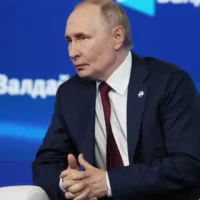

Budapest (Brussels Morning Newspaper) – Hungarian Prime Minister Viktor Orban stated on Monday that Hungary should not adopt the euro, citing the European Union’s ‘disintegration’ and the need to avoid aligning its future more closely with the bloc.
In an interview with the economic news site EconomX, Orban said,
“Hungary should not tie its fate closer to the European Union than now, and adopting the euro would be the closest possible link.”
Since taking power in 2010, Orban has grown more outspoken against the EU, which has withheld billions of euros in funds from Hungary because of the nationalist leader’s reforms to the rule of law.
What are the main reasons Hungary delays Euro adoption?
Hungary relies heavily on trade with the 27-member bloc and has modernised its economy using billions of euros in EU funds since joining two decades ago.
Hungary does not use the euro as its currency. Hungary has the Hungarian forint (HUF) as its official currency. Hungary has been intending to adopt the euro since 2003, but Hungary has not set any target dates to actually switch from the forint to the euro. At present, Hungary is not a member of the European Exchange Rate Mechanism (ERM II), which is a prerequisite for euro adoption.
Unlike Denmark, Hungary lacks a legal opt-out from joining the currency bloc. Additionally, some eastern EU neighbors, such as Poland, the Czech Republic, and Romania, are also currently outside the euro area.
How has the EU funding freeze strained Hungary’s economy?
As reported, Orban’s remarks sharply contrasted with those of his rising opposition opponent, Peter Magyar, who is actively campaigning to unblock frozen EU funds and to move one of the EU’s less wealthy economies toward adopting the euro.
Although Orban has not directly commented on central bank policy since Mihaly Varga, his former finance minister, took over in April, he stated on Monday that the bank’s 6.5% main interest rate—tied for the highest in the EU—was “higher than it could be.”
In September, the bank announced a year-long pause in rate cuts, which has contributed to the forint reaching a 15-month high against the euro as it aims to prevent a flow of domestic savings into foreign currencies, including the euro.