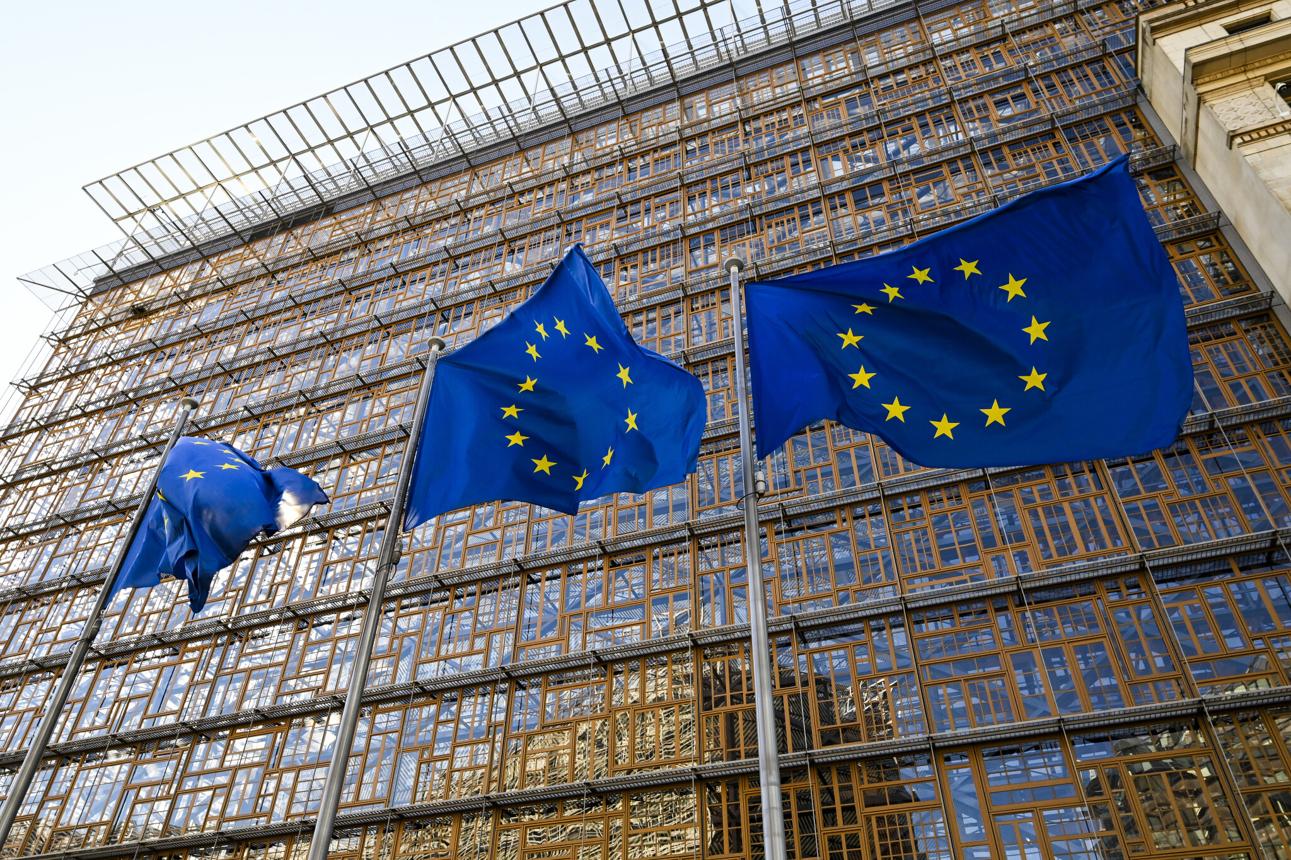
BRUSSELS, 27 November – Brussels Morning Newspaper – European Union leaders have ended a special two-day summit in Brussels without reaching an agreement on the bloc’s next seven-year budget, exposing deep divisions over spending priorities, national contributions and the financial resources needed to support Europe’s ambitions.
The special European Council meeting, held on 26 and 27 November, brought together leaders of the EU’s 27 member states to discuss the Multiannual Financial Framework (MFF) for 2028–2034. Despite more than 12 hours of negotiations, governments remained divided over the overall size of the budget and how funding should be distributed.
European Council President António Costa acknowledged the failure to secure a compromise, saying: “We didn’t reach an agreement.”
The discussions will now continue ahead of the next European Council meeting scheduled for 17–18 December, with Costa seeking a political agreement before the end of 2026.
The outcome represents a setback for efforts to establish the financial framework in time for the next EU budgetary period, which is due to begin on 1 January 2028.
Disagreements over the size of the EU budget
At the centre of the negotiations is a fundamental disagreement over how much money the European Union should spend during the seven-year period.
The European Commission’s original proposal sought to provide greater financial capacity for the bloc to address emerging challenges, including economic competitiveness, defence, security, technological development and support for Ukraine.
However, several governments that contribute more to the EU budget than they receive back have pushed for tighter spending limits and lower national contributions.
Germany and other net contributor countries argue that the proposed financial package needs further reductions. Their position reflects concerns about domestic budget pressures and the need to maintain control over public expenditure.
Other member states have resisted additional cuts, arguing that a smaller budget could weaken the EU’s ability to deliver existing programmes while financing new strategic priorities.
Speaking after the negotiations, Costa said some countries had requested further reductions under his revised proposal, while most opposed additional cuts. Some governments had even called for previously proposed reductions to be reversed.
The disagreement illustrates the challenge facing the EU: finding enough money to finance new priorities without placing an unacceptable financial burden on national governments.
Agriculture and regional funding remain major obstacles
The future of agricultural and cohesion funding has emerged as another important point of disagreement.
The Common Agricultural Policy (CAP) provides financial support to farmers and contributes to the stability of Europe’s agricultural sector. Cohesion funding, meanwhile, is designed to reduce economic and social inequalities between European regions.
A large majority of EU member states want these established policies protected, according to the European Council’s account of the negotiations.
Countries that depend heavily on EU structural funding are concerned that changes to the budget could reduce support for regional development, infrastructure and employment.
Agricultural support is also politically sensitive, particularly as European farmers face rising production costs, environmental requirements, international competition and uncertainty over future agricultural policies.
Governments therefore face competing demands: financing defence, innovation and competitiveness while maintaining the programmes that have traditionally supported European agriculture and less-developed regions.
The dispute is not simply about the overall budget ceiling. It also concerns which countries, industries and communities will benefit from European spending over the next seven years.
New EU revenue proposals face resistance
Another central issue is how the EU should finance its future spending.
Costa’s revised proposal seeks to establish a balanced package of new EU revenue sources, known as own resources, with the objective of limiting pressure on national contributions.
Among the proposals discussed is an EU-wide digital services levy, which could generate additional revenue from online advertising and companies’ use of consumer data.
However, the proposal has encountered opposition.
Irish Prime Minister Micheál Martin expressed strong reservations about the digital tax, arguing that it could undermine Europe’s competitiveness.
European Commission President Ursula von der Leyen offered a more positive assessment, saying the proposal had attracted broad support during the discussions and that she saw good prospects for an agreement on new revenue sources.
Other potential revenue streams include contributions linked to the carbon emissions trading system and tobacco duties.
The disagreement highlights a wider question for the EU: whether its future priorities should be financed primarily through higher national contributions, new EU-level revenue sources or reductions in existing expenditure.
Without agreement on the revenue side, governments will find it difficult to settle the overall financial package.
Ukraine financing adds pressure to negotiations
The budget discussions also took place against the backdrop of Ukraine’s continuing financial needs.
EU leaders addressed how to support Kyiv in 2027 and beyond, including a proposed €45 billion loan intended to help meet Ukraine’s economic and military financing requirements next year.
The discussions have exposed differences between member states over how the financial burden should be shared and how the loan’s interest costs should be covered.
According to Costa, 24 member states supported the proposal, although Bulgaria indicated that its participation would be limited to the non-military component.
The Czech Republic, Hungary and Slovakia remain among the countries whose positions need to be addressed to secure wider agreement.
The proposed loan is separate from a longer-term financial envelope of approximately €100 billion for Ukraine over seven years included in recent budget discussions.
One of the outstanding questions concerns whether the interest costs associated with the proposed loan should be deducted from the wider budget allocation or financed separately.
The issue matters beyond Ukraine itself. European governments increasingly view support for Kyiv as connected to the EU’s wider security interests, while disagreements over funding reveal the difficulty of maintaining a common position among 27 national governments.
December summit becomes crucial for a budget agreement
The next major opportunity to resolve the dispute will come at the European Council meeting scheduled for 17–18 December.
Costa intends to continue consultations with national capitals in an effort to identify a compromise acceptable to the member states.
German Chancellor Friedrich Merz indicated that the discussions had produced some movement towards reducing the proposed budget, but confirmed that leaders would not reconvene for another round of negotiations on Friday.
French President Emmanuel Macron also called for an agreement before the end of the year, warning that France’s approaching presidential election would make further negotiations politically difficult in 2027.
The December meeting will therefore carry considerable political and financial significance.
Under EU rules, the Multiannual Financial Framework requires unanimous approval in the Council, followed by the consent of the European Parliament. The separate decision on the EU’s own resources also requires unanimity and approval by member states under their respective constitutional procedures.
An agreement among national leaders would consequently represent an important political breakthrough, rather than the final completion of every legislative step.
Why the budget deadlock matters for Europe
The failure to reach an agreement in Brussels is significant because the next MFF will determine the financial capacity of the European Union from 2028 to 2034.
Its priorities will influence funding for agriculture, regional development, research, infrastructure, industrial competitiveness, migration management, security and international partnerships.
For Belgium, which hosts the main EU institutions in Brussels, the negotiations also underline the importance of European-level decisions for the country’s political and economic environment.
For businesses, farmers, universities, regional authorities and local communities across the bloc, the eventual agreement will help determine the availability and direction of European funding.
The European Parliament has also defended a more ambitious financial framework than the positions previously discussed by national governments, meaning that further negotiations between EU institutions will remain necessary even after a political compromise is reached.
The existing 2021–2027 financial framework remains in place, and the failure to agree on its successor does not mean that current EU funding programmes have immediately stopped.
However, the institutions want the next budget to be agreed in time for the necessary legislation and programmes to be prepared during 2027, allowing the new framework to begin on 1 January 2028 without interruption.
For now, the Brussels summit has demonstrated that EU governments remain far apart on the financial choices facing the bloc. The December negotiations will determine whether leaders can bridge those differences and establish a common spending plan for Europe’s next seven-year period.