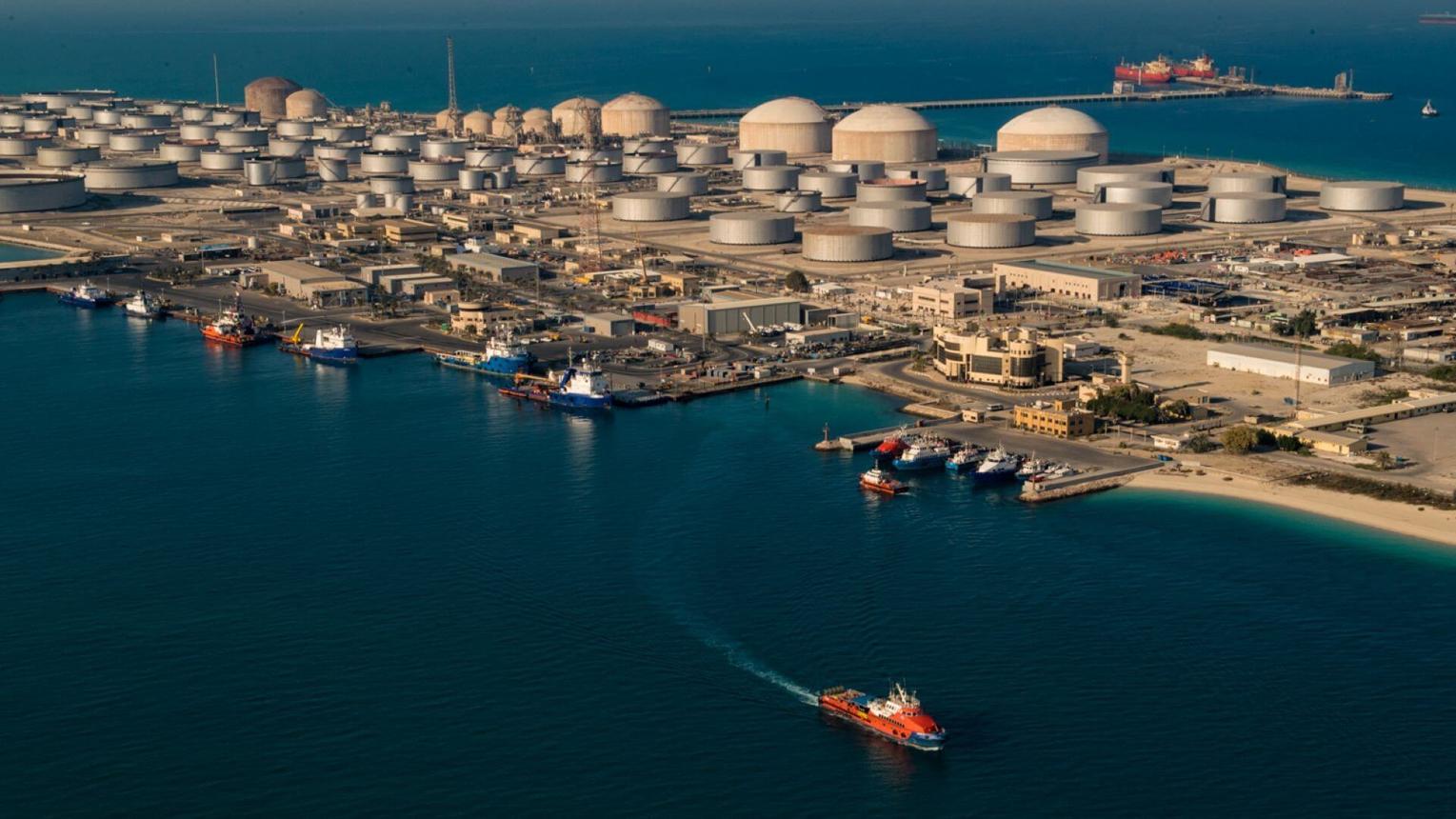
Riyadh, Saudi Arabia, 26 November – Brussels Morning Newspaper – Yemen’s Houthi movement has claimed responsibility for an attack on Saudi Arabia’s Ras Tanura oil refinery, raising fresh concerns about the security of one of the world’s most strategically important energy facilities and the potential consequences for international oil markets.
- Houthis announce attack on major Saudi energy facility
- Why Ras Tanura matters to Saudi Arabia and global oil supplies
- Drone interceptions add to Saudi security concerns
- Middle East tensions create uncertainty for international energy markets
- Saudi Arabia and the Houthis: Background to the conflict
- Previous attacks raise concerns about Saudi energy infrastructure
- What the escalation means for Europe and Belgium
- What happens next?
The reported incident on 25 November 2026 comes amid escalating tensions involving Saudi Arabia and the Iran-aligned Houthi movement. Satellite imagery reportedly showed thick black smoke above the industrial complex, while a source familiar with the incident confirmed that an attack had taken place, according to Reuters.
However, the full extent of the damage, the precise weapons used and the impact on refinery operations have not been independently established.
The development has attracted international attention because Ras Tanura is a major component of Saudi Arabia’s energy infrastructure. Any prolonged disruption could affect oil processing, transportation and export operations, with implications for global energy markets and economies, including those of European Union member states.
Houthis announce attack on major Saudi energy facility
On 25 November, Houthi military spokesperson Yahya Saree announced that the movement had targeted the Ras Tanura facility.
The group claimed that its operation had successfully struck the industrial complex and caused fires.
Reuters reported that a source familiar with the incident confirmed that an attack had occurred. Satellite imagery from NASA and Planet Labs also showed a substantial plume of smoke above the facility.
These developments provide evidence of an incident at the site, but the available information does not establish the complete scale of the damage or confirm whether the refinery was forced to suspend operations.
Saudi authorities and Saudi Aramco had not immediately provided a detailed public response in the reporting cited here.
The distinction matters because statements from parties involved in an armed confrontation should not automatically be treated as independently verified accounts.
Why Ras Tanura matters to Saudi Arabia and global oil supplies
Ras Tanura, situated on Saudi Arabia’s eastern coast along the Persian Gulf, is one of the kingdom’s most important energy centres.
The refinery has a processing capacity of approximately 550,000 barrels of crude oil per day and is connected to a major oil export terminal.
Its strategic importance extends beyond refining. The wider industrial complex forms part of the infrastructure through which Saudi Arabia processes and transports energy products to international markets.
An attack on such a facility therefore raises concerns about more than immediate physical damage.
If disruptions persist, they could affect supply expectations, shipping arrangements, insurance costs and investor confidence.
Saudi Arabia remains one of the world’s leading oil producers and exporters. Consequently, developments affecting its major energy infrastructure are closely monitored by governments, traders and energy companies.
Drone interceptions add to Saudi security concerns
The reported attack came as Saudi Arabia faced additional security incidents.
According to reporting by Anadolu Agency, the Saudi-led military coalition said its air defences intercepted and destroyed four drones over Ras Tanura on 25 November.
Another incident occurred in Riyadh on 24 November, when a drone reportedly struck a tower in the King Abdullah Financial District, injuring 11 people, according to Saudi Civil Defense information cited by Anadolu Agency.
Coalition spokesperson Turki al-Maliki attributed the attack to the Houthis and warned of a response.
The incidents have increased concerns about the vulnerability of Saudi Arabia’s strategic infrastructure and major urban centres.
Nevertheless, the circumstances of individual attacks, their targets and the extent of damage require separate verification.
Middle East tensions create uncertainty for international energy markets
The latest developments have wider implications because they coincide with concerns about maritime security in the Persian Gulf and surrounding waterways.
The Strait of Hormuz, which connects the Persian Gulf with the Gulf of Oman, is one of the world’s most important energy shipping corridors.
A substantial proportion of internationally traded oil passes through the waterway, making its security essential to global energy supply chains.
Reuters reported on 26 November that concerns over shipping security intensified following Iranian state media reports of oil tankers striking mines in the strait. These reports concern a separate development and should not be confused with the Houthi-claimed attack on Ras Tanura.
The combination of risks to shipping routes and energy infrastructure has created additional uncertainty for oil markets.
For European countries, this is particularly relevant because international crude prices influence fuel costs, transportation expenses and broader economic conditions.
Belgium, as an EU member state and an important European logistics centre, is also exposed to changes in international energy and shipping conditions.
However, there is currently no established evidence that the Ras Tanura incident has directly disrupted Belgian energy supplies.
Saudi Arabia and the Houthis: Background to the conflict
The confrontation between Saudi Arabia and the Houthi movement is rooted in Yemen’s prolonged political and military conflict.
The Houthis took control of Yemen’s capital, Sanaa, in 2014, triggering a wider conflict involving the internationally recognised Yemeni government and regional powers.
Saudi Arabia led a military coalition in support of the Yemeni government in 2015. Since then, the conflict has developed into a broader regional security challenge involving missile attacks, drones, maritime threats and military operations.
The Houthis have repeatedly targeted Saudi territory, including infrastructure and strategic locations. Saudi Arabia, in turn, has accused the movement of threatening civilian and economic installations.
The latest incidents should therefore be understood within the context of a conflict that has repeatedly threatened regional stability and international trade.
Previous attacks raise concerns about Saudi energy infrastructure
Saudi Arabia has also reported earlier incidents involving its oil infrastructure.
In a communication submitted to the United Nations Security Council on 10 November 2026, the Saudi government described attacks involving an administrative building belonging to Saudi Aramco in Riyadh and the kingdom’s East-West oil pipeline.
According to the Saudi communication, the Aramco building was struck by fragments on 8 November, while an attack on the pipeline on 9 November caused a small fire in the Medina region.
These details represent Saudi Arabia’s official account and should be attributed accordingly.
The East-West pipeline is strategically important because it transports crude oil from eastern Saudi Arabia towards Yanbu on the Red Sea coast.
It provides an alternative route for exporting oil when transportation through the Strait of Hormuz faces security risks.
Repeated incidents involving such facilities could increase the pressure on Saudi Arabia to strengthen the protection of its energy infrastructure.
What the escalation means for Europe and Belgium
Although the latest incident occurred thousands of kilometres from Brussels, its potential economic implications extend to Europe.
International oil markets are sensitive to developments involving major producers, particularly when incidents threaten production facilities or important shipping routes.
For Belgium, the consequences could emerge through changes in international fuel prices, transport costs and energy-market expectations.
The Port of Antwerp-Bruges is an important centre for international trade, industrial activity and energy-related logistics. Disruptions to maritime transportation routes can therefore have wider implications for European businesses and supply chains.
However, it would be premature to conclude that the reported attack will lead directly to higher Belgian petrol prices or an immediate shortage of energy supplies.
The actual impact will depend on the extent of damage, the duration of any operational disruption and whether further incidents affect regional shipping.
For EU policymakers, the situation also reinforces the importance of diversified energy supplies, secure maritime corridors and international cooperation on energy security.
What happens next?
The immediate questions concern the condition of the Ras Tanura facility and whether its operations have been affected.
A detailed statement from Saudi Aramco or Saudi authorities would help clarify the extent of the damage and establish whether the incident has affected refining or export activities.
International energy markets will also monitor any further developments involving Saudi infrastructure and the Strait of Hormuz.
The Houthi movement has indicated that it intends to continue its military operations, raising concerns about further attacks. However, the timing, location and scale of any future operations remain uncertain.
Diplomatic efforts to prevent further escalation will remain important, particularly given the potential consequences for regional stability and international trade.
For now, the reported attack highlights the growing vulnerability of strategic energy infrastructure in a region that remains central to the global economy. Whether the incident develops into a wider disruption will depend on the damage assessment, Saudi Arabia’s response and the course of the broader regional confrontation.