BRUSSELS, 1 November – Brussels Morning Newspaper – The European Union is advancing its €90 billion financial assistance programme for Ukraine, with the EU Ukraine loan providing critical funding for defence procurement, government operations and economic stability as Russia’s war continues.
The European Commission’s published financial figures show that €19.8 billion has been disbursed under the programme, which covers 2026 and 2027. The funding is designed to help Ukraine maintain essential public services while strengthening its military capabilities.
EU Allocates €60 Billion for Defence and €30 Billion for Budget Support
The financial package divides assistance into two principal components. Approximately €60 billion is designated for defence-related expenditure, including military equipment and investment in defence manufacturing capacity.
The remaining €30 billion supports Ukraine’s wider economy and public finances through macro-financial assistance and the Ukraine Facility.
According to the European Commission, the €19.8 billion already disbursed comprises €15.8 billion for defence procurement, €3.2 billion in macro-financial assistance and €800 million through the Ukraine Facility.
The programme is financed through borrowing on international capital markets, backed by the EU budget. Its implementation includes conditions relating to financial accountability, governance and the rule of law.
European Commission Outlines Ukraine Financing Strategy
The European Council initially agreed to the €90 billion package in December 2025. The European Commission subsequently presented legislative proposals in January 2026, and the Council completed the essential legislative framework on 23 April.
The Council approved arrangements making €45 billion accessible during 2026, subject to the programme’s implementation requirements.
This included €28.3 billion for defence industrial capacity and €16.7 billion divided equally between macro-financial assistance and the Ukraine Facility.
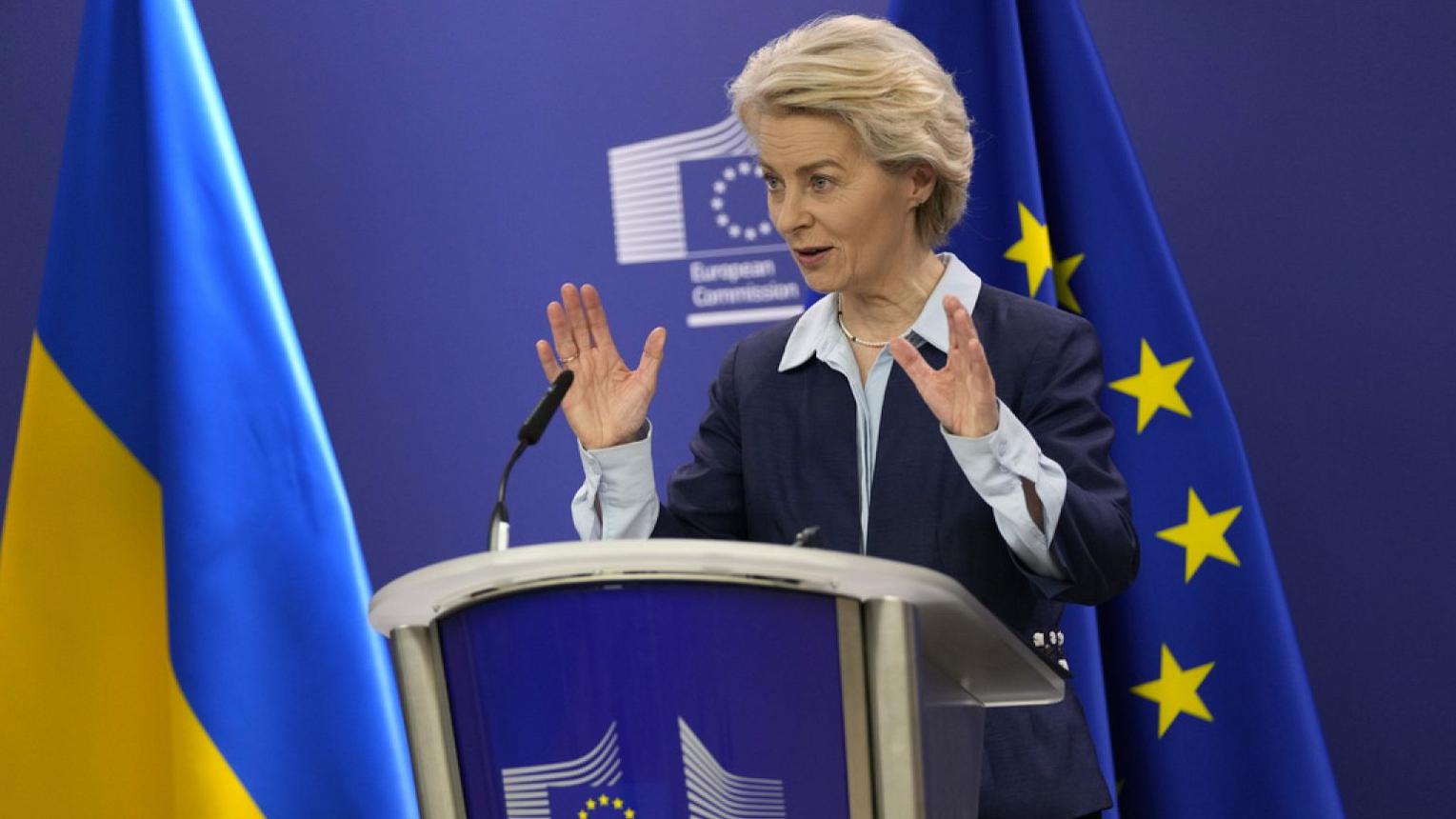
European Commission President Ursula von der Leyen explained the purpose of the financing when presenting the proposals in January.
“We all want peace for Ukraine. And for that Ukraine must be in a position of strength,” she said.
The Commission described the programme as a means of providing predictable financial assistance while supporting Ukraine’s security and economic resilience.
EU Ukraine Loan Strengthens European Defence Cooperation
The assistance programme also supports closer cooperation between Ukrainian and European defence manufacturers.
Under the financing framework, Ukraine can purchase eligible military equipment from suppliers in Ukraine, EU member states and other participating countries, subject to applicable procurement conditions.
In July 2026, EU member states approved the United Kingdom’s participation in the programme, expanding opportunities for Ukraine to obtain defence equipment from British manufacturers.
The Council said the arrangement would help Ukraine meet urgent military requirements while strengthening cooperation between European defence industries.
Why the Financial Package Matters for Ukraine
Ukraine continues to face substantial financial pressures resulting from Russia’s full-scale invasion, launched in February 2022.
Military expenditure, damaged infrastructure and the cost of maintaining essential government services have placed significant demands on public finances.
The EU Ukraine loan is intended to reduce uncertainty over available funding while allowing Ukrainian authorities to plan defence purchases and public expenditure over a longer period.
For European governments, the programme also represents a commitment to Ukraine’s sovereignty and territorial integrity.
The financing framework provides for repayment linked to reparations owed by Russia to Ukraine, while the EU has reserved its legal options concerning immobilised Russian assets.
What Happens Next for EU Financial Assistance?
The European Commission will continue implementing the approved financing arrangements, with further disbursements governed by Ukraine’s financial requirements and compliance with programme conditions.
The remaining assistance is intended to support Ukraine through 2027, although individual payment dates and amounts depend on the relevant implementation decisions.
The EU Ukraine loan remains a central part of Europe’s financial and defence assistance strategy, supporting Kyiv’s ability to maintain government services and strengthen its defence during the continuing conflict.
The next significant developments will concern additional funding releases, oversight of expenditure and progress towards the programme’s agreed objectives.
Sources: European Commission, Council of the European Union, European Parliament and the European Commission’s Directorate-General for Enlargement and Eastern Neighbourhood.