BRUSSELS, Belgium, 30 October, (Brussels Morning Newspaper) – EU protectionism has become a growing concern for Germany after Chancellor Friedrich Merz pledged to raise objections from Asian trading partners about proposed European industrial policies that could create additional barriers to international commerce.
The warning follows Merz’s diplomatic visits to Japan, Singapore and South Korea, where discussions focused on economic cooperation, industrial competitiveness and the future of international trade.
According to Reuters, Asian partners expressed concerns that the European Union’s proposed Industrial Accelerator Act could disadvantage overseas suppliers through requirements favouring European-made products.
Merz said he would communicate those concerns to policymakers in Berlin and Brussels, highlighting the difficulties facing European leaders as they attempt to strengthen domestic manufacturing while maintaining international partnerships.
The development comes amid growing uncertainty over global trade, American tariff policies and competition from China’s state-supported industrial sectors.
Germany Raises Concerns Over EU Protectionism
Germany’s warning comes as the European Commission advances measures intended to strengthen industrial production and reduce dependence on foreign suppliers.
The Industrial Accelerator Act, proposed on 4 March 2026, seeks to increase demand for European-made products while encouraging investment in strategic industries.
The proposal includes targeted European-origin and low-carbon requirements in public procurement and public support schemes.
However, critics are concerned that these measures could make it more difficult for international manufacturers to compete for certain European contracts.
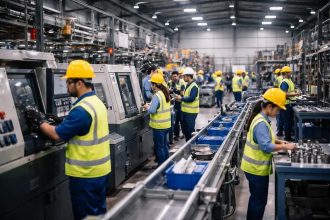
For Germany, EU protectionism presents a particular challenge because its economy relies heavily on exports, international supply chains and access to overseas markets.
German automotive manufacturers, engineering companies and industrial suppliers maintain extensive commercial relationships across Asia.
Restrictions affecting those relationships could create additional costs for businesses already facing intense international competition.
Friedrich Merz Defends Open International Trade
Speaking at the Asia-Pacific Conference of German Business in Seoul on 30 October, Merz emphasised the importance of protecting international trade and strengthening cooperation between like-minded countries.
He stated:
“We want to offer opportunities beyond bilateral agreements.”
The Chancellor argued that Germany and its partners should defend and further develop the rules-based global economic order.
His remarks reflected concerns about increasing trade restrictions and the changing economic policies of major global powers.
Merz also met South Korean President Lee Jae Myung on 29 October, with both leaders agreeing to strengthen security cooperation.
South Korea’s Industry Ministry reported that German and South Korean companies and organisations signed nine memoranda of understanding covering areas including energy, electricity and biohealth.
The agreements demonstrate Germany’s interest in expanding economic cooperation with Asian partners while European industrial policy remains under discussion.
EU Protectionism and the Industrial Accelerator Act
The European Commission introduced the Industrial Accelerator Act as part of its broader efforts to improve industrial competitiveness and support cleaner manufacturing.
According to the Commission, the legislation aims to strengthen European production, simplify investment procedures and encourage demand for low-carbon technologies.
The measures cover strategically important sectors, including steel, aluminium, cement, automotive manufacturing and clean technologies.
European policymakers argue that stronger domestic industrial capabilities are necessary to address supply-chain vulnerabilities and competition from heavily subsidised overseas producers.
However, the debate over EU protectionism raises questions about whether preferential purchasing requirements could affect established international trade relationships.
The Commission’s proposals are not equivalent to a general ban on imported products. Instead, they introduce targeted conditions for certain procurement arrangements and public support programmes.
Their final scope will depend on negotiations involving European lawmakers and national governments.
Why EU Protectionism Matters for European Businesses
The disagreement carries significant implications for European manufacturers, exporters, importers and international investors.
Businesses purchasing components from overseas suppliers could face additional compliance requirements if European sourcing conditions become law.
At the same time, manufacturers producing goods within the European Union could benefit from stronger demand generated through public procurement and industrial support measures.
Germany’s concerns are particularly relevant because its manufacturing industries depend on both imported components and international customers.
The debate also highlights a broader economic challenge facing Brussels.
European policymakers want to strengthen industrial resilience, protect strategic technologies and reduce dependence on vulnerable supply chains.
Nevertheless, EU protectionism could become a source of disagreement with international partners if proposed measures are considered discriminatory or unnecessarily restrictive.
Maintaining constructive trade relationships while responding to unfair competition will remain an important consideration for European institutions.
EU Protectionism Debate Reflects Wider Global Trade Pressures
The latest disagreement follows increasing tensions within the international trading system.
During his Asian tour, Merz called for closer cooperation between European and Asian economies to defend established international trade rules.
He also proposed stronger engagement with countries participating in the Comprehensive and Progressive Agreement for Trans-Pacific Partnership.
The initiative reflects Germany’s interest in diversifying economic relationships amid concerns about American trade restrictions and China’s industrial policies.
For European businesses, uncertainty surrounding international market access has increased the importance of predictable trading arrangements.
The debate over EU protectionism therefore extends beyond industrial legislation to broader questions about Europe’s economic relationships with Asia and other major markets.
What Happens Next for EU Trade Policy?
The Industrial Accelerator Act remains a legislative proposal requiring agreement between the European Parliament and EU member states.
According to Reuters, approval is expected to be pursued in 2027, although the final provisions have not yet been settled.
Merz has pledged to bring Asian trading partners’ concerns to policymakers in Germany and Brussels.
Further discussions will determine how European sourcing requirements are balanced against international trade commitments and the needs of domestic manufacturers.
For Brussels, the challenge is to strengthen Europe’s industrial competitiveness without introducing unnecessary obstacles to international cooperation.
The outcome of the EU protectionism debate could influence European industrial policy, international market access and the bloc’s relationships with important trading partners in the years ahead.