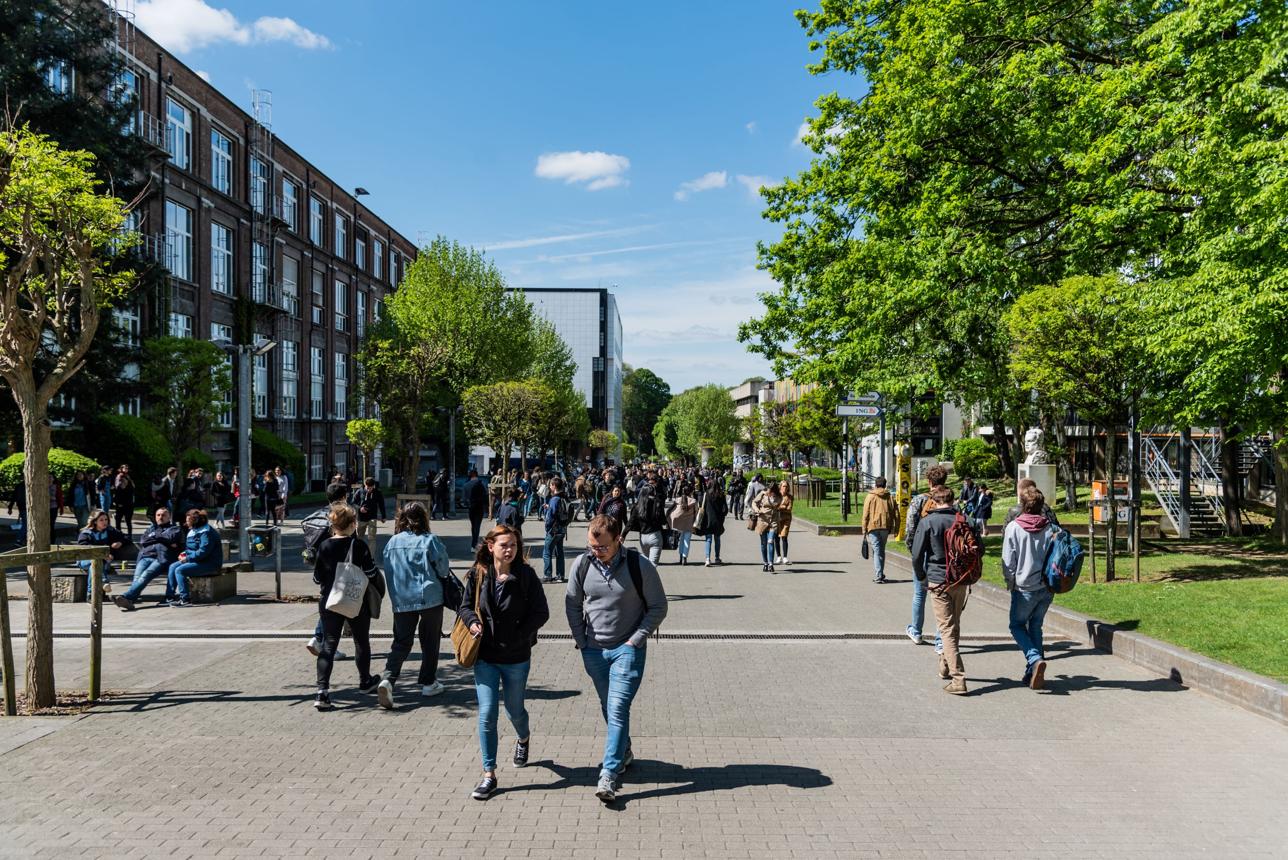
Brussels, Belgium, 23 October, (Brussels Morning Newspaper) – A Brussels student blockade disrupted access to the Université libre de Bruxelles (ULB) Solbosch campus in Ixelles on Thursday, 22 October, as demonstrators protested rising university tuition fees and proposed education funding reductions. The action highlighted growing concerns about the affordability of higher education in French-speaking Belgium.
Dozens of students gathered outside the campus from approximately 6 am, erecting temporary barricades and displaying protest banners. The demonstration was organised by the Gen Z Contre Attaque collective, which opposes education reforms affecting students and academic institutions.
Although protesters sought to disrupt teaching activities, access was not completely closed. Students wishing to attend classes and delivery vehicles were reportedly allowed through certain entrances.
Brussels student blockade targets higher education costs
The demonstration centred on increases in university registration fees, which protesters argue could make higher education less accessible to families with limited financial resources.
According to Belgian reporting, the standard annual registration fee has risen from approximately €835 to nearly €1,200, representing an increase of around 43%.
Anadolu Agency, citing Belgian media and figures attributed to the Wallonia-Brussels Federation, reported that the increase affects approximately 58% of higher education students.
Protesters also raised concerns about education funding, public transport costs and changes to the regulatory framework governing higher education.
The collective includes students and representatives from educational organisations, researchers and university employees.
Student organisers explain opposition to reforms
Student activist Valentin Deberdt Detheux, who participated in coordinating the demonstration, told Brussels broadcaster BRUZZ that protesters wanted to challenge policies they believe threaten affordable education.
He argued that increasing university fees could force families to reconsider whether they can afford to send their children to university.
The demonstrators also criticised wider public spending priorities and reductions in social services.
Their demands extend beyond tuition fees to the accessibility and financing of Belgium’s French-speaking education system.
The blockade was reported to have remained peaceful during Thursday morning, with demonstrators distributing information and speaking to students and lecturers.
Background to Belgium’s education protests
The campus action followed several demonstrations across French-speaking Belgium during October.
Students and education workers have opposed reforms involving tuition fees, institutional financing and working conditions.
Earlier demonstrations on 9, 12 and 17 October included confrontations between some protesters and police.
Reuters reported that a demonstration on 17 October attracted several hundred predominantly young participants concerned about education costs and reforms.
The Solbosch protest was a separate campus action, and reporting from Thursday morning described a comparatively calm atmosphere.
The demonstrations reflect a broader dispute over public spending and the financial pressures facing educational institutions and households.
Impact on Brussels universities and students
The disruption at ULB raises questions about how universities can maintain teaching activities while students exercise their right to demonstrate.
Higher registration fees could place additional pressure on students already managing accommodation, transport and everyday living expenses.
Campaigners fear that increased education costs may discourage some prospective students from enrolling or continuing their studies.
For universities, the dispute also highlights the challenge of maintaining educational services while operating within public funding constraints.
Education policy for French-speaking institutions falls primarily under the Wallonia-Brussels Federation, making its decisions central to the dispute.
What happens next for Brussels student protests?
Organisers have identified 17 November, International Students’ Day, as a date for further student mobilisation.
Deberdt Detheux told BRUZZ that preparations were already under way for a larger demonstration.
Separate calls for additional protests in Brussels have also circulated on social media.
However, no confirmed agreement reversing the disputed fee increases was established in the reporting reviewed for this article.
The latest campus action demonstrates that opposition to education reforms remains active, with students continuing to demand affordable access to university education.