Brussels (Brussels Morning Newspaper) October 21, 2026 – European Union leaders have collectively pledged to sustain and expand military, financial, and diplomatic support for Ukraine during a summit meeting in Brussels. The reaffirmation of European commitment follows publicly voiced criticism from United States President Donald Trump regarding Ukrainian leadership and shifting priorities in American foreign policy. Despite political unity demonstrated at the European Council summit, experts and economic data highlight significant structural challenges, including unequal financial burden-sharing across member states, strategic defense dependency on US infrastructure, and upcoming European domestic elections.
- European Leaders Welcome Ukrainian President to Brussels Summit
- Financial Commitments and Sanctions Strategy Under the European Union
- Strategic Defense Dependencies and Frontline Operational Challenges
- Analysis of Disparities in Economic Contributions Across Member States
- European Electoral Cycles and Potential Shifts in Long-Term Foreign Policy
European Leaders Welcome Ukrainian President to Brussels Summit
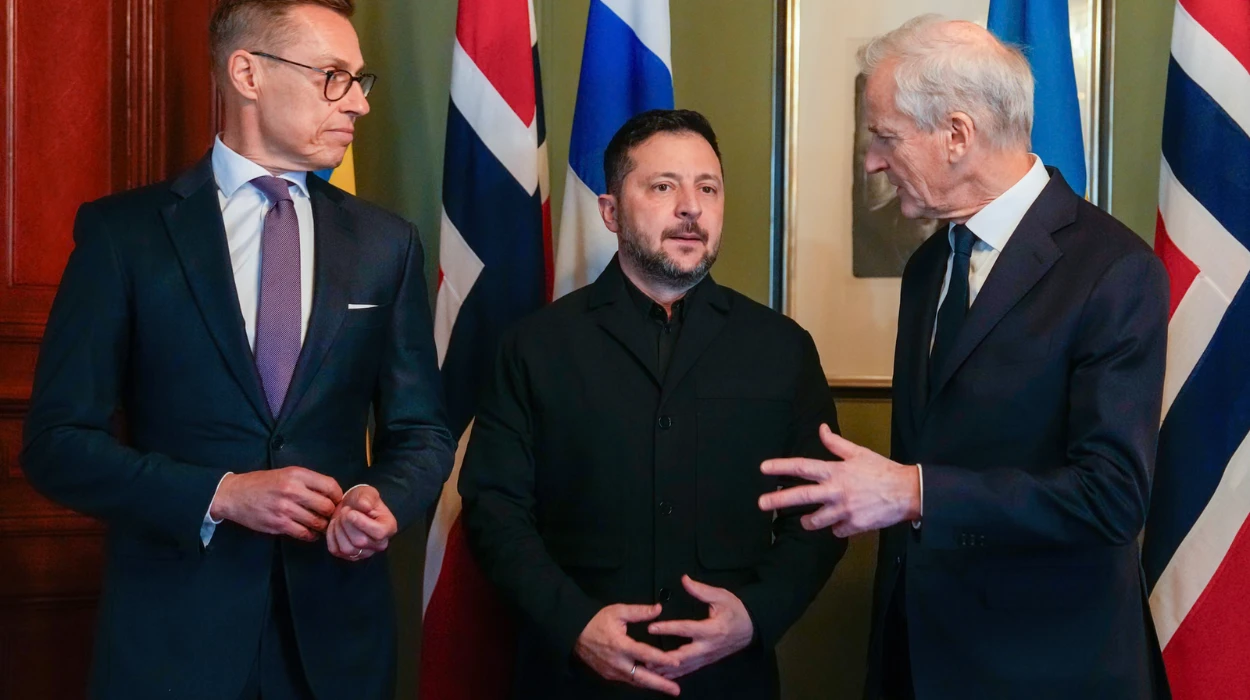
During a European Council summit convened at the European Union headquarters in Brussels, European leaders offered a warm reception to Ukrainian President Volodymyr Zelenskyy, standing to applaud and greet the wartime leader upon his arrival. European Council President António Costa delivered a joint statement alongside President Zelenskyy and European Commission President Ursula von der Leyen, explicitly stating that European nations would maintain their support for Kyiv.
“This is no time to withdraw the support to Ukraine,”
European Council President António Costa stated.
“This is no time to relieve Russia’s sanctions. Now it’s time to increase our support. To increase our pressure.”
Responding to the reception, President Zelenskyy expressed gratitude to European representatives, emphasizing the importance of securing consistent backing from European allies during ongoing hostilities.
The public demonstration of unity in Brussels came shortly after US President Donald Trump issued statements berating President Zelenskyy. President Trump asserted that dealing with the Ukrainian president was more difficult than dealing with Russian President Vladimir Putin and attributed rising global oil prices to Ukrainian policy decisions, omitting discussion on the impact of US policy regarding Iranian oil exports.
Financial Commitments and Sanctions Strategy Under the European Union
According to data compiled by the Kiel Institute for the World Economy through its Ukraine Support Tracker, total European financial, military, and humanitarian allocations to Ukraine between January 2022 and August 2026 reached €236 billion. This figure includes contributions from both EU institutions and non-EU European countries, such as the United Kingdom and Norway. By comparison, total bilateral allocations committed by the United States during the same period stood at €115 billion.
The European Union has continued to expand economic sanctions targeting Moscow. On July 23, 2026, the EU officially adopted its 21st package of sanctions against Russia. The measures introduced individual designations for 218 entities and individuals, alongside severe financial operational restrictions. Nearly all Russian commercial banks were rendered subject to asset freezes, with 33 financial institutions subjected to complete transaction bans and disconnection from the SWIFT international payment mechanism.
The 21st sanctions package also targeted shadow fleet oil operations, crypto-asset platforms assisting circumvention in third-party jurisdictions, and liquefied natural gas (LNG) terminal service providers controlled by Russian interests. In addition to sanction measures, European member states previously agreed on a €90 billion financial loan package for Ukraine to support government operations and state continuity. Concurrently, formal EU accession negotiations with Kyiv have proceeded, with additional negotiation clusters opened, while EU states continue providing temporary protection to approximately 4.4 million Ukrainian refugees.
Strategic Defense Dependencies and Frontline Operational Challenges
Despite ongoing policy declarations and economic funding measures, analysts point to several underlying vulnerabilities affecting Europe’s long-term capability to maintain its assistance strategy.
A primary challenge remains Europe’s operational reliance on US defense technology and military intelligence. Operational disruptions were observed following technical restrictions affecting US-operated SpaceX Starlink satellite systems, which are utilized extensively across frontline drone operations and civilian defense networks in Ukraine. President Zelenskyy stated that access to satellite internet infrastructure had been deliberately throttled, a charge that senior officials within the Trump administration explicitly denied.
Furthermore, Ukrainian air defense remains heavily dependent on US-manufactured Patriot missile interceptor systems to defend urban centers against ballistic missile strikes. President Zelenskyy publicly accused the Trump administration of blocking European partner nations from transferring existing domestic Patriot interceptor stocks to Ukrainian forces.
Analysis of Disparities in Economic Contributions Across Member States
Financial contributions within Europe also display marked variance across individual economies. Germany represents the largest individual European bilateral donor, allocating €54 billion to Ukraine since 2022. Analysis from the Kiel Institute notes that while Germany’s spending is substantial, four Nordic nations—Denmark, Sweden, Norway, and Finland—have collectively allocated greater aid combined relative to their population base.
When measured as a percentage of gross domestic product (GDP), Nordic and Baltic countries lead overall contributions. Denmark has committed aid equivalent to 4.17 per cent of its national GDP, while Estonia has committed 3.77 per cent. By comparison, Germany’s allocations account for 1.49 per cent of its GDP, France stands at 1.1 per cent, Italy at 1.0 per cent, and the United Kingdom at 0.86 per cent.
European Electoral Cycles and Potential Shifts in Long-Term Foreign Policy
Long-term European support faces political uncertainties as several key European Union member states prepare for upcoming national elections. General elections are scheduled across Spain, France, Poland, and Italy—four of the five most populous nations in the bloc. Mujtaba Rahman, managing director for Europe at the Eurasia Group, stated that political fragmentation across European capitals poses a primary long-term operational risk for Kyiv, citing the potential for economic and electoral realities to constrain future funding proposals by 2027.
Political developments in France are being closely monitored across European institutions. Marine Le Pen, leader of France’s National Rally, has gained domestic political support following recent urban civil unrest, rioting, and looting. Le Pen has stated that, if elected to the French presidency, she would move to end French bilateral military assistance to Ukraine within six months, citing national economic limitations.
Le Pen additionally declared her opposition to the proposed €100 billion Ukraine financing facility drafted within the European Union’s upcoming €2 trillion 2028–2034 Multiannual Financial Framework (MFF) budget. She indicated an intention to reduce France’s national contributions to the central EU budget by half, while reiterating opposition to Ukrainian accession to the European Union, characterizing potential membership as economically damaging to French sovereignty.
While Le Pen maintained her condemnation of Russian military aggression and noted support for baseline financial aid, her fiscal proposals have raised discussions within Brussels regarding potential political deadlock over future EU budget negotiations.