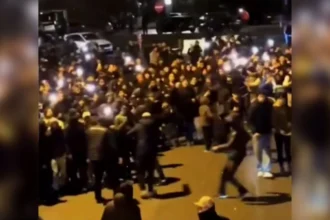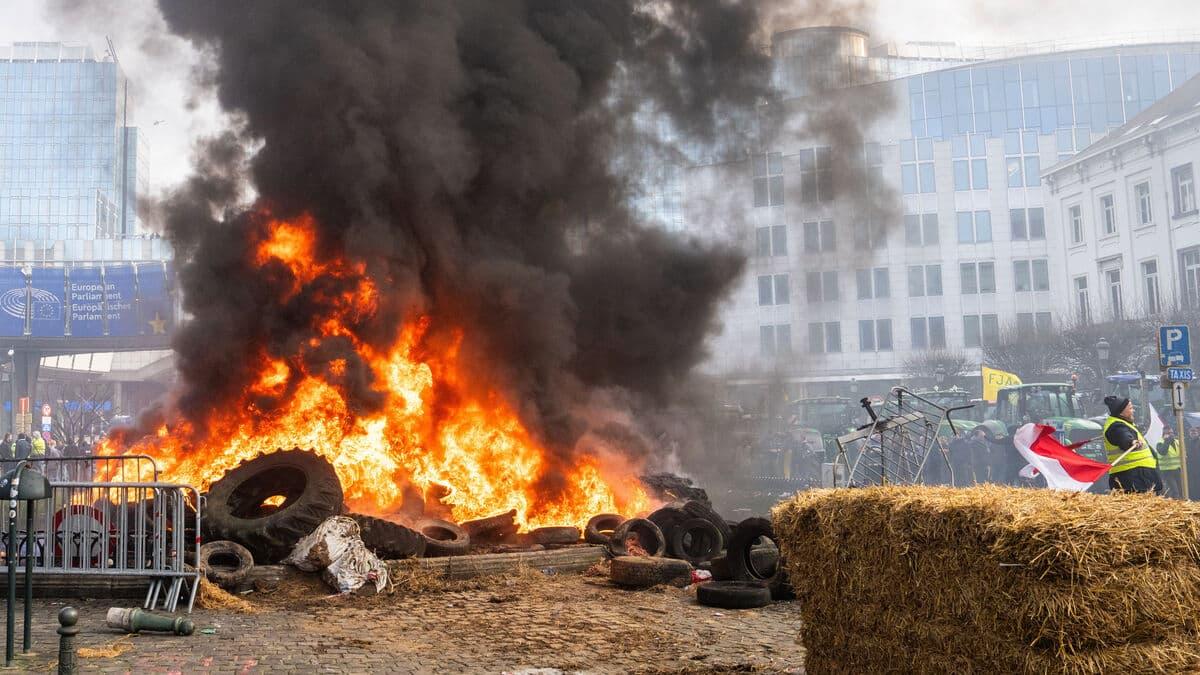
Brussels, 18 October, (Brussels Morning Newspaper) – Brussels police clashes erupted on Saturday, 17 October, as hundreds of demonstrators confronted security forces near Brussels-Midi railway station. Officers deployed tear gas and water cannon after protesters erected barricades and threw projectiles, intensifying tensions in the Belgian capital amid wider demonstrations over education costs, government spending and public services.
The disturbances followed several days of protests across Belgium, with authorities facing renewed pressure to maintain public order while protecting the right to peaceful assembly.
Brussels Police Clashes Escalate Near Midi Station
According to The Brussels Times, approximately 500 to 600 demonstrators gathered around the Europa Esplanade near Brussels-South railway station.
The demonstration began earlier in the morning around Brussels Central Station, where participants chanted anti-fascist slogans and criticised police actions.
Shortly before 13:00, confrontations intensified when some demonstrators used construction barriers to advance towards police positions.
Officers responded with tear gas and water cannon, forcing groups back towards Brussels-Midi.
Reuters reported that several hundred predominantly young demonstrators participated in Saturday’s gathering. A Reuters witness also observed protesters overturning a vehicle during the unrest.
Belgian media identified many participants as anti-fascist activists, distinguishing Saturday’s gathering from earlier demonstrations involving school pupils.
Belgian Interior Minister Condemns Violent Unrest
Belgian Interior Minister Bernard Quintin strongly condemned the disturbances and announced support for officers responding to the confrontations.
In a statement published on X, Quintin said:
“What is unfolding in Brussels is no longer mere protest.”
He added that authorities would use necessary measures to restore order.
The minister’s comments followed reports of property damage and confrontations involving police and demonstrators.
Federal police were also supporting local officers as authorities worked to contain the disturbances.
Education Costs and Government Reforms Fuel Tensions
The latest confrontations occurred against a backdrop of growing public opposition to education reforms and government spending reductions.
Belgian student organisations have raised concerns about rising education costs and proposed changes they fear could restrict access to higher education.
Earlier demonstrations involved pupils, teachers and trade union representatives protesting against austerity measures.
On 12 October, clashes near Brussels-Midi resulted in ten arrests, including nine minors, according to reporting by Euronews.
The wider protest movement has also extended to Liège, where students have criticised education funding and difficulties obtaining study materials.
However, Saturday’s Brussels demonstration was predominantly associated with anti-fascist activists rather than being a direct continuation of the earlier school protests.
Violent Demonstrations Raise Public Safety Concerns
The disturbances have renewed attention on security around Brussels’ major transport infrastructure.
Brussels-Midi serves as an important domestic and international railway hub, connecting the Belgian capital with other European cities.
Confrontations near the station can disrupt movement through surrounding streets and create difficulties for commuters, residents and local businesses.
The events also highlight the challenge facing Belgian authorities in distinguishing peaceful demonstrators from individuals involved in violence.
While public demonstrations remain an important democratic right, attacks on officers and damage to property can result in criminal investigations.
What Happens Next After the Brussels Unrest?
Belgian authorities may examine evidence from Saturday’s confrontations to determine whether further enforcement action is warranted.
At the time of the initial reports, comprehensive official figures for injuries and arrests specifically linked to the 17 October disturbances had not been confirmed.
Further announcements from police or prosecutors would clarify whether individuals face charges connected to the violence.
Meanwhile, debates over education funding, living costs and government budget policies remain unresolved.
The Brussels police clashes have therefore placed renewed attention on both public security and the broader political concerns surrounding demonstrations across Belgium.