Belgium (The Brussels Morning Newspaper) – October 14, 2026 –Kazakhstan’s President Kassym-Jomart Tokayev has proposed establishing a practical partnership between Belgium’s Port of Antwerp-Bruges and Kazakhstan’s Caspian Sea ports of Aktau and Kuryk to expand trade and improve transport connections between Central Asia and Europe. The proposal was presented at the fourth meeting of the Kazakhstan-Belgium Business Council on 13 October 2026, attended by Belgian King Philippe. Tokayev also highlighted opportunities for cooperation in critical minerals, energy, petrochemicals, artificial intelligence and advanced manufacturing. The initiative forms part of broader efforts to strengthen bilateral economic relations during the Belgian monarch’s state visit to Kazakhstan.
- How Did Tokayev Present the Proposed Port Partnership?
- Why Are Aktau and Kuryk Important to Kazakhstan’s Trade Strategy?
- How Could the Partnership Support Kazakhstan’s Exports?
- What Role Does the Middle Corridor Play in the Initiative?
- Which Other Economic Sectors Did Tokayev Highlight?
- What Do the Economic Figures Reveal About Kazakhstan-Belgium Relations?
- How Did King Philippe’s State Visit Contribute to the Discussions?
- Background: Kazakhstan’s Efforts to Strengthen European Trade Connections
How Did Tokayev Present the Proposed Port Partnership?
President Kassym-Jomart Tokayev has called for closer cooperation between Kazakhstan’s ports of Aktau and Kuryk and Belgium’s Port of Antwerp-Bruges, identifying transport and logistics as important areas for strengthening economic relations between the two countries.
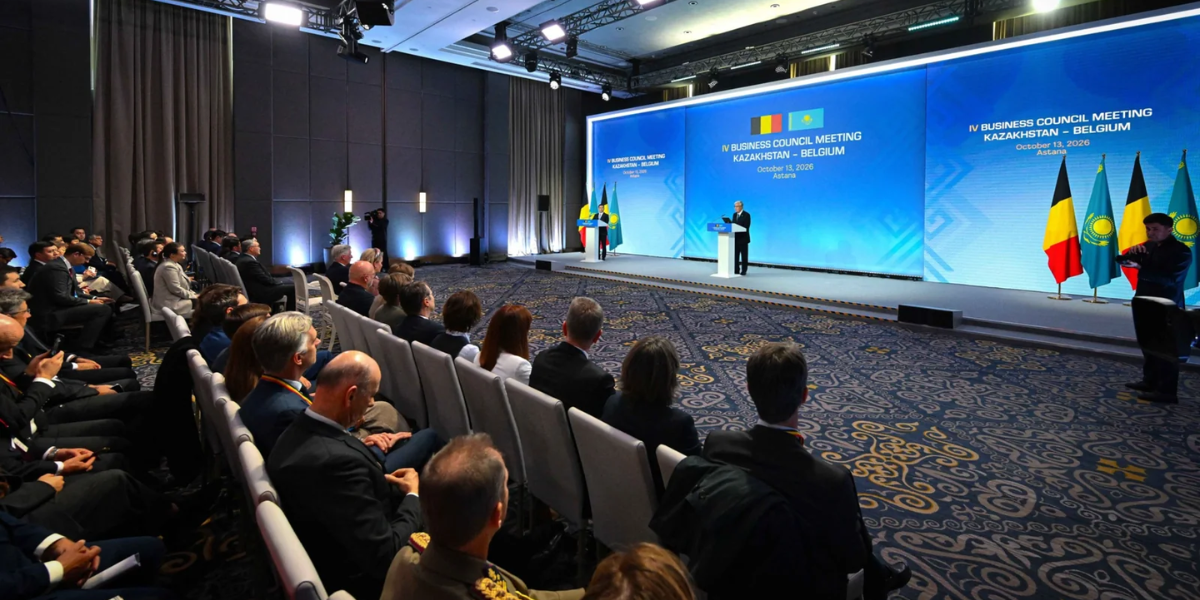
The proposal was presented during the fourth meeting of the Kazakhstan-Belgium Business Council on 13 October 2026. King Philippe of the Belgians attended the meeting alongside the Kazakh president as part of his state visit to Kazakhstan.
According to Kazakhstan’s presidential press service, Akorda, Tokayev said Kazakhstan was investing substantially in modernising railway and road infrastructure, seaports and terminals along the Trans-Caspian International Transport Route, commonly known as the Middle Corridor.
He said Belgium’s experience as a major European logistics centre could support Kazakhstan’s ambitions to expand international trade.
Tokayev expressed the expectation that a practical partnership would connect Antwerp-Bruges with Aktau and Kuryk, potentially giving Kazakh producers broader access to markets for metal products, petrochemicals and agricultural goods.
The proposal was presented as part of a wider economic cooperation agenda rather than as a confirmed new shipping service. The reports published on 13 October described Tokayev’s call for a partnership but did not announce a completed port agreement or provide a timetable for implementation.
The initiative follows earlier discussions between Kazakh representatives and officials in Antwerp about direct cooperation between the ports. Those discussions included port management, digitalisation, logistics and the possible use of Antwerp as a European distribution hub for Kazakh exports.
Why Are Aktau and Kuryk Important to Kazakhstan’s Trade Strategy?
Aktau and Kuryk are located on Kazakhstan’s Caspian Sea coast and form part of the country’s transport infrastructure connecting Central Asia with routes towards Europe.
Their strategic importance is linked to the Middle Corridor, which connects China and Central Asia with Europe through the Caspian Sea and the South Caucasus. The route uses a combination of railways, ports and maritime connections to move freight across several countries.
Kazakhstan has been investing in railway and road infrastructure, seaports and cargo terminals along this corridor. The modernisation programme is intended to strengthen the country’s capacity to transport goods through its territory and support international trade.
A closer relationship with Antwerp-Bruges would connect Kazakhstan’s Caspian transport infrastructure with one of Europe’s established maritime and logistics centres. It could provide a framework for cooperation on cargo handling, freight distribution and the movement of goods between the two regions.
The earlier discussions between Kazakhstan’s ambassador to Belgium, Roman Vasilenko, and representatives of Antwerp’s business and port communities addressed practical areas for collaboration. These included port infrastructure management, smart-port technologies, multimodal logistics, digitalisation, decarbonisation and training for port specialists.
The discussions also considered the potential use of Antwerp as a European logistics and distribution hub for Kazakh metals, critical raw materials, petrochemical products and agricultural goods. A framework document covering cooperation between Antwerp-Bruges, Aktau and Kuryk was proposed during those earlier exchanges.
However, a proposal for closer cooperation should not be confused with a fully operational transport arrangement. The public reports available on 13 October did not establish that a new direct shipping service had begun or that specific freight volumes had been agreed.
How Could the Partnership Support Kazakhstan’s Exports?
Tokayev identified metal products, petrochemicals and agricultural goods as the principal categories that could benefit from broader market access through closer port cooperation.
Kazakhstan has significant industrial and agricultural production, but exporters moving goods to distant markets depend on transport infrastructure, freight-handling capacity and connections between different modes of transport.
A partnership involving Aktau, Kuryk and Antwerp-Bruges could bring port authorities and logistics businesses together to examine how those connections might be improved.
For exporters, relevant areas could include coordinating cargo transfers, improving the exchange of logistics information, developing distribution arrangements and strengthening links between transport operators. These are potential areas of cooperation, rather than confirmed outcomes of the latest meeting.
Antwerp-Bruges is an established European port complex with connections to industrial and distribution networks. Its experience in handling international cargo is one reason Kazakhstan has expressed interest in working with Belgian logistics institutions.
The earlier talks in Antwerp also considered training opportunities for Kazakh port specialists and the possible exchange of expertise in port operations and digital systems. Such cooperation could complement investment in physical infrastructure by developing the skills and processes required to manage international freight.
The proposal also fits Kazakhstan’s broader effort to expand the range of international markets available to its producers. By strengthening transport links with European logistics centres, the country is seeking opportunities to connect its industrial output and agricultural production with international customers.
The extent of any resulting benefits would depend on the practical arrangements eventually adopted, including transport capacity, commercial agreements and the participation of port operators and freight companies. No specific export targets or projected financial returns were announced in the reports of Tokayev’s proposal.
What Role Does the Middle Corridor Play in the Initiative?
The Middle Corridor, formally known as the Trans-Caspian International Transport Route, is an important component of Kazakhstan’s international transport strategy.
The route links parts of Asia and Central Asia with Europe through the Caspian Sea and the South Caucasus. Depending on the origin and destination of cargo, freight movements involve rail transport, maritime crossings and onward connections through participating countries.
Kazakhstan’s investments in railway infrastructure, roads, ports and terminals are intended to strengthen its ability to support these movements.
The proposed port partnership would extend discussions about the corridor into a more direct relationship with a European logistics centre. Instead of treating transport infrastructure solely as a domestic development priority, the proposal seeks closer coordination between facilities at the Caspian end of the route and distribution networks in Europe.
Earlier meetings between Kazakh officials and Antwerp representatives addressed the development of the Trans-Caspian route alongside possible cooperation on port technology and logistics. The parties also discussed the potential to establish direct institutional links between the port authorities.
For the proposed arrangement to progress, the relevant organisations would need to determine the scope of their cooperation and identify workable commercial and operational arrangements. The latest announcement did not specify a new timetable, a dedicated freight service or agreed cargo volumes.
The initiative nevertheless places port cooperation within the wider discussion about Kazakhstan’s transport links with European markets.
Which Other Economic Sectors Did Tokayev Highlight?
Transport was one of several areas raised at the Kazakhstan-Belgium Business Council. Tokayev also identified opportunities in technology, energy, petrochemicals and industrial production.
How Could Artificial Intelligence and Semiconductor Research Support Cooperation?
Tokayev identified artificial intelligence and the technology industry as priorities for strengthening the bilateral relationship.
He referred to Kazakhstan’s AlemAi and Alatau City initiatives, which he said were intended to support the development of advanced industries. He also highlighted Belgium’s capabilities in semiconductor research as an opportunity for joint projects and partnerships.
The comments broadened the agenda beyond traditional trade and infrastructure, bringing technology development into the discussion.
The reported statements did not establish specific new semiconductor investments or joint artificial intelligence projects arising from the meeting. They identified areas in which the two countries could explore further cooperation.
What Energy and Petrochemical Opportunities Were Discussed?
Tokayev described Kazakhstan as a reliable supplier of oil to European markets and said there was considerable scope for cooperation in renewable energy, energy efficiency, industrial decarbonisation and hydrogen production.
He invited Belgian companies to consider joint projects involving advanced processing, chemicals and higher-value polymer products.
The emphasis on processing is relevant to Kazakhstan’s stated ambition to develop domestic industrial capacity and produce goods with greater added value rather than relying exclusively on the export of raw materials.
The proposals form part of a wider agenda covering industrial development and energy cooperation. The reports did not announce a new energy supply contract or confirm a specific hydrogen or renewable-energy project arising from the business council.
Why Are Critical Minerals Part of the Bilateral Agenda?
Critical minerals were another important subject during the Belgian state visit.
Tokayev said Kazakhstan already produced 21 of the 34 raw materials considered critical to European industry. He also noted that Kazakhstan supplied Belgium with titanium and molybdenum products.
He welcomed the Kazakhstan-Belgium Roundtable on Critical Minerals held during the visit and called for practical investment and technology projects.
The president said Kazakhstan wanted to strengthen its domestic processing industry and manufacture more high-value goods. He also invited Belgian partners to explore geological exploration, advanced processing and metals recycling.
Tokayev cited cooperation between Belgian engineering company John Cockerill and Kazakhstan’s Qarmet on new galvanising and coating facilities as an example of industrial collaboration.
The proposed facilities illustrate the type of manufacturing cooperation discussed by the president, although the latest announcement did not provide a comprehensive project schedule or establish that all the wider critical-minerals proposals had been agreed.
What Do the Economic Figures Reveal About Kazakhstan-Belgium Relations?
The business council took place against a background of established commercial links between the two countries.
According to Kazakhstan Today, reporting on the meeting on 13 October, Belgian companies had invested more than US$15 billion in Kazakhstan’s economy over the preceding 20 years. The report also stated that more than 100 Belgian companies and joint ventures were operating in Kazakhstan.
Bilateral trade increased by nearly 10 per cent during the first eight months of 2026, according to the same report. The published account did not provide a corresponding total trade value alongside that growth figure.
Tokayev also described Kazakhstan as Belgium’s largest trading partner in Central Asia, underscoring the existing importance of the relationship within the region.
These figures provide context for the discussions about ports, energy, minerals and technology. The proposed partnership is being considered within an established commercial relationship involving investment and businesses operating in both countries.
However, the investment and trade figures do not establish the financial value of the proposed port arrangement itself. No separate investment commitment or forecast for additional bilateral trade was announced as part of the port proposal.
How Did King Philippe’s State Visit Contribute to the Discussions?
King Philippe and Queen Mathilde visited Kazakhstan from 11 to 14 October 2026 at the invitation of President Tokayev.
The visit included discussions on bilateral relations, economic cooperation and opportunities for businesses in both countries. The fourth meeting of the Kazakhstan-Belgium Business Council provided a forum for addressing commercial priorities in the presence of the two heads of state.
The port proposal was one part of a wider agenda that included critical minerals, petrochemicals, engineering, energy and technology.
Tokayev also recalled King Philippe’s contribution to economic ties between the two countries, referring to a trade mission the monarch led to Kazakhstan 16 years earlier.
The visit followed earlier contacts between Kazakhstan’s diplomatic representatives in Belgium and Antwerp’s port and business communities. Those discussions had already identified possible cooperation between the ports and the development of technological links between innovation centres.
The state visit therefore brought the port initiative into a broader setting of bilateral political and economic engagement. The official statements and media reports described areas for cooperation, but they did not establish that every proposal discussed during the visit had resulted in a binding commercial agreement.
Background: Kazakhstan’s Efforts to Strengthen European Trade Connections
Kazakhstan is a landlocked country whose international freight routes depend on transport infrastructure and connections through neighbouring states. Its Caspian ports, railway network and road infrastructure form part of the system used to move goods between domestic production centres and foreign markets.
The Middle Corridor provides a route linking Central Asia with Europe through the Caspian Sea and the South Caucasus. Its operation requires coordination across different transport systems and national jurisdictions.
Belgium, meanwhile, provides access to established European maritime logistics and industrial networks through Antwerp-Bruges. The earlier discussions between Kazakh representatives and Antwerp institutions explored ways to connect those capabilities with Kazakhstan’s transport and export infrastructure.
The proposed partnership builds on those discussions by identifying a practical relationship between Antwerp-Bruges and the ports of Aktau and Kuryk as a priority for further cooperation. The immediate announcement concerns an intended partnership; a completed agreement, operational timetable and specific commercial commitments were not confirmed in the reports published on 13 October 2026.