Brussels (The Brussels Morning Newspaper) – October 13, 2026 – A public sector strike disrupted Brussels public transport on Monday, reducing metro and bus frequencies and suspending several tram services. Belgian railway operator SNCB-NMBS announced that around three in ten intercity trains would be cancelled, alongside the withdrawal of nearly all additional peak-hour P trains. The industrial action also affected rubbish collection, postal deliveries, schools and other public services as unions protested against the federal government’s planned budget cuts.
- Which Brussels Metro and Bus Services Were Running During the Strike?
- Which Brussels Tram Lines Were Cancelled or Partially Suspended?
- How Were Belgian National Railway Services Affected?
- Why Were Belgian Public Sector Workers Striking?
- Which Other Public Services Were Disrupted Across Brussels?
- What Happened During the Earlier Brussels Demonstration?
- When Could Further Belgian Industrial Action Take Place?
- Background: Belgium’s Budget Dispute and Public Sector Strikes
The strike, organised by public sector union CGSP-ACOD, formed part of wider industrial action across Belgium amid continuing disagreements over the government’s budget plans.
Which Brussels Metro and Bus Services Were Running During the Strike?
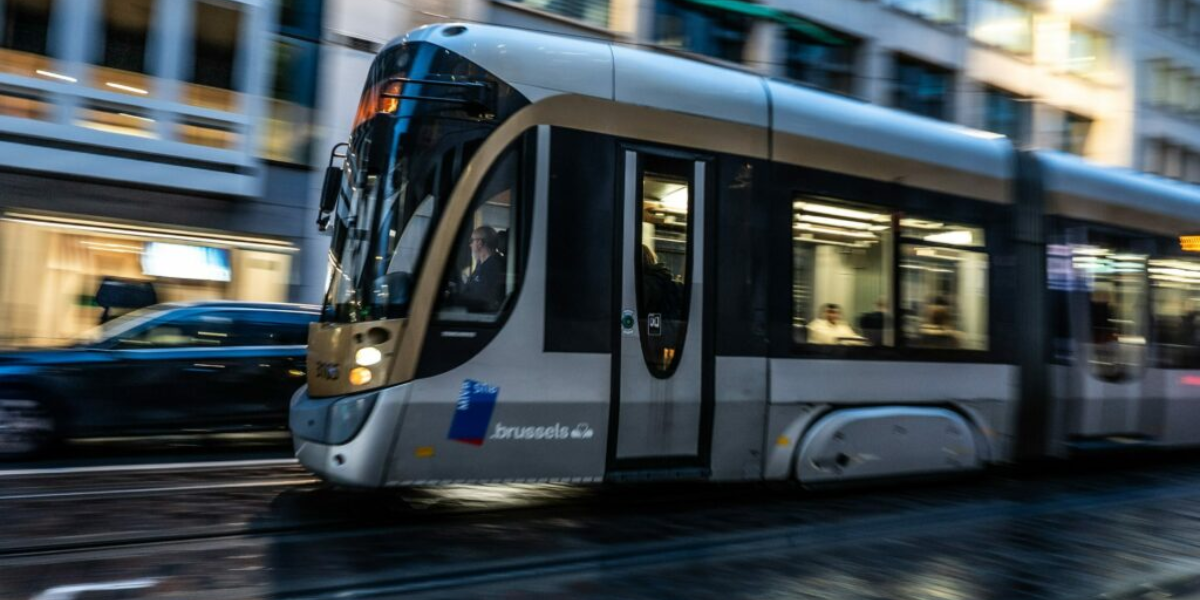
Brussels public transport operator STIB-MIVB confirmed that metro and bus services were operating across their networks on Monday, although passengers faced significantly reduced frequencies.
In an update published at 14:00, the operator reported that all metro and bus lines were running, subject to the disruption. This meant that services remained available across the capital, but passengers could experience longer waiting times and less frequent departures than on a normal working day.
The disruption affected commuters travelling to work, students heading to educational institutions and passengers connecting between different forms of public transport.
Although the availability of metro and bus lines provided some transport options, the reduced service levels meant that passengers needed to check departures before travelling. The strike also affected tram services, including suspensions on several routes and partial closures on others.
STIB-MIVB advised passengers to consult its official communication channels for updates on the services operating throughout the day. Information was available through the operator’s website, mobile application and social media channels.
Which Brussels Tram Lines Were Cancelled or Partially Suspended?
Several tram routes were affected by the industrial action, with some services completely suspended and others operating only along part of their usual routes.
According to The Brussels Times, reporting with Belga, tram lines 18, 35, 39, 44 and 93 were not operating. The T-bus service associated with routes 39 and 44 was also unavailable.
Additional restrictions affected tram lines 4, 10, 82 and 92. Lines 4 and 10 were suspended between Gare du Nord and Gare du Midi, while line 82 was suspended between Triangle and Avenue du Roi. Tram line 92 was not operating between Botanique and Louise.
These partial suspensions meant that passengers could not assume that a tram line was operating along its complete route, even where services remained available on other sections.
The disruption was particularly relevant to people travelling through central Brussels and those using tram connections to reach railway stations.
Passengers were advised to check the status of individual routes before setting out, as the network’s operating arrangements differed between lines and sections.
How Were Belgian National Railway Services Affected?
The strike extended beyond Brussels’ urban transport network, affecting intercity and regional railway services operated by SNCB-NMBS.
The railway operator announced that approximately three in ten intercity trains would be cancelled on Monday. Nearly all P trains, which provide additional capacity during peak commuting periods, were also expected to be withdrawn.
Fewer S and L trains were scheduled to operate as well. These services are used for regional and local journeys, including travel between Brussels and surrounding communities.
The reduction in rail services added another difficulty for passengers attempting to travel around Belgium during the strike.
Travellers using intercity trains faced the possibility of cancellations, while those relying on regional connections needed to check whether their planned services were operating.
The railway operator advised passengers to monitor its communication channels for the latest information. Checking the journey planner before departure was important because the availability of a particular service could differ from the usual timetable.
The combined disruption to urban transport and national rail services affected several stages of journeys, particularly for people travelling between Brussels and other Belgian cities.
Why Were Belgian Public Sector Workers Striking?
The industrial action was organised in opposition to planned budget cuts by the Belgian federal government.
Reuters reported that Monday’s strike represented a second day of nationwide strike action, following a large protest in Brussels on Friday, 9 October. Public sector workers took action against the government’s proposed measures as Prime Minister Bart De Wever faced pressure over delayed negotiations on a new federal budget.
The dispute was linked to the government’s efforts to address Belgium’s public finances. De Wever had argued that difficult budgetary measures were necessary to prevent mounting debt and interest costs from placing a heavier burden on future generations.
However, coalition partners had failed to reach an agreement on the new federal budget over the weekend.
Reuters reported that the deadlock forced De Wever to cancel a planned State of the Union address to parliament on Tuesday while negotiations continued. Belgian media reported that an agreement could be delayed until late October or early November.
The disagreement over the budget formed the wider political context for the industrial action, which affected transport and other public services.
Which Other Public Services Were Disrupted Across Brussels?
Transport was not the only service affected by Monday’s strike. Rubbish collection was severely disrupted across several Brussels districts, while postal deliveries and some educational and municipal services also experienced interruptions.
The Brussels Cleanliness agency reported significant collection failures in multiple areas. In Anderlecht, Saint-Gilles and the part of Laeken around Bockstael, approximately 70% of white rubbish bags had not been collected.
The non-collection rate reached 60% in Forest and Ixelles, while nearly one-third of collection rounds could not be completed in the Pentagon and Louise districts.
The agency had asked residents to keep their blue and yellow rubbish bags at home until the next scheduled collection. However, the instruction was only partially followed, and residents were subsequently asked to take back bags that had not been collected.
Further disruption was expected in the afternoon and evening in Anderlecht, Berchem-Sainte-Agathe, Ganshoren, Jette, Etterbeek, Koekelberg, Molenbeek-Saint-Jean, Saint-Josse-ten-Noode and Schaerbeek.
The agency said it would organise catch-up collection rounds in the following days, depending on available operational capacity. It also warned that restoring the normal collection schedule could take time because industrial action had already affected services on Friday.
Mobile recycling centres planned for Anderlecht and Ixelles were cancelled.
Postal deliveries were also affected. Bpost completed 85% of its delivery rounds, according to The Brussels Times. Schools faced possible disruption after the ACOD Onderwijs union issued a strike notice, while local authority services could also be affected.
These interruptions demonstrated the breadth of the public sector action, extending beyond transport to services used by residents and businesses throughout the capital.
What Happened During the Earlier Brussels Demonstration?
Monday’s strike followed a nationwide trade union demonstration in Brussels on Friday, 9 October, which Reuters reported had involved thousands of protesters.
The demonstration was partly peaceful but ended with clashes between a group of demonstrators and police. During the unrest, officers deployed tear gas and water cannons.
A separate report by The Brussels Times, citing Belga, said that between 30,000 and 50,000 people attended Friday’s demonstration. The report also recorded damage to public transport vehicles: three trams were damaged and four buses were vandalised, including one bus that was completely destroyed.
Following the violence, 21 people, including 17 minors, were placed under judicial arrest, according to the same report.
On Monday afternoon, further clashes occurred near Brussels Midi railway station. Hundreds of young people were reported to have clashed with police, with several arrests made following incidents involving stone-throwing, fireworks and vandalism.
Brussels-Capital/Ixelles police confirmed reports of the unrest. Several cars were damaged, and one vehicle was set on fire near the station, according to reporting cited by The Brussels Times.
The transport operator closed Clemenceau metro station, where trains were no longer stopping. Several bus routes were also suspended, shortened or diverted in the city centre and around Brussels Midi station.
These incidents created additional localised disruption beyond the effects of the public sector strike itself.
When Could Further Belgian Industrial Action Take Place?
The immediate disruption on Monday occurred amid continuing disagreement over the federal government’s budget proposals.
Reuters reported that the government had not reached an agreement on its new budget, leaving negotiations unresolved as the strike took place. The delay also affected the prime minister’s parliamentary programme.
Meanwhile, The Brussels Times reported that a decision on further industrial action was scheduled for 9 November.
That date marked a planned decision point rather than confirmation that another strike would take place. The available reports did not establish the timing or precise form of any additional industrial action.
For passengers and residents, the immediate priority remained checking official announcements concerning transport operations and public services.
STIB-MIVB’s updates provided information about metro, tram and bus availability, while SNCB-NMBS communicated changes to railway services. Local authorities and service operators also issued information about disrupted rubbish collection and other municipal operations.
The extent of any future disruption would depend on subsequent decisions by unions and the progress of negotiations over the government’s budget plans.
Background: Belgium’s Budget Dispute and Public Sector Strikes
Belgium’s October industrial action took place against a backdrop of disagreement over public spending and the government’s efforts to reach a new federal budget.
The planned measures prompted trade unions to organise demonstrations and strike action. Public sector workers’ participation disrupted transport, schools, broadcasting and other public services, according to Reuters.
The political dispute intensified after coalition partners failed to reach a budget agreement over the weekend of 10–11 October. The delay increased pressure on Prime Minister Bart De Wever as discussions continued.
The industrial action on Friday and Monday represented separate days of disruption within the same wider dispute. The protests on Friday included a large demonstration in Brussels, while Monday’s strike affected services across Belgium without a planned large-scale demonstration in the capital, Reuters reported.