Bruges (The Brussels Morning Newspaper) October 13, 2026 – Preparatory groundworks have begun for eight new wind turbines at the Port of Zeebrugge in Belgium, adding 42.6 megawatts of renewable electricity capacity. The project is a joint investment by ENGIE, Port of Antwerp-Bruges and Portfineco, which is jointly owned by Zefier and the port authority. The turbines are expected to generate approximately 115 gigawatt-hours of electricity annually from early 2028, equivalent to the average yearly consumption of around 33,000 Belgian households.
- Where Will the New Wind Turbines Be Built at Zeebrugge Port?
- How Much Renewable Electricity Will the Zeebrugge Wind Farm Generate?
- When Will the New Wind Turbines Become Operational?
- What Are the Technical Specifications of the Eight Wind Turbines?
- Which Companies Are Investing in the Zeebrugge Wind Energy Project?
- How Were Environmental Assessments and Permits Addressed?
- How Does the Project Relate to Existing Wind Power at Zeebrugge?
- What Is the Background to Renewable Energy Development at Zeebrugge Port?
Where Will the New Wind Turbines Be Built at Zeebrugge Port?
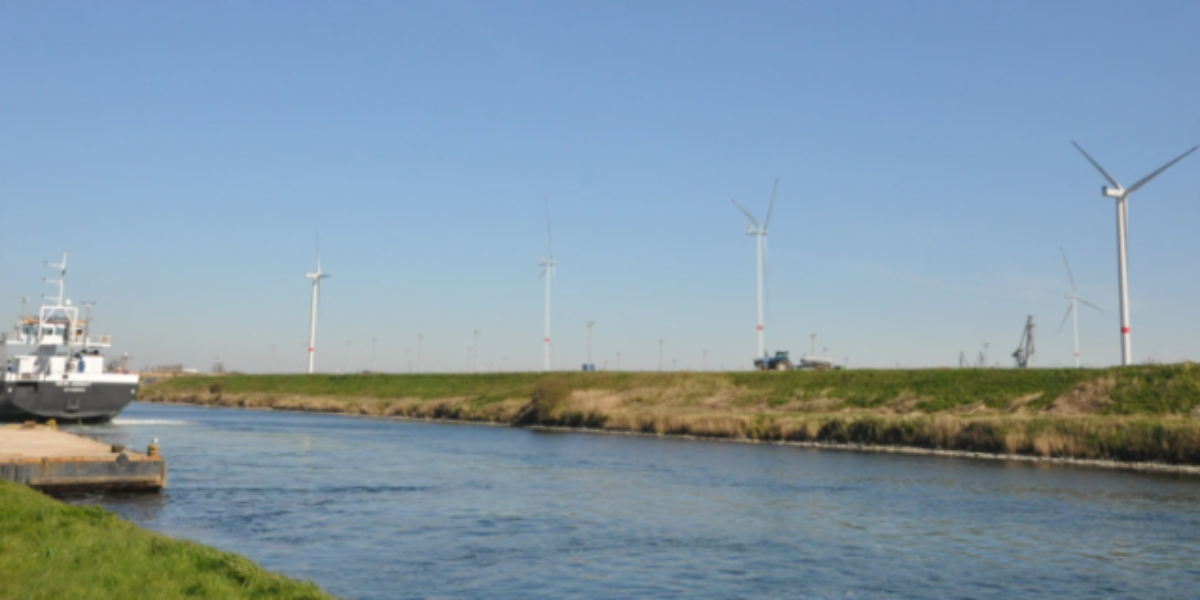
Construction preparations are under way for eight wind turbines at two terminal locations within the Port of Zeebrugge, according to announcements published by ENGIE and Port of Antwerp-Bruges on 9 October 2026.
Three turbines are planned for the RoRo terminal operated by Wallenius Wilhelmsen, while the remaining five will be installed on the premises of International Car Operators (ICO). The locations form part of the port’s existing industrial and logistics infrastructure.
The project will add a combined installed capacity of 42.6 megawatts (MW). The development is intended to expand local renewable electricity generation while placing wind power facilities within an established port and industrial environment.
The ICO site already hosts an operational wind farm comprising 11 turbines with a total capacity of 44 MW. That installation was commissioned in 2020 through cooperation between ENGIE, ICO and Portfineco.
The new project will therefore extend wind power generation at a location where renewable electricity infrastructure is already operating. The additional eight turbines will increase the number of wind turbines at the two named terminal sites, although the overall expansion across the wider port will depend on other existing and future installations.
How Much Renewable Electricity Will the Zeebrugge Wind Farm Generate?
The eight new turbines are expected to produce approximately 115 gigawatt-hours (GWh) of renewable electricity each year once operational.
According to the project partners, that annual output is equivalent to the average electricity consumption of approximately 33,000 Belgian households. The figure represents the expected yearly generation from the new installation rather than the combined output of the new turbines and the existing ICO wind farm.
The planned capacity of 42.6 MW describes the turbines’ combined installed generating capacity, while the 115 GWh figure estimates the electricity they will produce over a year. These measurements describe different aspects of the project and should not be treated as interchangeable.
The project partners have identified early 2028 as the expected start of electricity generation. Before that stage, the development must progress through construction, installation and the necessary preparations for operation.
The stated household equivalent provides a reference point for the anticipated output. Actual electricity production will depend on operating conditions, including the availability of wind, and the household comparison does not mean that each of the 33,000 households will receive a direct supply from the turbines.
The announcement identifies the project as an expansion of renewable electricity production within the port. It does not specify a separate household distribution arrangement or state that all electricity generated will be allocated exclusively to residential consumers.
When Will the New Wind Turbines Become Operational?
The construction programme sets out a series of stages leading to the planned start of electricity generation in early 2028.
Preparatory groundworks began in October 2026, followed by further civil engineering and construction work. The tower masts, nacelles and blades are scheduled for installation during the second half of 2027, when the turbines are expected to become visible on the Zeebrugge skyline.
The installation timetable was outlined in the announcement published by Port of Antwerp-Bruges and ENGIE. The companies have identified the beginning of 2028 as the expected date for the start of annual electricity production.
The wind turbines will be supplied by Vestas, according to Belgian transport industry publication Transportmedia. The project includes different turbine models across the three construction locations, with specified tip heights ranging from 180 to 200 metres.
The installation programme will cover three locations within the port, even though the project is commonly described as an eight-turbine development across two terminal operators. Two turbines are planned for the southern inlet dock at ICO, while three are planned for the northern inlet dock. The remaining three will be installed at the Wallenius Wilhelmsen terminal on Alfred Ronsestraat.
The project partners have not stated in the cited announcements that electricity generation will begin before the scheduled operational period. The early-2028 date remains the published target for the new installation.
What Are the Technical Specifications of the Eight Wind Turbines?
The project comprises eight turbines with a combined installed capacity of 42.6 MW. The technical specifications published by Port of Antwerp-Bruges identify two Vestas turbine models for the development.
Three turbines will be installed at Wallenius Wilhelmsen using the Vestas V150-6.0 MW model. Each has a rotor diameter of 150 metres and a tip height of 200 metres.
At ICO’s southern inlet dock, two additional V150-6.0 MW turbines are planned, also with rotor diameters of 150 metres and tip heights of 200 metres.
The three turbines at ICO’s northern inlet dock will use the Vestas V136-4.2 MW model. These units have rotor diameters of 136 metres and tip heights of 180 metres.
The distinction between rotor diameter and tip height is relevant to understanding the physical dimensions of the installation. Rotor diameter measures the span covered by the blades, while tip height describes the maximum height reached by a blade above ground level.
The planned dimensions also mean the new turbines will become prominent structures within the port landscape. Their installation is scheduled for the second half of 2027, when the tower masts and turbine components are due to be erected.
The project announcement does not provide a separate breakdown of the expected annual electricity output for each turbine model or terminal location. The published generation estimate of approximately 115 GWh per year applies to the development as a whole.
Which Companies Are Investing in the Zeebrugge Wind Energy Project?
The project is being jointly financed by ENGIE, Port of Antwerp-Bruges and Portfineco. Portfineco is jointly owned by Zefier and Port of Antwerp-Bruges, with each holding a 50 per cent share.
ENGIE will manage the turbines’ operations through Seagull I, the joint venture company established for the project. The arrangement brings together an energy company, the port authority and an investment vehicle linked to municipal renewable energy interests.
The partners have separate roles in the development. ENGIE is responsible for the operational management of the turbines, while Port of Antwerp-Bruges is participating as a joint investor and port infrastructure authority. Portfineco’s involvement links the project to Zefier, a municipal holding company with investments in renewable electricity generation.
In its announcement, ENGIE Belgium chief executive Vincent Verbeke described port and industrial areas as important locations for large-scale renewable energy developments. He said the company had 217 operational wind turbines in Belgium, representing a combined capacity of 611 MW, at the time of the announcement.
Verbeke also linked the Zeebrugge project to the port’s role as an energy hub for the surrounding region.
Dirk De fauw, vice-chairman of Port of Antwerp-Bruges and mayor of Bruges, said the project would contribute to the port authority’s objective of reaching 500 MW of installed wind capacity across its port platforms by 2030.
Henk Kindt, chairman of Zefier, said the cooperative’s participation reflected its commitment to renewable energy projects intended to benefit its shareholder municipalities. Zefier has 160 shareholder municipalities, according to the project announcement.
How Were Environmental Assessments and Permits Addressed?
The project progressed through permitting, environmental studies and technical preparation before construction began.
Sweco Belgium, the engineering and consultancy company involved in the preparatory work, said the necessary permits had become final and the project was ready for implementation. Its work included environmental impact assessment preparation, environmental permit applications, ecological analyses and technical studies.
The company also supported work relating to infrastructure, water management, structural engineering, crane hardstands, access roads and dewatering arrangements. These activities formed part of the preparation required before the project could move from planning into construction.
Environmental assessment included consideration of bird populations in and around the port. According to Sweco, the Zeebrugge port environment supports substantial gull populations during certain periods of the year.
The assessment used existing information and field research conducted across different seasons to map bird migration routes and areas used for resting and feeding. Sweco also reported that it undertook collision-risk modelling focused on winter conditions, examining the turbines alongside bird movements across the region.
The company identified measures that could be used to address potential risks, including adjusting turbine positions to avoid heavily used flight paths and temporarily shutting down turbines during periods of peak flight activity.
Noise, lighting and shadow flicker were also identified as issues to be managed during operation. Sweco said the project would place emphasis on limiting these effects on the surrounding environment.
These details form part of the project’s reported environmental preparation. The published material does not establish that every potential environmental effect has been eliminated; instead, it describes assessments and measures intended to identify and manage relevant risks.
How Does the Project Relate to Existing Wind Power at Zeebrugge?
The eight-turbine development follows the commissioning of an 11-turbine wind farm at the ICO terminal in 2020. That installation has a total capacity of 44 MW and was developed through cooperation between ENGIE, ICO and Portfineco.
The existing wind farm provides a local precedent for electricity generation from turbines located within port terminal infrastructure. The new project adds another 42.6 MW of planned capacity and extends the partnership involving ENGIE, Port of Antwerp-Bruges and Portfineco.
The port authority’s stated objective is to reach 500 MW of installed wind capacity across its platforms by 2030. The new Zeebrugge project is one contribution towards that target, although the published announcement does not say that these eight turbines alone will deliver the full amount.
The wider Port of Antwerp-Bruges operates as a major maritime, logistics and industrial centre. Its activities include handling containers, general cargo and vehicles, alongside industrial operations. The authority has identified the development of a lower-carbon port economy as one of its stated objectives.
The new turbines are planned for existing port terminals rather than an offshore wind farm. Their location places the generating equipment within the port’s industrial environment, alongside established logistics operations.
The project’s announced electricity output, installation schedule and installed capacity provide the principal measurable details of the expansion. Its contribution to the port authority’s 2030 wind capacity target will depend on the total installed capacity achieved across its platforms.
What Is the Background to Renewable Energy Development at Zeebrugge Port?
The Zeebrugge project forms part of the renewable electricity activities of ENGIE and its partners in Belgium.
ENGIE’s announcement states that the company operates wind turbines across Belgium and is continuing to develop large-scale renewable electricity projects. It identifies port and industrial areas as suitable locations for this type of development because of their importance to the Belgian economy.
Zefier, meanwhile, is a municipal holding company established in September 2017. Its investments include projects that generate electricity from renewable sources. The company reported that, by mid-2026, it held interests in 118 operational wind turbines with a nominal capacity of 360 MW, alongside investments in solar photovoltaic installations.