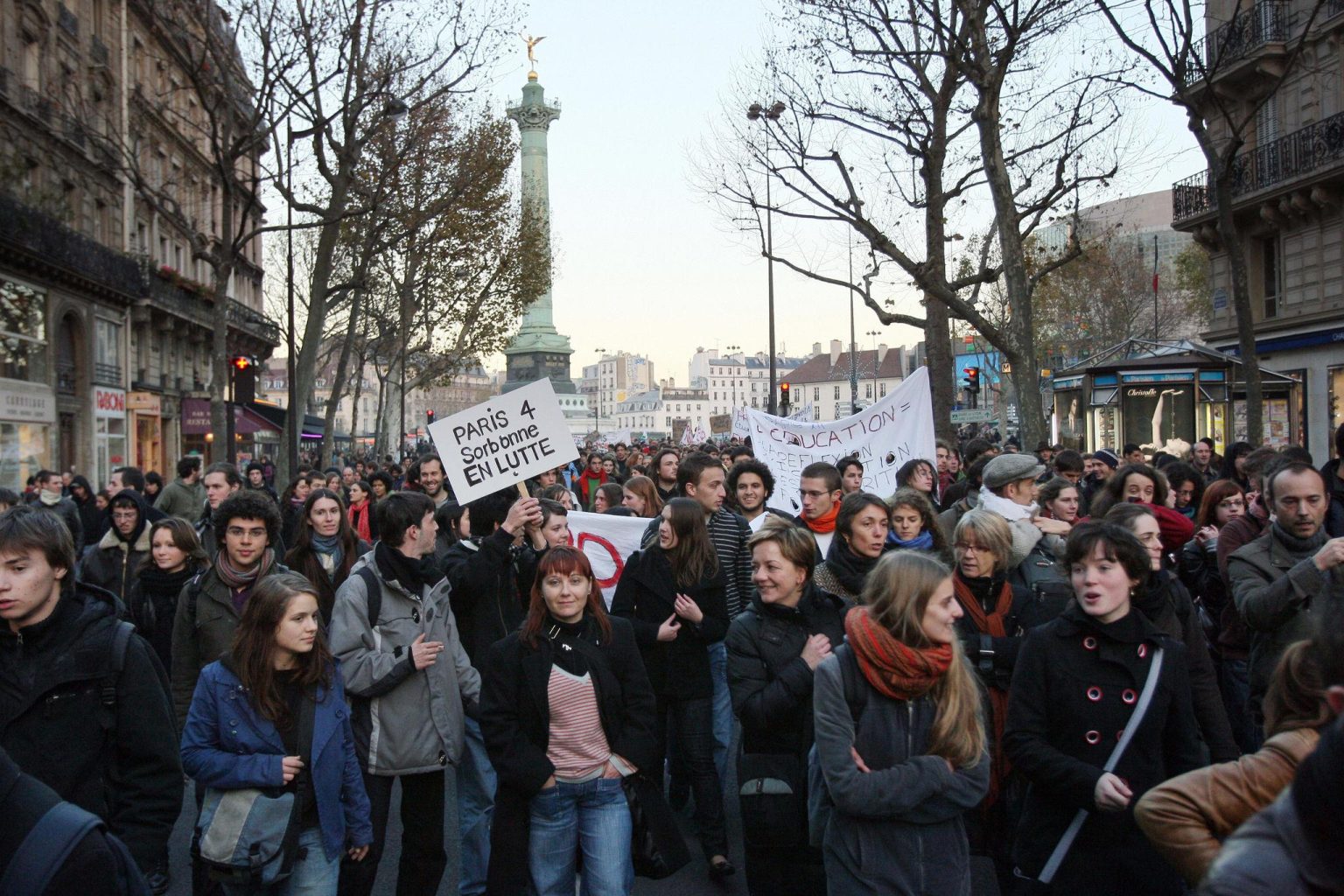
Paris, France, 3 October, (Brussels Morning Newspaper) – France student protests that began around disadvantaged Paris suburbs have expanded into a nationwide movement, with pupils demanding more teachers, improved school facilities and better classroom conditions. The demonstrations have affected more than 1,200 schools as the government faces mounting pressure to address education grievances while containing outbreaks of violence.
Student movement spreads beyond Paris
The movement initially gained momentum in the Paris region, including Seine-Saint-Denis, where pupils and education staff have highlighted teacher shortages, overcrowded classrooms and deteriorating buildings.
By Friday, around 400 schools and educational institutions were closed as demonstrations continued across France. Protests and confrontations were reported far beyond the capital, demonstrating how rapidly a dispute rooted partly in conditions around Paris had developed into a national challenge for President Emmanuel Macron’s government.
The Education Ministry had already responded to the escalating situation by bringing Education Minister Édouard Geffray and Interior Minister Laurent Nuñez together with prefects and education officials on 30 September to assess mobilisation around schools.
Teacher shortages drive student anger
Education conditions remain at the centre of the France student protests.
Students have raised concerns about shortages of teachers and substitute staff, overcrowding and deteriorating school infrastructure. Reuters reported that more than 1,200 schools had been affected by demonstrations, while conditions in poorer areas around Paris helped trigger the wider movement.
The unrest also comes as France debates its 2027 education budget. Government figures cited by Reuters indicate planned education spending of €65.53 billion, representing an increase of about 1.7%, although critics argue the rise will not resolve existing shortages.
Violence complicates nationwide demonstrations
The protests have increasingly been accompanied by serious disorder.
Police and students have clashed in several cities, while incidents involving fires, vandalism and attacks have been reported. Around 5,000 people, predominantly teenagers, had been arrested as authorities attempted to contain the unrest, Reuters reported.
The French government has drawn a distinction between legitimate concerns about education and violence surrounding some demonstrations. Interior authorities have deployed riot police as confrontations intensified.
The political dimension is also contested. French intelligence officials told a government crisis meeting that France Unbowed-linked activists were involved in encouraging unrest, according to Reuters. France Unbowed rejected allegations that it was responsible and accused the government of escalating tensions.
Government opens dialogue over school conditions
Geffray has moved towards talks with student representatives, parents and education organisations while authorities continue security operations around affected schools.
The government faces the difficult task of separating the students’ underlying education demands from violent incidents that have increasingly dominated coverage of the demonstrations.
The mobilisation is particularly significant because teachers and parents are becoming more closely involved. Six of France’s seven representative education unions, alongside the FCPE parents’ federation, have backed calls to stand alongside pupils ahead of further demonstrations.
Why France’s school unrest matters
The movement has turned school funding and educational inequality into a wider national political issue.
Conditions in disadvantaged communities are particularly important to the dispute. Reuters reported that shortages in areas including Seine-Saint-Denis have intensified criticism over differences in educational resources available to pupils depending on where they live.
For the government, the challenge now extends beyond reopening schools. Authorities must respond to demands over staffing and resources while addressing public safety and questions surrounding police handling of demonstrations.
What happens next?
The next major test comes on Tuesday, 6 October, when student organisations and the Union Étudiante have called for another mobilisation. The FCPE and six representative education unions have also supported the action.
That mobilisation will provide an important indication of whether the France student protests continue expanding after the weekend or whether dialogue between education officials, pupils, parents and unions begins to reduce tensions.
With hundreds of schools already disrupted and the movement extending across the country, education policy has moved rapidly towards the centre of France’s national debate.