The European Parliament’s latest cancer policy vote has exposed a troubling and ideological approach to public health.
All products containing nicotine are to be pushed towards a single, rising tax floor regardless of their risk profile, while alcohol, a Group 1 carcinogen in the same classification as tobacco smoke, is principally met with labels, awareness campaigns and the promise of another strategy document.
Ultra-processed food receives much the same treatment, better labelling, a request for a scientific definition and a gentle non-binding suggestion that countries consider differentiated VAT rates.
Tomáš Kubín, the Czech MEP from the Patriots for Europe group, warned that while he absolutely supports strong cancer prevention, there was a glaring “lack of consistency and proportionality” in the proposed policy.
He continued: “Both my parents and my brother were heavy smokers and died of cancer, but our regulations have to reflect the actual evidence and the different levels of risk involved.
“Take tobacco and nicotine. Grouping combustible cigarettes, e-cigarettes, heated tobacco, and nicotine pouches into one broad category simply ignores reality. Acknowledging that these products carry different levels of risk doesn’t mean we’re calling them harmless. It just means we can regulate them more intelligently, keeping a strict shield around minors and non-smokers without turning a blind eye to harm reduction.”
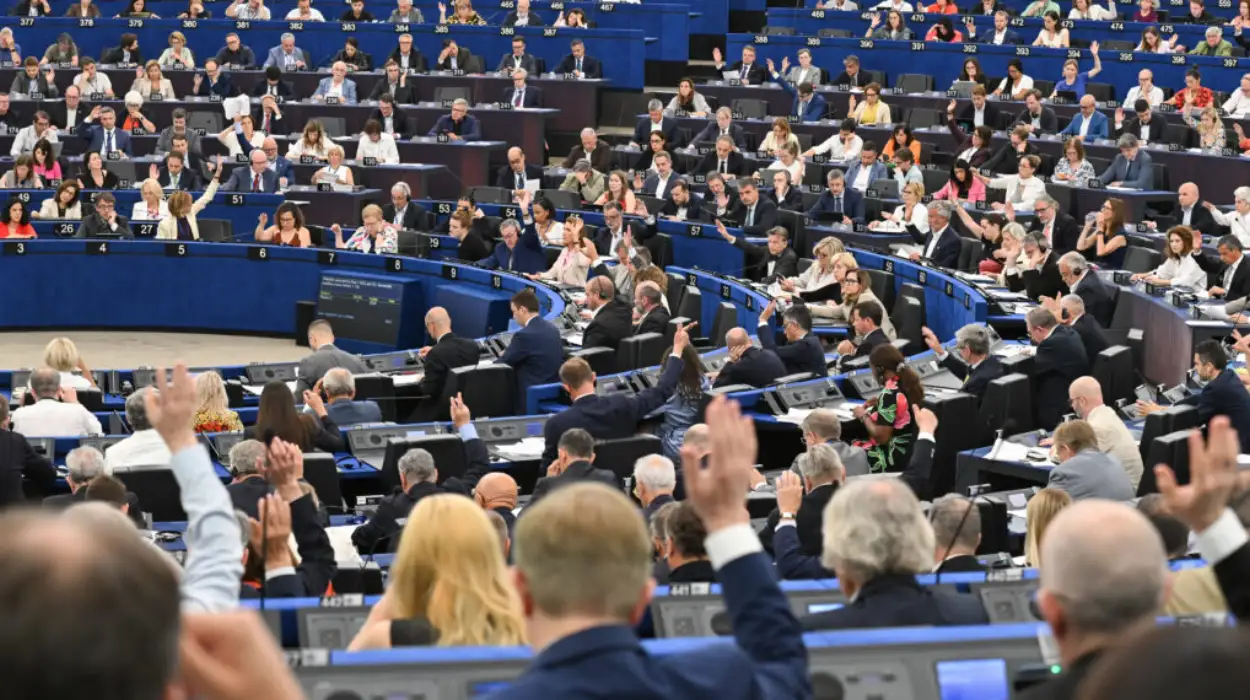
The row started earlier this week when the European Parliament’s Committee on Public Health, known as SANT, adopted its report on the implementation of Europe’s Beating Cancer Plan by 27 votes to eight, with five abstentions.
The report, led by Renew rapporteur Vlad Vasile-Voiculescu, is not legislation and does not itself amend EU law. It is a political recommendation. But it now moves to a full Parliament vote expected between October and November, when MEPs will have their last substantial opportunity to change its direction before it becomes Parliament’s official position.
The European Parliament’s own summary of the vote sets out the committee’s broader demands on cancer prevention, treatment and funding.
The most revealing decision concerned taxation. A compromise amendment, tabled with support from the PfE and ECR groups, sought to insert a principle that excise duties should reflect differences between product categories and their risk profiles.
The amendment was put to a roll-call vote and rejected.
The text adopted instead calls for “an increase and an upward convergence in minimum excise duties for all tobacco and nicotine products”. In practical terms, that means a single rising tax floor across the category, with no carve-out for products whose risk profile differs from that of combustible cigarettes.
The report also reaffirms the goal of a “Tobacco-Free Generation” by 2040, extends the proposed regulatory framework to e-cigarettes, heated tobacco and nicotine pouches, and adds language on plain packaging, flavour restrictions, mandatory ingredient reporting, online age verification and pre-market health impact assessments for all new tobacco and nicotine-based products.
This is particularly difficult to reconcile with what Parliament said only 12 days earlier. On 16 September, MEPs adopted the “Safe Hearts” cardiovascular health report in plenary by 545 votes to 47, with 75 abstentions. The two reports deal with many of the same underlying risk factors (tobacco and nicotine, alcohol and diet) yet they approach nicotine differently.
Mr Kubin continued: “There is also a real political disconnect here. Leading up to the vote, several EPP members raised these exact same concerns about how tobacco, alcohol, and food were being handled, pointing out the clash with Parliament’s recent stance on cardiovascular disease. Yet, when it came time to vote, the EPP effectively folded and backed the report alongside the left-wing groups.”
He added:
“My bottom line across all these areas is the same: recognise the different risk levels, give people accurate information, protect children, and demand evidence that our rules will actually achieve something. A successful cancer plan should be measured by real-world prevention, early diagnosis, and better survival rates.”
Mr Kubin’s concerns are shared by leading health experts, a number of whom have argued for tax system that has a meaningful difference between the most harmful products and lower-risk alternatives.
The report’s treatment of alcohol makes the inconsistency still clearer. Ethanol and acetaldehyde, produced through alcohol metabolism, are classified by the International Agency for Research on Cancer as carcinogenic to humans. They carry the same Group 1 classification as tobacco smoke. The BECA report even acknowledges this.
Yet its proposed response is markedly softer. Alcohol is to receive ingredient lists and nutrition declarations, clearly visible health information, awareness campaigns aimed particularly at minors, reduced exposure to marketing and a future revised EU alcohol strategy. Mandatory EU-wide taxation and bans were explicitly ruled out.
Indeed, Green MEP Tilly Metz, involved in the work on both files, said:
“I am not in favour of a ban on alcohol. That is not the solution.”
Her underlying argument (that prohibition is not the answer and that people should be able to make informed choices grounded in scientific evidence) is precisely the logic that has been rejected for nicotine.
If labels and information are the appropriate way to approach a Group 1 carcinogen in a drink, why should risk information and differentiated treatment be dismissed when applied to nicotine products with different risk profiles? It is a question Metz and her colleagues should be invited to answer.
The position on ultra-processed food follows the same information-first model. The adopted text calls for a harmonised front-of-pack nutrition label and asks the European Commission to work towards a scientific definition of “ultra-processed foods”. It encourages, rather than requires, member states to consider differentiated VAT rates. Binding reformulation targets and mandatory taxation measures contained in earlier drafts did not survive.
That leaves consumers with more information, but little structural change. People who eat high levels of ultra-processed food are told that a definition is being considered and that a label may help them make better choices. Drinkers are to receive clearer information about a carcinogen, but not the tax or prohibition tools applied to nicotine. However, the EU’s 85-100 million smokers, meanwhile, face a framework that places cigarettes, heated tobacco, e-cigarettes and nicotine pouches in one tax category even though Parliament’s own cardiovascular position recognises that different products may have different risk profiles.
This seems like a missed opportunity as several international studies, including from the UK’s Imperial University, show how some countries can successfully use tax on harmful products, along with other measures to change consumer behaviour and move people towards healthier alternatives including those with modified risk profiles in the same category, such as nicotine pouches.
Professor Franco Sassi, the Director of the Centre for Health Economics & Policy Innovation at Imperial Colle
ge Business School, and one of Europe’s leading experts, described the vote by SANT as a missed opportunity. Talking about ultra-processed food, he commented:
“The concept of ultra-processed food, and the evidence that links it with obesity and poor health, are clear. Designing a policy to shift diets away from ultra-processed foods is more complex, but this is not a reason to delay action. Foods high in fat, salt and sugar remain a legitimate target for policies.”
“Across Europe, food taxes already exist, but they are not designed to promote healthier choices. A more intelligent use of existing taxes could prevent tens of thousands of cancer cases, especially breast and colorectal cancer, without adverse impacts on household finances, and without making a healthy food basket more expensive.”
As Mr Kubin explained, a serious cancer policy should protect young people from taking up harmful habits. It should also help existing users reduce their exposure to harm. Those goals are not mutually exclusive. A risk-based approach would combine strict age controls, credible information and proportionate regulation with tax differences that reward movement towards less harmful products. It would not pretend that every product, whether nicotine, alcoholic or ultra-processed food, is identical.
The SANT vote therefore fails smokers by weakening the incentive to switch. It fails drinkers by applying a lighter policy to a carcinogen classified alongside tobacco. And it fails people who consume high levels of ultra-processed food by substituting labels and a promised definition for binding action.
The plenary vote in October or November is the last chance to correct that imbalance. If Europe’s cancer policy is genuinely to be based on risk, it must apply that principle consistently, and encourage people to move towards less harmful choices rather than taxing every product as though the science makes no distinctions.