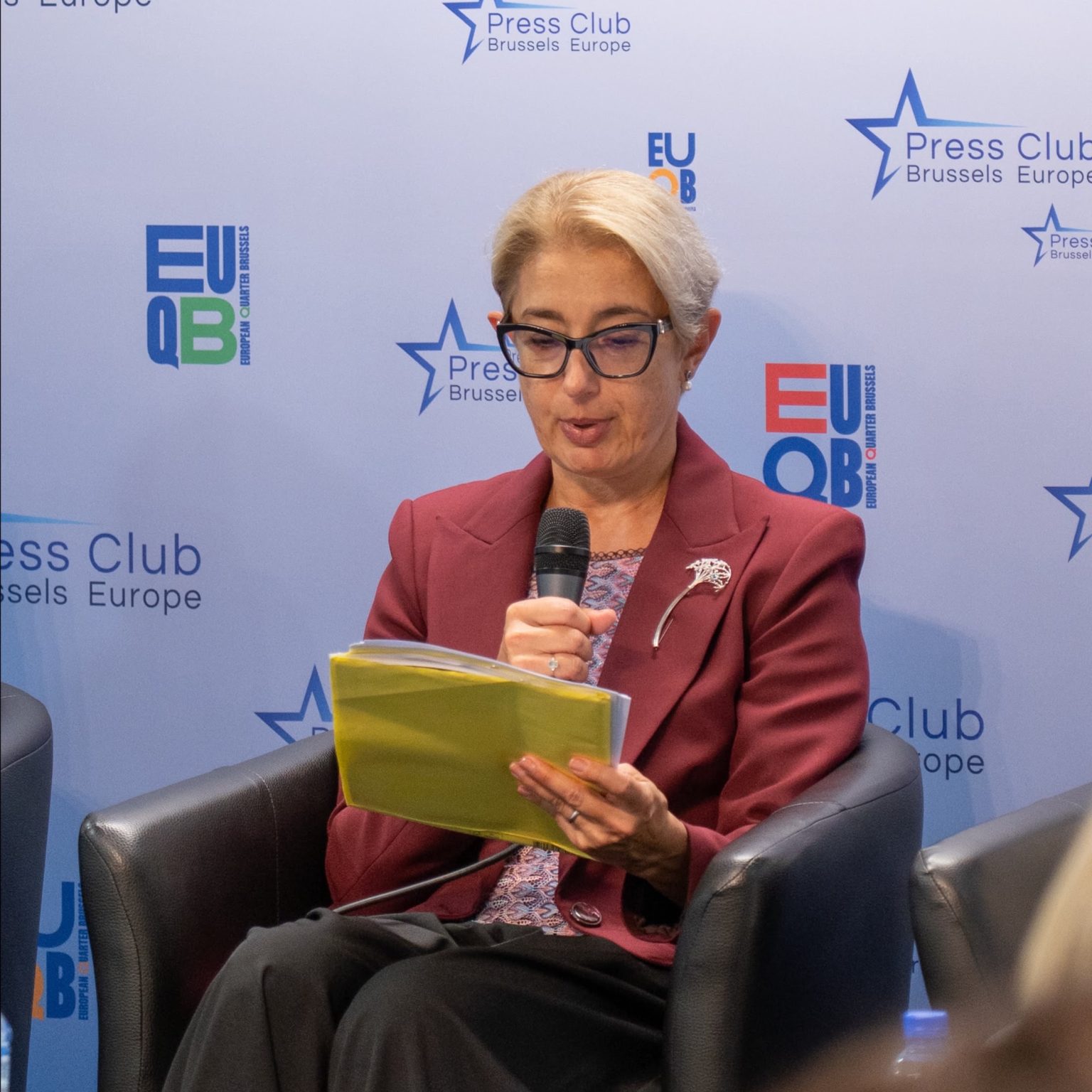
Medical spa destinations have a key role in tackling Europe’s health crisis, but more support is needed to tap into their full potential. That was a key message to emerge from a briefing on the possible contribution of spa medicine to healthier lives, sustainable tourism and stronger European regions.
The event, at the Press Club Brussels Europe on Wednesday, was particularly timely as it came a day after World Heart Day (29 September). It also came just ahead of the publication of the European Commission’s keenly awaited sustainable tourism strategy.
Spa services, the event was told, can significantly help in the field of rehabilitation and the treatment of chronic diseases. “But,” cautioned Dr Siyka Katsarova, “we need more support.”
Putting spa medicine at the heart of healthcare
Katsarova is president of the European Spas Association (ESPA), which is celebrating its 30th anniversary and organised the event. It represents 20 European countries and 1,400 spas, which support some 850,000 jobs and attract 20 million tourists every year.
She opened the 90-minute briefing by reminding the packed audience of ESPA’s mission: putting natural remedies and medical spa expertise at the “heart” of modern healthcare and wellbeing. Katsarova also noted that the coronavirus pandemic had emphasised the importance of medical spas, not as a “luxury”, but on the “frontline” of health prevention and rehabilitation.
But to realise the full potential of such services and fully utilise the “rich” natural healing resources in Europe, more support was needed at EU level. This, she noted, includes fully “integrating” spa medicine and health tourism into EU health strategies.
It is also crucial, she told the audience, to fully protect Europe’s natural therapeutic resources and increase investment to ensure nature-based resources “no longer” remain on the “margins” of health policy.
Prevention and the EU life sciences agenda
The first part of the briefing focused on three areas: the life sciences perspective, health tourism and the upcoming EU sustainable tourism strategy.
Dr Milena Angelova, a member of the European Economic and Social Committee (EESC) and rapporteur on the EU Life Sciences Strategy, told the meeting her “key message” was to highlight the “healing power of nature” and its role in disease prevention. “This should not be a side topic,” she stressed, “but should be at the centre of any health strategy.”
She said Europe had a “rich heritage” in natural mineral resources and it was vital to protect and promote this heritage in order to foster healthier lifestyles for EU citizens.
Such spa-based services, she said, can play a role in reducing the risk of lifestyle-related chronic diseases, which are the leading cause of death in the EU, responsible for over 80% of premature mortality and 70–80% of healthcare costs. Spas and health resorts deliver “evidence-based” care and health tourism, she added, can also contribute to global wellbeing.
Better connectivity and a more ambitious tourism strategy
Further comment came from Maltese MEP Daniel Attard, the European Parliament’s rapporteur on a recently adopted report on responsible tourism. Seizing on the potential of health tourism, he referred to his own country, Malta, which he said had suffered from the impact of overtourism.
He said, “It is all well and good to talk about health tourism but we need things like better connectivity to help people to actually reach health and well-being destinations.” The sector also needed to cultivate a skilled labour force that can treat people with such needs, he added.
He said, “I want the EU to be more ambitious in its future tourism strategy and to look at what it can do, rather than what it cannot do.” The MEP said, “Debates such as this contribute to what is an important narrative and a very important subject.”
His comments were partly addressed by Elisabeth Kotthaus, head of the Tourism Unit at the European Commission’s Directorate-General for Mobility and Transport. She spoke of the “vital” importance of the “huge” tourism sector in Europe, pointing out that it supports some 20 million jobs EU-wide.
“There is agreement on what we need to do but we still can learn more from each other,” she said.
The official added that Europe is the world’s number one tourist destination but would not remain number one unless it acted proactively and harnessed opportunities such as health tourism. This, she went on, was a “promising area” of tourism and could play a “huge role” in the future.
The overall aim of the strategy, she said, was to promote “balanced tourism” and best practice, adding, “we want to help regions to better manage their particular issues.”
Italy and France highlight established spa models
The second part of the lively discussion focused on country highlights, including those from France and Italy.
Italy was represented by Marina Lalli, vice-president of Federterme, who spoke of the country’s integrated model of spa medicine, prevention, rehabilitation and regional development.
She said, “The good news is that therapeutic medicine is integrated into the Italian health system, meaning the government recognises and supports therapeutic treatments for several pathological conditions.”
But, she went on, there was still a tendency in Italy to “run after the disease” rather than put the emphasis on prevention. “If we could do more on prevention, before someone falls ill, a lot could be saved in cost terms.”
France was represented by Thierry Dubois, president of La Médecine Thermale and C.N.E.Th. Dubois highlighted France’s excellence in evidence-based thermal medicine and the strong economic impact of its spa sector.
But he also cautioned that any cuts in this area would be “catastrophic”, adding that more funding was needed for research across the EU as a whole.
He said, “We in this field are not asking for special treatment but, rather, recognition of the role spa medicine has in prevention and recovery.” He also highlighted the importance of spa centres often being located in areas that suffer economically.
Romania’s natural resources and a call for EU recognition
Another speaker, Iuliana Tașie, showcased Romania’s innovation in medical spa services, with recognised strengths in cardiovascular prevention, rehabilitation and emerging climate-health destinations.
The country, she said, boasts no less than one-third of all therapeutic springs in Europe and is notable for its integrated use of “therapeutic factors” in primary and secondary prevention, as well as rehabilitation and the promotion of healthy lifestyles.
She said the focus should also be on combating cardiovascular disease, which claims the lives of some 20 million people every year, accounting for 30% of all deaths worldwide.
Marlies Sobczak, meanwhile, outlined the work of ESPA’s thalassotherapy working group.
The meeting concluded with the Brussels Declaration on European Medical Spas, Prevention and the Life Sciences Agenda, through which attendees called for these resources and treatments to be recognised, protected and integrated into European health policy.