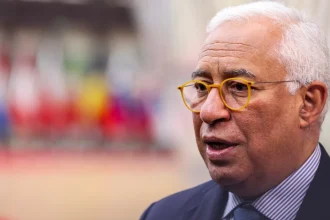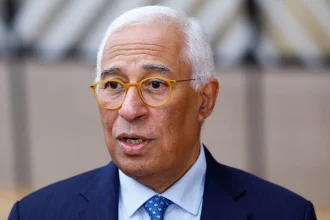
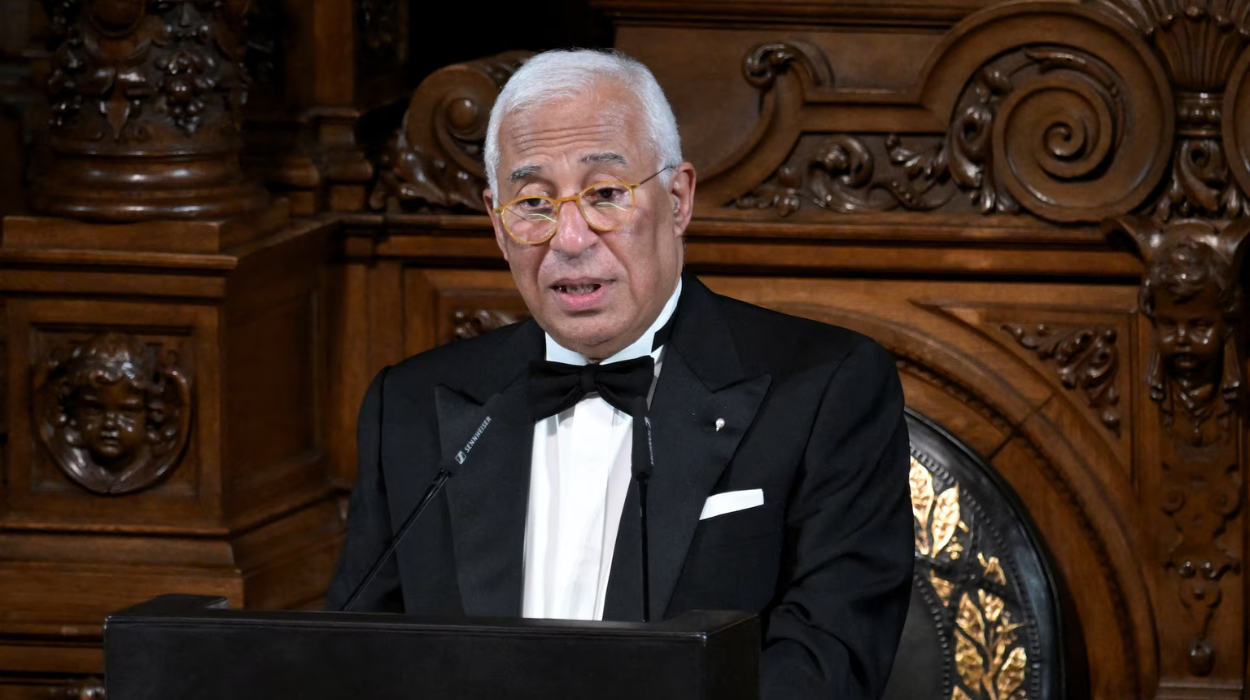
Brussels (Brussels Morning Newspaper) September 25, 2026 – European Council President António Costa addressed the 81st Session of the United Nations General Assembly in New York, calling for reinforced multilateralism, comprehensive reform of global governance institutions, strict adherence to international law, and enhanced regulation of artificial intelligence. During his address, Costa emphasized that no single country can independently address major global challenges such as climate change, conflict, and economic insecurity, while reaffirming the European Union’s backing for international judicial bodies, a two-state solution in the Middle East, and a lasting peace in Ukraine.
- The Imperative of Stronger and Representative Multilateralism
- Comprehensive Reform of the United Nations Security Council
- Strict Upholding of International Law and Support for Global Courts
- Global Governance and Regulation of Artificial Intelligence
- Urgent Appeal for Resolution to the War in Ukraine
- Reaffirmation of the Two-State Solution in the Middle East
- Commitment to Sustainable Development and Global Financial Reform
The Imperative of Stronger and Representative Multilateralism
Opening his address at the United Nations Headquarters, President António Costa stated that no nation, regardless of its power, can independently prevent pandemics, stabilize the climate, secure supply chains, regulate artificial intelligence, ensure financial stability, or construct lasting peace. He emphasized that the global community requires a strong, effective, and representative multilateral system capable of delivering tangible results for populations while safeguarding human rights, reinforcing democracy, and advancing gender equality.
Costa noted that multilateral frameworks face intense pressure from geopolitical polarization, institutional limitations, and financial constraints. He maintained that the correct response to these institutional strains is not withdrawal or isolation, but rather systematic reform, renewal, and reinvestment. To counter isolationist tendencies, Costa highlighted the launch of the new P4M initiative—Partners for Multilateralism, International Law, Peace, and Prosperity—established alongside international partners including Australia, Barbados, Brazil, Canada, India, and Kenya.
Comprehensive Reform of the United Nations Security Council
Addressing the structural efficacy of the United Nations, Costa stressed the necessity for the international organization to remain at the core of the global multilateral architecture. In pursuit of this objective, he reiterated the European Union’s consistent call for a comprehensive reform of the United Nations Security Council.
Costa explained that structural changes are required to render the Security Council more effective, inclusive, democratic, and accountable to the wider international community. He stated that institutional credibility depends heavily on the UN’s capacity to reflect contemporary geopolitical realities while remaining fully operational in preventing conflicts and mitigating humanitarian crises across different regions.
Strict Upholding of International Law and Support for Global Courts
Turning to the enforcement of global rules, President Costa asserted that international law must be applied uniformly without exception. He stated explicitly that there can be no double standards regarding international law, pointing out that the international community is currently witnessing deliberate violations that threaten global stability.
Costa offered unequivocal backing for international judicial bodies, declaring that the European Union stands firmly behind both the International Court of Justice and the International Criminal Court. He cautioned that it is entirely unacceptable to threaten or attack the International Criminal Court, its officials, or its staff. Accountability, he underscored, cannot be permitted to depend on political convenience or shifting diplomatic expediencies.
Global Governance and Regulation of Artificial Intelligence
Addressing technological transformation, Costa identified artificial intelligence as one of the defining challenges of the modern era. He stressed that the global community requires an accountable, transparent, and regulated architecture for artificial intelligence governance.
Costa stated that humanity must remain permanently in the driving seat, ensuring that artificial intelligence serves human interests rather than exerting control over society. He cautioned that the artificial intelligence industry cannot be left to unregulated self-governance by a small group of major global technology corporations. Consequently, he urged the United Nations to assume a central role in establishing global standards through mechanisms such as the UN Global Digital Compact, the Independent International Scientific Panel, and the Global Dialogue on AI Governance.
Urgent Appeal for Resolution to the War in Ukraine
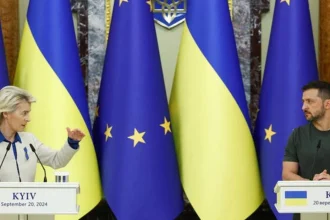
Addressing regional conflicts, Costa focused extensively on the ongoing war in Ukraine, speaking both before the General Assembly and during a United Nations Security Council briefing. He called upon the entire international community to unite behind European efforts to bring Russia’s war to an end.
Describing the continuation of the conflict as a critical danger, Costa warned that escalation and the further spreading of hostilities would yield disastrous consequences for the international community. He urged global actors to utilize all available diplomatic and economic levers to compel Russia to halt its escalation and to create the necessary conditions for a comprehensive, just, and lasting peace.
Reaffirmation of the Two-State Solution in the Middle East
During high-level discussions concerning the Middle East and the situation in Gaza, Costa addressed what he characterized as a prolonged humanitarian impasse. He reaffirmed the European Union’s absolute commitment to the two-state solution as the sole viable path toward lasting peace and security in the region.
Costa outlined the European position that sustainable peace requires the existence of the State of Israel and an independent, democratic, contiguous, sovereign, and viable Palestine living side by side in mutual recognition, security, and peace. Furthermore, he emphasized the necessity of respecting ceasefires, protecting freedom of navigation in critical maritime corridors such as the Strait of Hormuz, and maintaining robust humanitarian support for Palestinian populations.
Commitment to Sustainable Development and Global Financial Reform
Concluding his comprehensive overview of global priorities, Costa turned to the implementation of the 2030 Agenda for Sustainable Development, warning that progress remains severely hindered by widening funding gaps, escalating climate crises, and persistent geopolitical divisions. He reaffirmed the European Union’s commitment to the Paris Agreement, the Pact for the Future, and the Sustainable Development Goals, noting that the EU and its member states collectively provide over 40 percent of official development assistance globally.
Costa highlighted the Global Gateway initiative as a primary mechanism through which the European Union invests in sustainable infrastructure, connectivity, healthcare, education, and poverty eradication across partner nations. He concluded by identifying the upcoming 2027 Sustainable Development Goals Summit as an essential turning point to realign global efforts, correct existing trajectories, and achieve international targets.