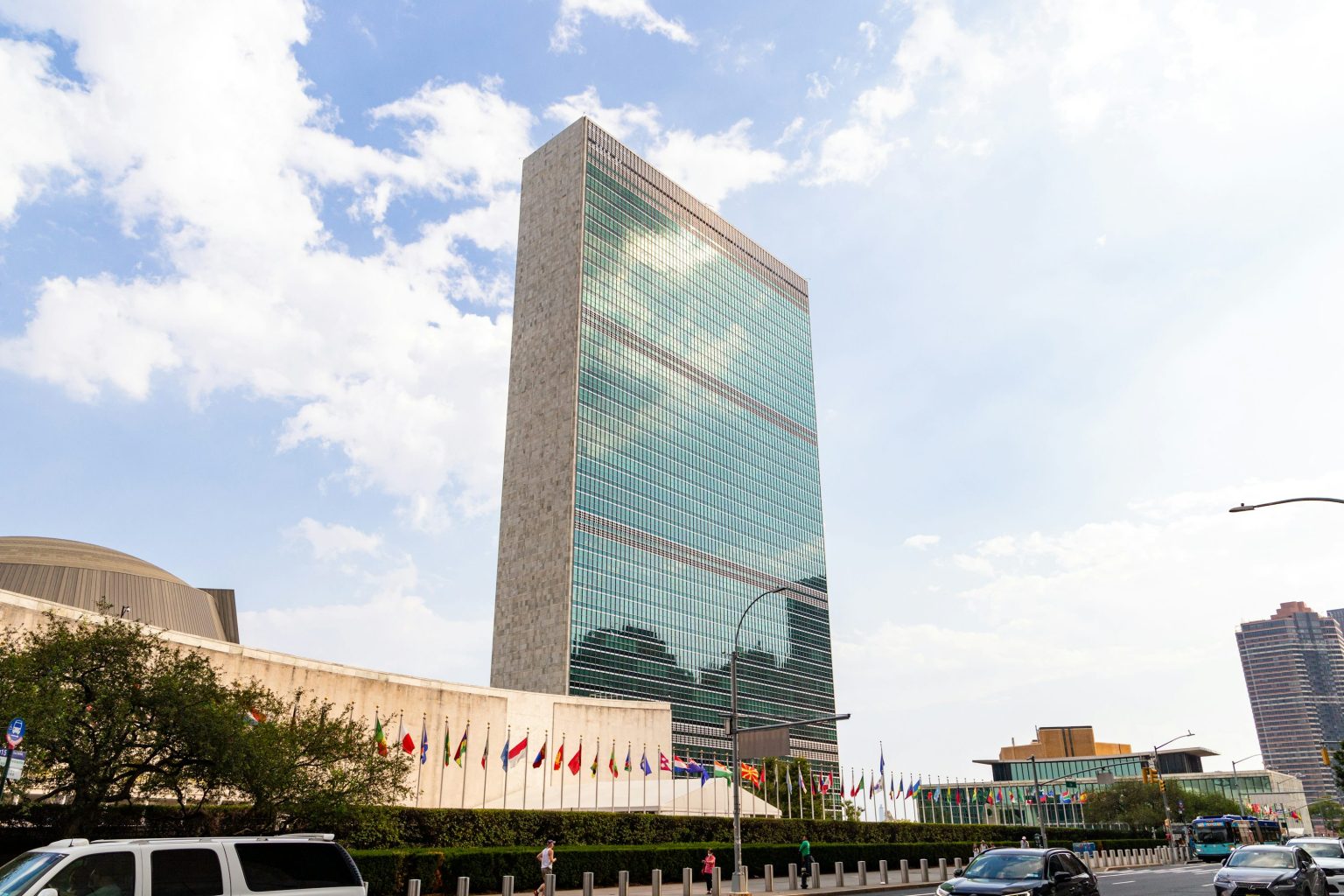
New York, 23 September, (Brussels Morning Newspaper) – Gaza and Palestinian statehood have returned to the centre of debate at the United Nations, as world leaders gathering for the 81st General Assembly confront continuing humanitarian problems in Gaza, Israeli settlement expansion in the occupied West Bank and the future of a two-state solution. UN Secretary-General António Guterres used his opening address on Tuesday to call for an end to fighting and unrestricted humanitarian assistance.
Palestinian statehood returns to UN debate
The status of Palestine remains a central diplomatic issue. Palestine has held non-member observer state status at the UN since 2012. In May 2024, the General Assembly determined that Palestine was qualified for full membership and recommended that the Security Council reconsider its application favourably. Full membership still requires a Security Council recommendation.
Turkish President Recep Tayyip Erdoğan used his General Assembly address on Tuesday to call on governments that have not recognised Palestine to do so. He also criticised the structure of the Security Council and argued that the international system had failed to respond adequately to the situation in Gaza.
Guterres warns over Gaza and West Bank
Guterres delivered one of the clearest warnings of the opening debate, saying the scale of killing and destruction in Gaza following the Hamas-led attacks of 7 October 2023 was unlike anything he had witnessed during his years as UN secretary-general.
“The fighting must stop. Humanitarian aid must flow,” Guterres told the General Assembly.
Turning to the West Bank, he warned that violence, displacement and Israeli settlement expansion were undermining prospects for peace.
“We cannot allow the two-State solution to disappear before our eyes,” he said.
Israel says its military actions are directed against Hamas and rejects accusations that its campaign amounts to genocide. Prime Minister Benjamin Netanyahu has said he will use his forthcoming UN address to defend Israel’s conduct and challenge international criticism.
Gaza humanitarian concerns remain prominent
Foreign ministers from Qatar, Egypt, Jordan, the United Arab Emirates, Indonesia, Pakistan, Türkiye and Saudi Arabia met in New York on the margins of the General Assembly. They expressed concern about continuing humanitarian suffering in Gaza and called for the “immediate, safe and unhindered” delivery of humanitarian and early-recovery supplies.
French President Emmanuel Macron also focused heavily on Gaza in his Tuesday address, criticising claims that peace had been secured while humanitarian access remained restricted.
Abbas to address UN remotely
Palestinian President Mahmoud Abbas will again participate remotely after the United States denied him a visa. On 17 September, the General Assembly voted 152-3, with four abstentions, to allow Palestine’s president to submit a pre-recorded statement for the general debate.
The United States defended its visa restrictions and criticised Palestinian diplomatic actions against Israel. Palestinian representatives said the restrictions violated Washington’s obligations as UN host country.
What happens next?
Attention will now turn to further speeches from Palestinian, Israeli and other international leaders. Gaza’s humanitarian situation, settlement activity and Palestinian statehood are expected to remain prominent throughout the high-level debate, although full Palestinian UN membership would still require action by the Security Council.