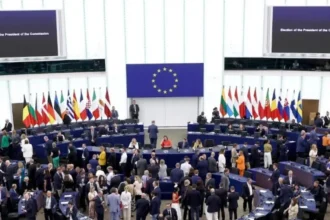
Brussels (Brussels Morning Newspaper) September 22, 2026 – The European Parliament has adopted its negotiating position to extend the Carbon Border Adjustment Mechanism (CBAM) to downstream steel and aluminium products. The legislative step aims to prevent carbon leakage further down the industrial value chain and strengthen regulatory measures against commercial circumvention. Lawmakers approved the broadened framework by 464 votes to 50, with 159 abstentions, setting the stage for upcoming negotiations with EU member states.
Legislative Action and Proposed Scope of Extension
The European Parliament’s formal vote on September 15, 2026, advances discussions on widening the reach of the European Union’s carbon border levy. As enacted in its definitive phase starting January 1, 2026, the CBAM initially focused on high-emission basic materials, covering cement, iron and steel, aluminium, fertilisers, electricity, and hydrogen. Importers of these designated goods are required to declare and account for the embedded greenhouse gas emissions.
Under the newly adopted parliamentary stance, the mechanism’s scope would encompass a broader spectrum of finished and semi-finished merchandise containing significant quantities of steel or aluminium. The proposed additions feature items such as fasteners, wire, springs, and various household articles. While the European Commission initially suggested incorporating roughly 180 additional downstream product categories based on carbon leakage risk criteria, and the Council examined an expanded list, the European Parliament’s position covers approximately 457 product lines.
Addressing Carbon Leakage Risks in Value Chains
The initiative to include downstream items is designed to resolve structural vulnerabilities identified in the initial design of the regulatory framework. Policymakers noted that when basic materials like carbon-intensive steel or aluminium face border charges, manufacturing operations can alter trade flows by shifting processing stages outside the bloc. Finished goods manufactured abroad using carbon-intensive inputs could otherwise enter the European single market without bearing equivalent carbon costs, bypassing internal pricing pressures established by the EU Emissions Trading System (ETS).
By extending reporting requirements and financial obligations to downstream components, the regulatory mechanism attempts to maintain parity between domestic producers operating under EU climate rules and external suppliers. Industry associations and trade groups have responded to the vote with varied perspectives regarding the breadth and speed of the proposed rollout. While certain manufacturing representatives acknowledged the necessity of closing potential loopholes, others cautioned that expanding coverage to complex consumer and industrial goods introduces substantial administrative and compliance burdens for importers.
Anti-Circumvention Measures and Safeguard Adjustments
Alongside product expansion, the European Parliament backed tighter anti-circumvention provisions. The adopted text seeks to lower the threshold at which minor technical modifications to imported goods are legally classified as methods designed solely to evade CBAM obligations. Lawmakers emphasized that these stricter rules must focus specifically on intentional avoidance patterns rather than standard commercial adjustments.
Furthermore, the Parliament rejected a provision previously suggested by the European Commission that would have allowed goods to be temporarily removed from the CBAM framework during periods of severe price shocks. Instead, lawmakers proposed redirecting CBAM revenues collected from affected sectors to support industrial decarbonisation efforts. The text also supports the deployment of a Temporary Decarbonisation Fund (TDF) from 2027 through 2029 to assist European producers exposed to carbon-leakage pressures in competitive international export markets.
Next Steps in Legislative Negotiations
The vote concludes only an internal milestone for the European Parliament. Because the text represents the institution’s official negotiating position rather than final binding law, the proposals must undergo formal trilogue negotiations between the European Parliament and the Council of the European Union.
The definitive product scope, final timeline for implementation, and exact parameters of anti-circumvention thresholds will be determined through these inter-institutional discussions. Until an amending regulation is formally enacted and published in the Official Journal of the European Union, the existing product scope and legal parameters of the CBAM remain fully applicable.