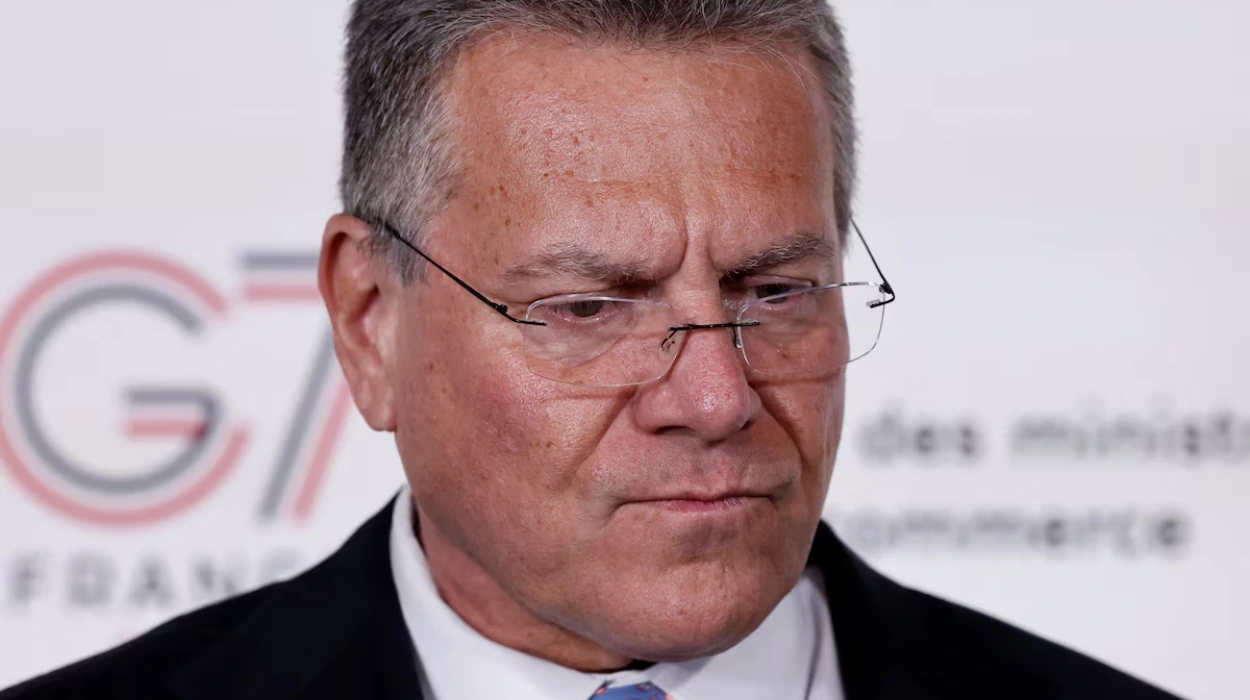
Brussels (Brussels Morning Newspaper) September 22, 2026 – European Trade Commissioner Maroš Šefčovič stated that he aims to transition from general rhetoric to concrete results during his upcoming diplomatic mission to China for crucial bilateral trade negotiations. Speaking on Tuesday, Sefcovic emphasised that the dialogue must expand past traditional trade balance debates to achieve a necessary political breakthrough addressing market access, export controls, and rising economic imbalances.
Overview of Upcoming Bilateral Trade Negotiations
European Trade Commissioner Maros Sefcovic outlined his objectives ahead of his scheduled visit to China. The discussions, slated for early October, follow persistent concerns raised by Brussels regarding the widening trade deficit between the European Union and Beijing. Sefcovic stressed that the upcoming rounds must transcend standard diplomatic exchanges to secure verifiable outcomes concerning European market access and the management of Chinese exports heading into the bloc.
The commissioner specifically pointed to export controls as a vital area requiring consolidation, noting that while foundational understandings have been established, they must now be formalized into concrete policy agreements. These diplomatic engagements arrive amid heightened scrutiny over industrial overcapacity in sectors including chemicals, batteries, and vehicles, which European leadership has argued threatens domestic industrial sectors.
Context of EU-China Economic Imbalances
The push for tangible results follows extensive statements from top European officials regarding the state of transatlantic and Eurasian commerce. European Commission President Ursula von der Leyen previously addressed the European Parliament, characterising the European Union’s goods trade deficit with China as unsustainable. According to European Commission figures, the goods trade deficit reached €360.6 billion ($413.4 billion) in the preceding year and continued to expand by nine percent during the first half of the reporting year.
Leadership in Brussels has framed the current economic dynamic around concerns of a secondary industrial shock and potential deindustrialisation. In response, the European Union has maintained that a surge in imported manufactured goods is heavily influenced by systemic overcapacity within Chinese industrial manufacturing. Conversely, Beijing has consistently rejected these assertions, maintaining that concerns regarding economic imbalances and excess capacity reflect protectionist inclinations designed to constrain Chinese market expansion.
Strategic Priorities and Broader Trade Agreements
Alongside ongoing dialogues with Beijing, Commissioner Sefcovic’s broader commercial portfolio encompasses several parallel trade initiatives across international markets. Earlier on Tuesday, the European Union formally announced the successful conclusion of a comprehensive trade agreement with the Philippines. Building upon this momentum, Sefcovic expressed official optimism that similar comprehensive trade pacts involving India and Indonesia would be finalized prior to the conclusion of the calendar year.
Furthermore, the European trade chief confirmed that administrative teams are actively working toward securing an agreement with Thailand. These concurrent negotiations reflect the broader strategic diversification efforts undertaken by the European Union to strengthen economic partnerships across Southeast Asia and South Asia while simultaneously addressing structural trade challenges with major global economies like China.
Internal Policy Instruments and Critical Raw Materials
To support its trade objectives, the European Union has pursued internal mechanisms aimed at safeguarding industrial competitiveness and securing supply chains. Ursula von der Leyen highlighted the bloc’s strategic vulnerability regarding critical minerals, particularly rare earth elements essential for modern manufacturing and technology sectors. In response, the European Commission announced initiatives to urgently procure and build up dedicated reserves.
Plans include the establishment of a specialized European Corporation on critical raw materials designed to assist member states in obtaining and stockpiling necessary resources. European leaders have emphasized that these internal defensive tools complement ongoing external negotiations, ensuring that the twenty-seven-nation bloc retains appropriate legal and economic instruments to protect its collective commercial interests.