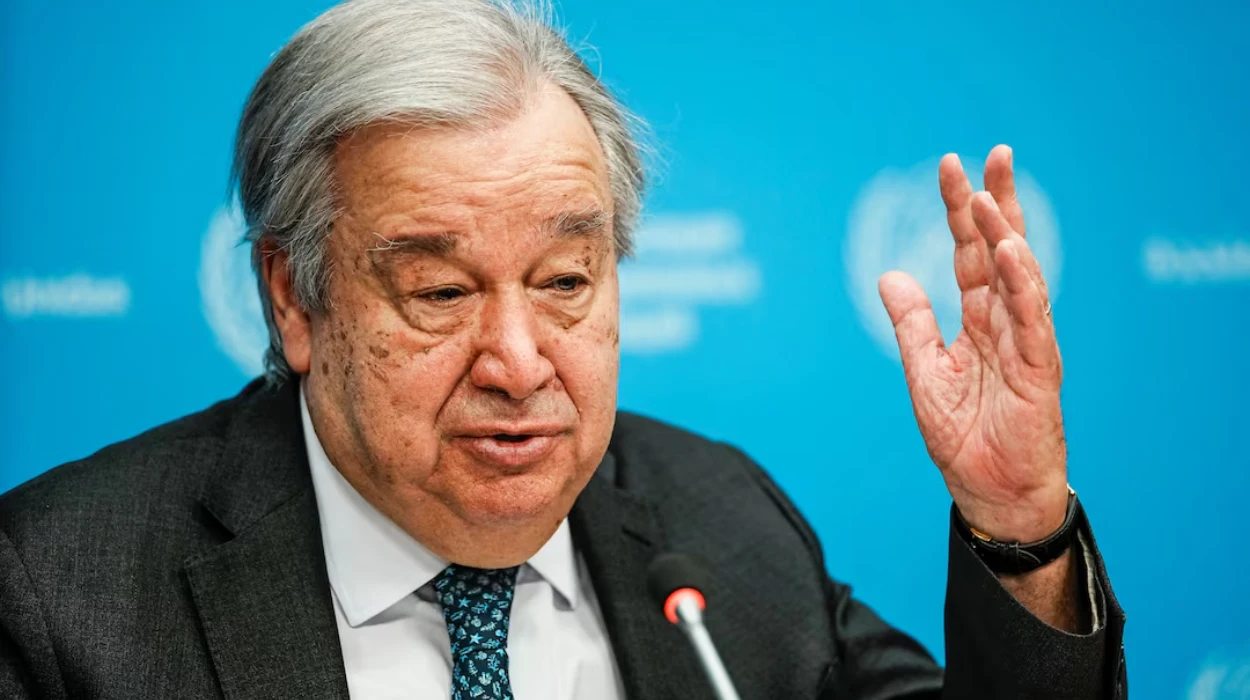
New York (Brussels Morning Newspaper) September 21, 2026 – United Nations Secretary-General António Guterres has warned that global conditions are deteriorating due to multiplying and increasingly complex international conflicts. Speaking on the eve of his final address to the UN General Assembly, Guterres stated that severe geopolitical divides have paralysed the UN Security Council, leaving vulnerable populations facing severe humanitarian crises.
Global Security and Major Power Conduct
The state of the world is worsening as ongoing military conflicts expand in scale and complexity. In a detailed interview, United Nations Secretary-General António Guterres outlined that the involvement of major superpowers and key members of the Security Council in global wars has generated a profound institutional crisis.
Guterres pointed directly to ongoing violations of international law by countries holding permanent positions within the council. According to the UN chief, this conduct establishes a damaging environment of global impunity. Consequently, mid-sized and smaller powers around the world increasingly believe they can act without restraint because they perceive that no punitive consequences will follow.
The UN leader stressed that the underlying structural issue relates to the distribution and execution of global power. He noted that contemporary multilateral institutions are hindered from operating effectively because current power dynamics do not align with international cooperation requirements.
Institutional Paralysis and Urgent Reform Needs
The paralysis within the United Nations Security Council remains a central obstacle to maintaining international peace and security. Guterres emphasized that the composition of the Security Council is fundamentally outdated, reflecting geopolitical realities from several decades ago rather than the structure of the modern international order.
Reforming the Security Council must remain an absolute priority for member states to restore global faith in multilateral governance. Despite the acute dysfunction of its primary security organ, Guterres maintained that the wider United Nations organization is not fundamentally broken, though it faces severe operational strain.
Socioeconomic Fallout and Developing Nations
The paralysis of international bodies and ongoing conflicts have triggered widespread economic shocks, heavily impacting civilian populations across the developing world. Guterres highlighted that disruptions tied to geopolitical conflicts—including commercial transit challenges in the Black Sea, the Strait of Hormuz, and the Bab al-Mandeb Strait—have severely restricted the flow of essential commodities.
These maritime blockades and infrastructure attacks on oil installations have contributed directly to shortages of food, energy supplies, and chemical fertilisers. While developed economies grapple with manageable fluctuations in interest rates and fuel costs, populations across developing nations are enduring desperate economic circumstances characterized by steep spikes in living expenses and acute resource scarcity.
Transition of Leadership and Future Mandate
The remarks coincide with the final months of Guterres’s tenure as secretary-general, a role he has held since January 1, 2017. His official mandate concludes on December 31, 2026, leaving the selection of his successor pending among member states. The incoming leadership will inherit an organization facing profound geopolitical friction, financial constraints, and an urgent mandate for comprehensive institutional reform.