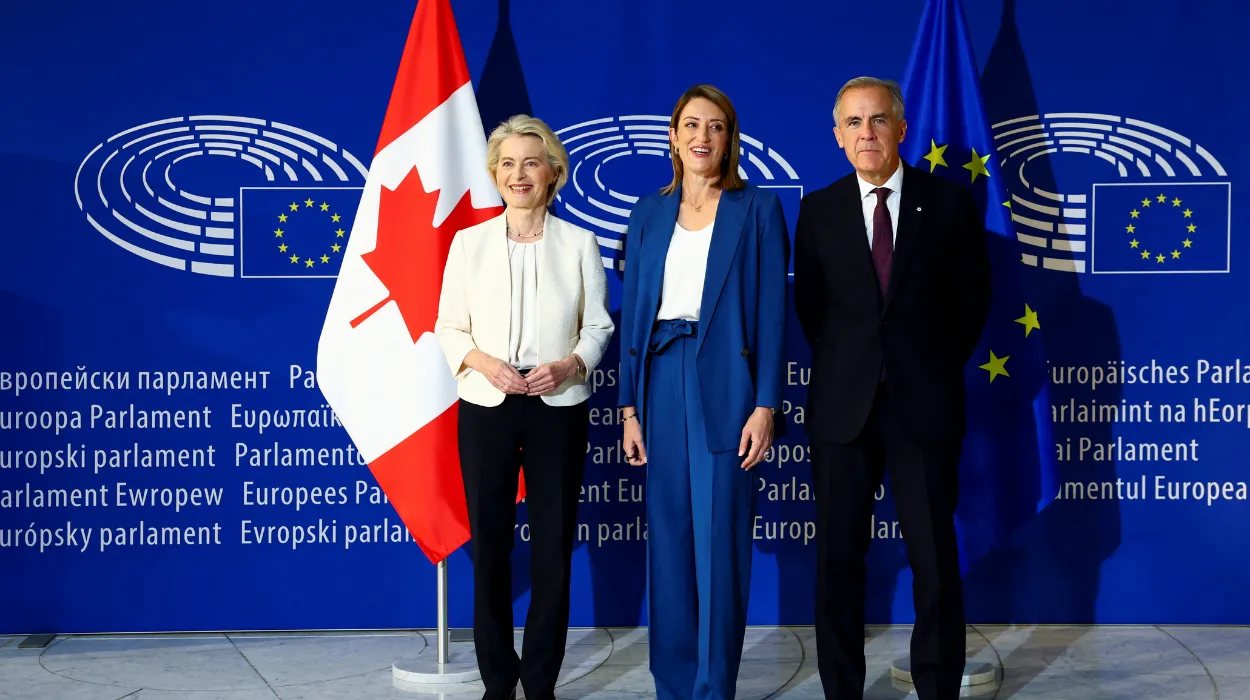
Brussels (Brussels Morning Newspaper) September 18, 2026 – European Commission President Ursula von der Leyen has proposed making Canada the bloc’s first associate member, prompting Canadian Prime Minister Mark Carney to call for an alliance for the future during addresses in Strasbourg. The unprecedented proposal seeks to expand cooperation on critical minerals, defence, and technology, though the precise legal framework remains undefined and requires approval from all 27 EU member states.
Evolution of the Canada-European Union Partnership
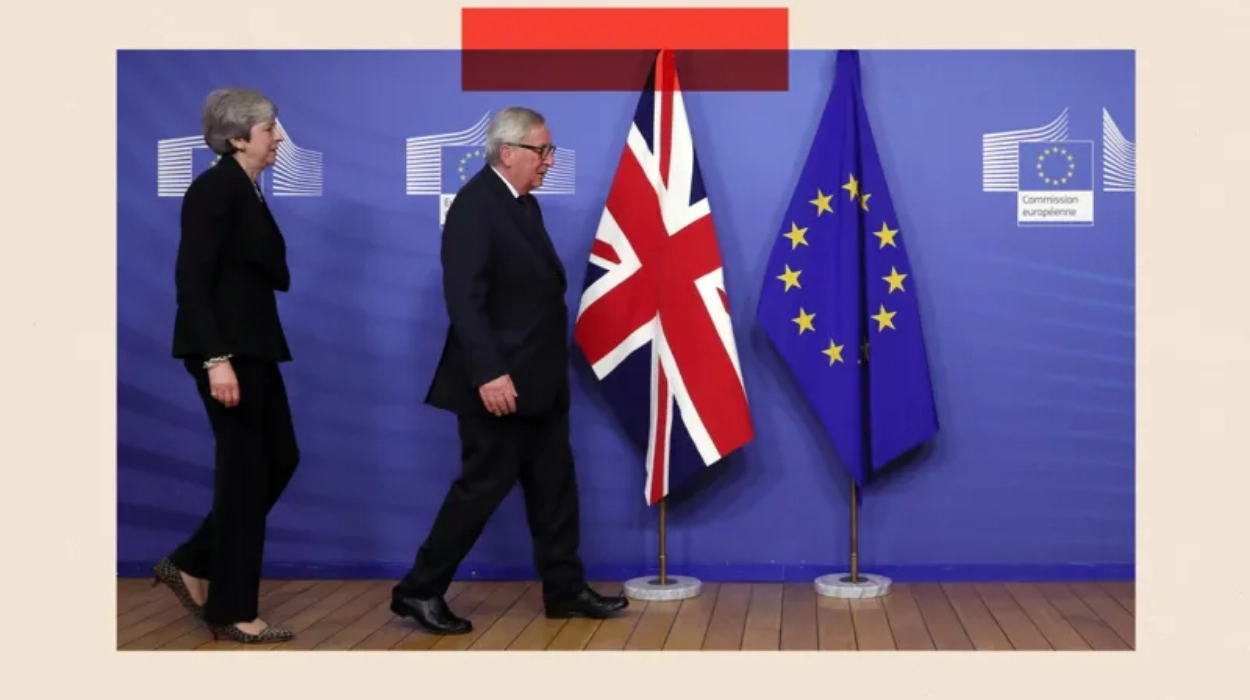
European Commission President Ursula von der Leyen announced the initiative during her annual State of the European Union address at the European Parliament in Strasbourg. Addressing Canadian Prime Minister Mark Carney directly—marking the first time a foreign head of government attended the address—von der Leyen stated that partnerships must be urgently reimagined.
She proposed paving the way for Canada to become the European Union’s first associated member, aiming to elevate existing ties beyond the current Comprehensive Economic and Trade Agreement (CETA). Von der Leyen emphasized that the prospective framework would focus on mutual economic security, critical raw materials, artificial intelligence, quantum technology, cyber security, and the defence industry.
In response, Prime Minister Carney addressed a formal sitting of the European Parliament, welcoming the offer while clarifying that Ottawa is not seeking full membership in the bloc. Carney stated that the final shape and name of the arrangement would be determined by Brussels, and any resulting agreement would be submitted to the Canadian parliament for a vote.
Scope of Proposed Sectoral Cooperation and Integration
Carney outlined several key areas for bilateral integration under the proposed “alliance for the future”. These proposals include deep cooperation on critical minerals—noting Canada’s deposits of more than 34 critical minerals—alongside liquefied natural gas and hydrogen supplies.
The framework also targets enhanced collaboration in defence industrial capacity, artificial intelligence and compute, energy security, space initiatives, and payment systems. Furthermore, Carney proposed seamless digital trade in non-agricultural goods and a wide range of services.
Additional initiatives include facilitating rights for young Canadians and Europeans to live, work, and study on either side of the Atlantic. Proposals involve Canadian participation in the Erasmus+ programme and the upcoming Horizon research initiative. European Parliament President Roberta Metsola supported the expansion, pointing to potential cooperation across education, research, trade, and defence.
Geopolitical Context and Institutional Hurdles
The renewed push for integration builds upon prior cooperative agreements, including a Strategic Partnership Agreement and Canada’s inclusion as the first non-European member of the EU’s Security Action for Europe (SAFE) defence loan scheme. European officials have noted that the framework is designed for mutual strength rather than directed against any external nation.
Despite the political momentum, European diplomats and institutional analysts have highlighted structural ambiguities. Associate membership does not currently exist within the foundational EU treaties, and implementation requires unanimous agreement among all 27 member states. Observers point out that previous agreements, such as CETA, faced prolonged ratification delays across member states. Both governments intend to revisit the specific terms and structure of the partnership during an upcoming EU-Canada summit scheduled in Canada.