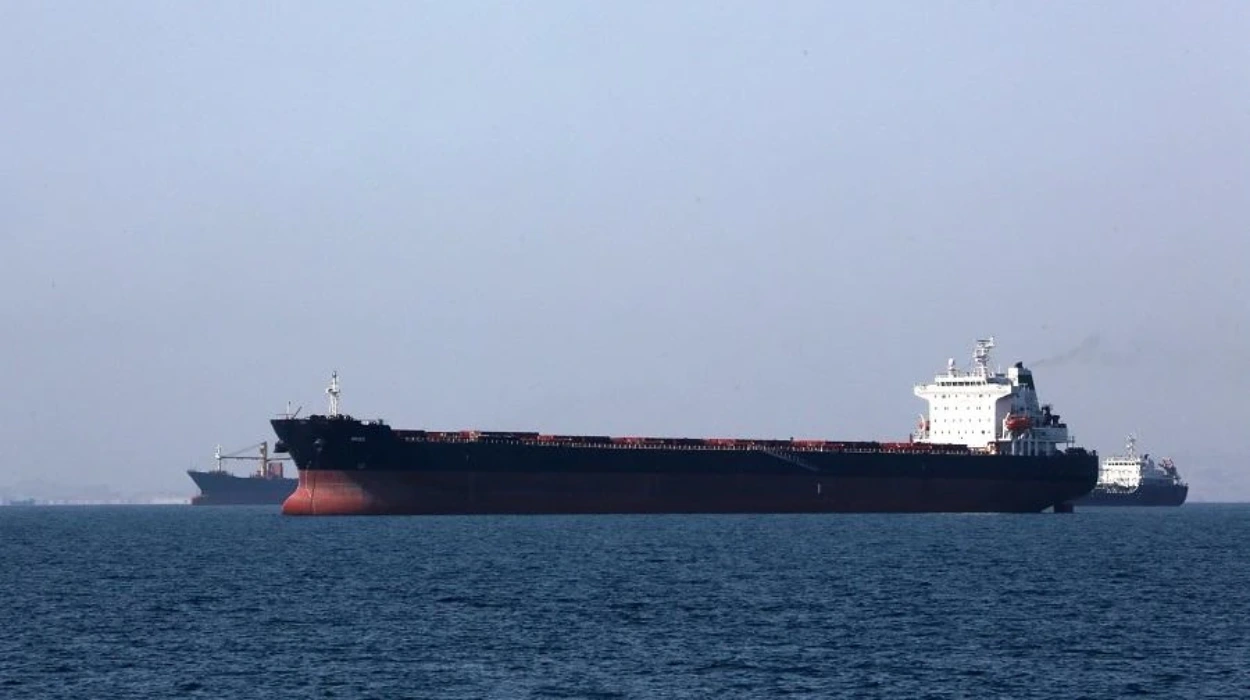
Riyadh (Brussels Morning Newspaper) October 6, 2026 – Gulf economies are projected to experience a substantial economic rebound of 10.3 percent in 2027, according to a recent World Bank report, contingent upon the stabilization of regional conflicts and the resumption of normal oil production and shipping flows. The regional forecast follows anticipated contractions across the Gulf Cooperation Council in 2026 due to extensive disruptions in the Strait of Hormuz.
The World Bank report highlights that regional economic performance is closely tied to developments surrounding ongoing geopolitical tensions involving Iran. The disruption of traditional oil export routes has exerted considerable downward pressure on hydrocarbon-dependent economies across the Middle East and North Africa (MENA) region. Consequently, collective economic output for the GCC is projected to contract by 4.3 percent over the course of 2026.
Output across the broader Middle East, North Africa, Afghanistan, and Pakistan (MENAAP) region is also projected to decline by 2.1 percent during the current year, following a positive growth rate of 3.3 percent recorded in 2025. Similarly, the wider Middle East and North Africa economy is anticipated to contract by 2.8 percent in 2026 after expanding by 3.4 percent in the previous year.
However, international financial institutions and economic analysts indicate that a recovery is achievable if active conflicts subside by the end of 2026. According to World Bank projections, growth in the MENAAP region, excluding Iran, could rebound to 7.8 percent in 2027. This anticipated expansion is expected to be driven primarily by the restoration of hydrocarbon production, normalization of maritime trade routes, and a concurrent bounce in tourism and domestic commercial activity.
Saudi Arabian Economic Outlook And Resilience Factors
Saudi Arabia’s national economy is expected to reflect the regional trend, with the World Bank forecasting a 2 percent economic contraction in 2026, followed by a sharp recovery of 7.9 percent in 2027. Despite broader trade disruptions affecting the Gulf subregion, the Kingdom has been partially shielded from the full severity of the oil export bottlenecks by utilizing alternative transport infrastructure, notably the East–West Pipeline, which transports crude oil directly to Yanbu on the Red Sea coast.
Thomas Kuruvilla, managing partner of Arthur D. Little Middle East and India, observed that the Saudi economy is positioned to enter the 2027 recovery phase with a significantly broader economic base than during previous hydrocarbon cycles. Diversification initiatives implemented under national strategic frameworks are credited with strengthening non-oil sectors.
According to industry analysts, construction, logistics, business services, tourism, and hospitality sectors are anticipated to benefit extensively from heightened domestic and commercial activity. Continued capital investments aligned with long-term development objectives are expected to reinforce foundational growth. A key determinant for the 2027 economic trajectory will be the extent to which the hydrocarbon sector’s recovery successfully catalyzes broader private-sector activity, productivity gains, and long-term capital investment.
Furthermore, the domestic tourism sector is projected to capture substantial advantages from the predicted economic upturn. Extensive infrastructural pipelines established across hospitality, entertainment, and destination development are anticipated to attract sustained consumer demand as regional investor confidence and international travel flows normalize.
Projected Growth Trajectories Across Gulf Cooperation Council Member States
The World Bank’s comprehensive regional outlook details varying degrees of economic recovery across individual Gulf Cooperation Council member states for 2027. The projected figures depend heavily on sector-specific capacities and the full restoration of energy supply chains.
Qatar is anticipated to register the highest gross domestic product growth rate in the region, projected at 26.7 percent in 2027, as scheduled liquefied natural gas production capacities fully resume operations. Kuwait’s economy is similarly positioned for a robust expansion, with GDP expected to grow by 22 percent as petroleum export volumes return to pre-disruption levels.
In the United Arab Emirates, economic growth for 2027 is projected at 9.5 percent, supported by ongoing commercial diversification, logistics strength, and resilient trade networks. Bahrain and Oman are forecasted to achieve more moderate, stable economic growth rates of 4.2 percent and 3.4 percent respectively over the same 12-month period.
Broader Implications For Investor Confidence And Regional Stability
Economic analysts emphasize that the realization of these projected growth figures depends on sustained policy execution and broader regional stability. The return of predictable shipping conditions through strategic maritime corridors such as the Strait of Hormuz remains a critical prerequisite for international trade normalization.
Market observers note that evidence of commercially viable opportunities, strengthening corporate cash flows, and increased risk-sharing between public institutions and private investors will serve as primary indicators of structural economic health. Greater stability across the Middle East is expected to reinforce investor sentiment, signaling that the anticipated 2027 rebound represents a durable re-rating of the GCC economic landscape rather than a temporary cyclical adjustment.