
New York, United States — January, 2026: Brussels Morning Newspaper says US dollar weakness has emerged as one of the most influential forces shaping global financial markets at the opening of 2026. Currency traders, institutional investors, and policymakers are closely monitoring the greenback as shifting political signals, questions around monetary independence, and heightened risk aversion reshape confidence in long-established economic assumptions. The dollar’s recent slide has rippled through equities, commodities, and bond markets, prompting a broad reassessment of how stability is defined in an increasingly uncertain global environment.
Political Factors Behind US Dollar Weakness
Political uncertainty in the United States has weighed heavily on market sentiment in recent months. Prolonged debate over fiscal priorities, government spending, and institutional accountability has unsettled investors who traditionally rely on predictability and continuity. Foreign exchange analysts note that currencies often react before other asset classes when political clarity fades, making exchange rates an early indicator of deeper concern.
As these debates persist, many traders now interpret US dollar weakness as a signal of institutional strain rather than a short-term response to economic data. This perception has encouraged portfolio managers to reduce exposure to dollar-denominated assets and seek broader diversification strategies.
Federal Reserve Independence and Dollar Confidence
The credibility of the Federal Reserve remains central to the dollar’s global role. Confidence that monetary policy decisions are insulated from political or legal pressure underpins trust in the currency. Recent scrutiny surrounding central bank leadership has heightened sensitivity to official communication and governance standards.
One senior currency strategist said,
“Markets move on confidence in institutions as much as on economic indicators.”
This single remark reflects why US dollar weakness has gained momentum as investors reassess the durability of safeguards designed to protect independent monetary decision-making.

Gold Prices Rise as the Dollar Loses Ground
Gold prices have strengthened alongside the dollar’s decline, reinforcing bullion’s reputation as a traditional store of value during periods of uncertainty. Historically, gold benefits when confidence in fiat currencies weakens, and recent trading patterns reflect this relationship clearly.
Portfolio managers report increased allocations to precious metals as US dollar weakness encourages diversification away from paper assets. This shift is driven less by speculation and more by a desire to preserve capital during prolonged periods of volatility.
Interest Rate Uncertainty Weighs on the Dollar
Interest rate expectations remain a critical driver of currency valuation, yet forward guidance has become increasingly difficult to interpret. When markets struggle to anticipate policy direction, yield advantages narrow, reducing incentives to hold dollar-based assets.
Analysts argue that uncertainty surrounding future rate decisions has reinforced US dollar weakness, particularly as investors balance persistent inflation concerns against the risk of slowing economic growth and political influence over monetary frameworks.
Investor Risk Aversion Amplifies Currency Pressure
Investor psychology has played a decisive role in shaping recent market behavior. Even without definitive outcomes, the perception of institutional risk can trigger defensive positioning. Strategists observe that heightened caution has made US dollar weakness a self-reinforcing trend, with each decline prompting additional hedging activity.
This behavior reflects prudence rather than panic, suggesting that investors are preparing for extended uncertainty rather than reacting to a single catalyst or headline.
Historical Episodes of Dollar Declines
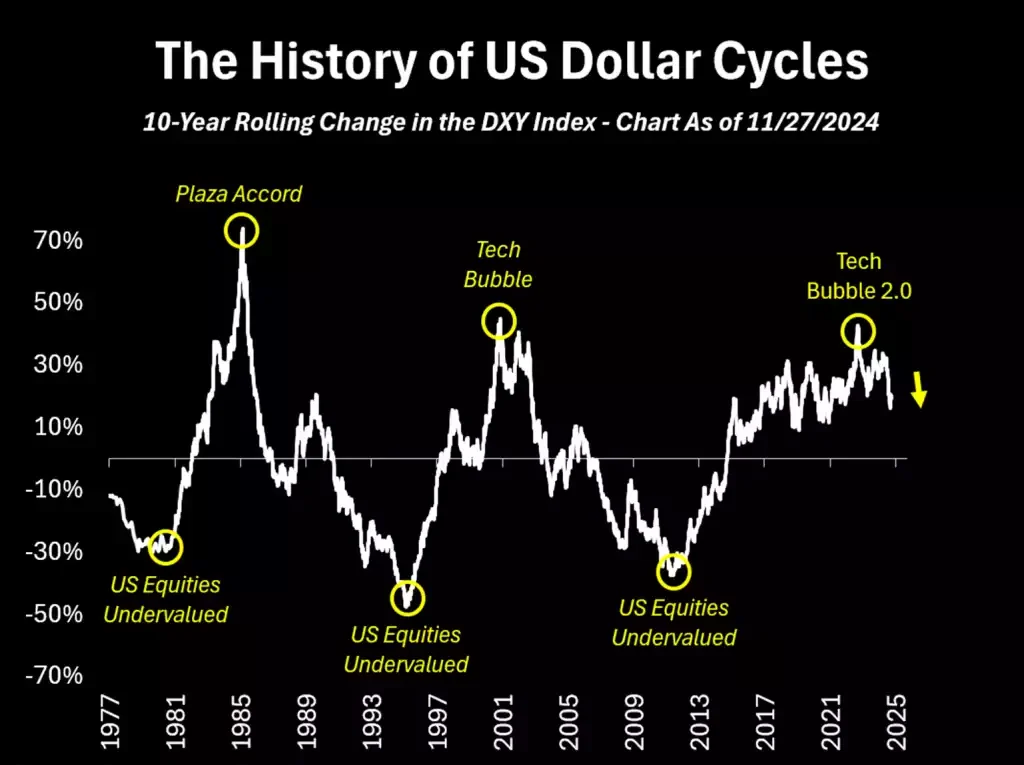
Past periods of dollar softness often coincided with moments of political tension or institutional doubt. Analysts comparing current conditions with earlier cycles point to familiar patterns in capital flows and asset allocation. The persistence of US dollar weakness today echoes episodes when confidence eroded faster than economic fundamentals alone would justify.
Modern financial markets, however, are far more interconnected than in previous decades, amplifying both the speed and global reach of currency movements.
Global Market Impact of a Softer Dollar
A weaker dollar carries implications well beyond the United States. Emerging markets, commodity exporters, and multinational corporations all adjust strategies in response to currency shifts. As US dollar weakness continues, global portfolios are being re-calibrated to manage exposure and volatility more carefully.
European and Asian investors have also increased interest in alternative assets, highlighting the international dimension of current market uncertainty and the shared nature of risk perception.
Central Bank Reserve Strategy Amid Dollar Weakness
Central banks worldwide have gradually diversified reserve holdings over the past decade. While the dollar remains dominant, renewed focus on US dollar weakness has strengthened arguments for balance and resilience in reserve management strategies.
Even incremental adjustments in reserve composition can influence long-term currency dynamics, particularly during periods when confidence in traditional anchors is tested.
Trade and Corporate Challenges From Currency Moves
Currency movements directly affect trade competitiveness and corporate planning. A softer dollar can support exports by improving price competitiveness, but it also raises costs for import-dependent businesses. Corporate leaders note that sustained US dollar weakness complicates forecasting and increases the importance of active currency risk management.
Earnings guidance across sectors increasingly highlights exchange-rate exposure as a central factor shaping profitability and investment decisions.
Liquidity and Volatility in Dollar Trading
Despite heightened uncertainty, liquidity across major currency markets has remained largely intact. Trading conditions suggest orderly adjustment rather than disorderly retreat. Still, analysts warn that prolonged US dollar weakness could test resilience if confidence deteriorates further.
For now, volatility remains elevated but manageable, supported by deep markets and active participation from global investors.
Policy Signals Influencing Dollar Direction
Investors are closely monitoring official communication from policymakers for signs of stabilization and reassurance. Clear guidance, transparency, and consistency are viewed as essential to restoring confidence. Market observers argue that addressing the perceptions driving US dollar weakness will require not only policy action but credible messaging.
In sensitive environments, even subtle changes in tone can have out sized effects on currency markets.
Outlook for Currency Markets in 2026
As 2026 progresses, the dollar’s trajectory will depend on political stability, monetary clarity, and global economic conditions. While short-term rebounds remain possible, many analysts believe US dollar weakness reflects underlying concerns that may take time to resolve.
Investors are positioning portfolios for flexibility rather than assuming a rapid return to previous norms, favouring resilience over aggressive risk-taking.
A Critical Moment for Global Dollar Confidence
The current period represents a critical moment for confidence in global financial institutions and policy frameworks. Whether stability returns or uncertainty deepens, the prominence of US dollar weakness is shaping investment decisions and policy debate worldwide. This phase is likely to be remembered as a moment when trust, credibility, and governance defined global market behavior in 2026.