Washington, United States, March 22, 2026 (Brussels Morning Newspaper) US defense strategy debate has taken center stage following the resignation of a top counterterrorism official who stepped down in protest of the United States’ approach to the escalating conflict with Iran. The move has triggered widespread attention, highlighting growing internal divisions over military policy and long-term strategic planning.
- Resignation Reflects Deep Strategic Divisions
- Global Reactions Highlight Broader Concerns
- Strategic Risks of Continued Escalation
- Impact on National Security Operations
- Political Fallout and Policy Questions
- Human Impact of Strategic Decisions
- Calls for Diplomacy and De-escalation
- Historical Lessons and Strategic Reflection
- What Lies Ahead?
- A Defining Moment in US Defense Strategy Debate
According to officials familiar with the situation, the resignation reflects deep concerns within the national security community about the direction of U.S. involvement. The decision comes as tensions continue to rise, placing increased pressure on policymakers to reassess their approach.
Resignation Reflects Deep Strategic Divisions
The resignation of a senior official during a critical geopolitical moment is highly unusual and signals underlying disagreements at the highest levels. The US defense strategy debate has intensified in recent weeks, with competing views emerging over how best to address the crisis.
Sources indicate the official had voiced repeated concerns about escalation risks, including the possibility of a broader regional conflict. The departure is seen by many analysts as a warning sign that consensus within the national security framework is weakening.
one former defense official said.
“When experienced leaders step down, it often reflects serious disagreements about strategy.”
Global Reactions Highlight Broader Concerns
The US defense strategy debate is not confined to Washington. International leaders are closely watching developments, with some expressing concern about the potential consequences of continued escalation.
Belarusian President Alexander Lukashenko stated that Iran would “courageously overcome wartime challenges,” a remark that underscores growing global attention on the conflict. His comments suggest that geopolitical alignments may shift as tensions deepen.
Countries across Europe and Asia are calling for restraint, emphasizing the importance of diplomatic engagement over prolonged military action.
Strategic Risks of Continued Escalation
Experts warn that the ongoing US defense strategy debate is taking place against a backdrop of increasing global instability. The conflict with Iran presents a range of strategic risks that could have lasting implications.
Key concerns include:
- Expansion of hostilities into neighboring regions
- Disruption of critical energy and trade routes
- Heightened risk of retaliatory actions
- Strain on international alliances and partnerships
The resignation adds urgency to these concerns, suggesting that even senior insiders are questioning the current trajectory.
Impact on National Security Operations
The departure of a high-level counterterrorism official raises questions about operational continuity and effectiveness. The individual was reportedly involved in overseeing key intelligence and counterterrorism initiatives.
With the US defense strategy debate intensifying, there are concerns that shifts in leadership could disrupt ongoing operations. Analysts warn that such disruptions may create vulnerabilities at a time when global threats remain high.
Political Fallout and Policy Questions
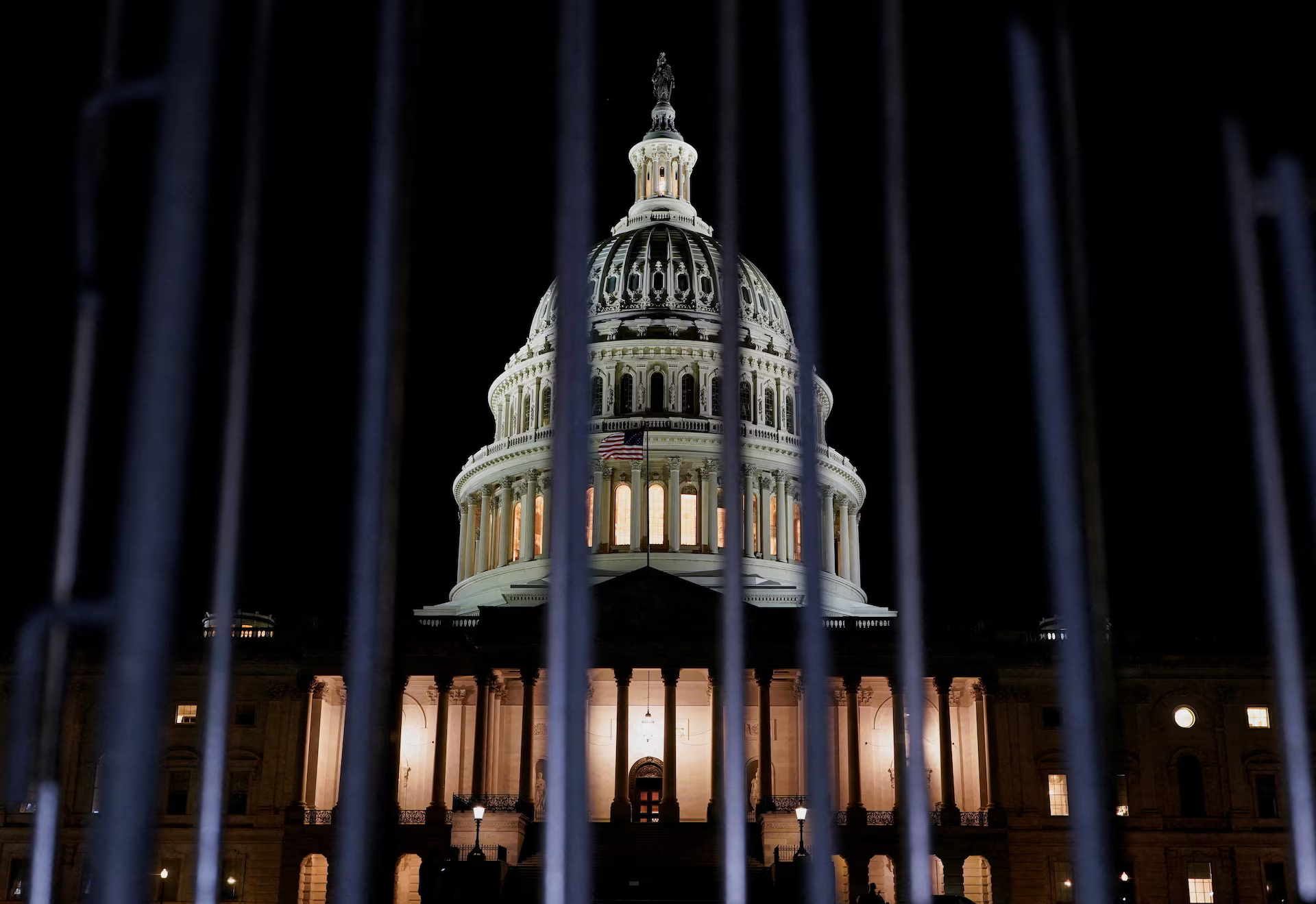
The resignation has sparked immediate political reactions, with lawmakers calling for greater clarity on the administration’s strategy. The US defense strategy debate is now a central issue in discussions about national security and foreign policy.
Some officials have praised the resignation as an act of principle, while others argue that unity is essential during times of crisis. The differing perspectives highlight the complexity of the situation and the challenges of achieving consensus.
Human Impact of Strategic Decisions
Beyond policy discussions, the US defense strategy debate has real-world implications for individuals and communities affected by the conflict. The resignation underscores the ethical and moral considerations involved in decision-making at the highest levels.
Sources close to the former official described the decision as deeply personal, driven by concerns about the broader consequences of continued escalation.
“This was about more than policy,” one insider said. “It was about responsibility and accountability.”
Such perspectives resonate with growing calls for a more balanced approach that prioritizes both security and humanitarian considerations.
Calls for Diplomacy and De-escalation
As tensions rise, many experts are advocating for renewed diplomatic efforts. The US defense strategy debate has brought attention to the need for alternative approaches that reduce the risk of further conflict.
Diplomats argue that sustainable solutions require engagement, dialogue, and cooperation among global stakeholders. They emphasize that military action alone is unlikely to achieve lasting stability.
The current situation presents an opportunity to reassess priorities and explore pathways toward de-escalation.
Historical Lessons and Strategic Reflection
The US defense strategy debate is also informed by historical precedents. Past conflicts have demonstrated the challenges of managing prolonged engagements and the importance of clear objectives.
Analysts note that without a defined endgame, conflicts can become increasingly complex and difficult to resolve. The resignation of a senior official highlights the need for ongoing evaluation and strategic adjustment.
History suggests that adaptability and open dialogue are essential components of effective policy-making.
What Lies Ahead?
The resignation marks a turning point in the ongoing US defense strategy debate, raising critical questions about the future direction of U.S. foreign policy. Observers are closely watching how leadership responds and whether changes in strategy will follow.
The international community is also expected to play a key role in shaping the next phase of the conflict. As discussions continue, the focus will remain on balancing security objectives with the need for stability.
The coming weeks are likely to be decisive in determining the path forward.
A Defining Moment in US Defense Strategy Debate
The resignation of a top counterterrorism official has brought the US defense strategy debate into sharp focus. It reflects deep divisions within the national security establishment and highlights the challenges of navigating a complex geopolitical crisis.
From global reactions to political implications, the situation underscores the importance of thoughtful and strategic decision-making. As tensions persist, the need for clarity, cohesion, and diplomacy becomes increasingly urgent.
The world is watching closely as this critical debate continues to unfold.