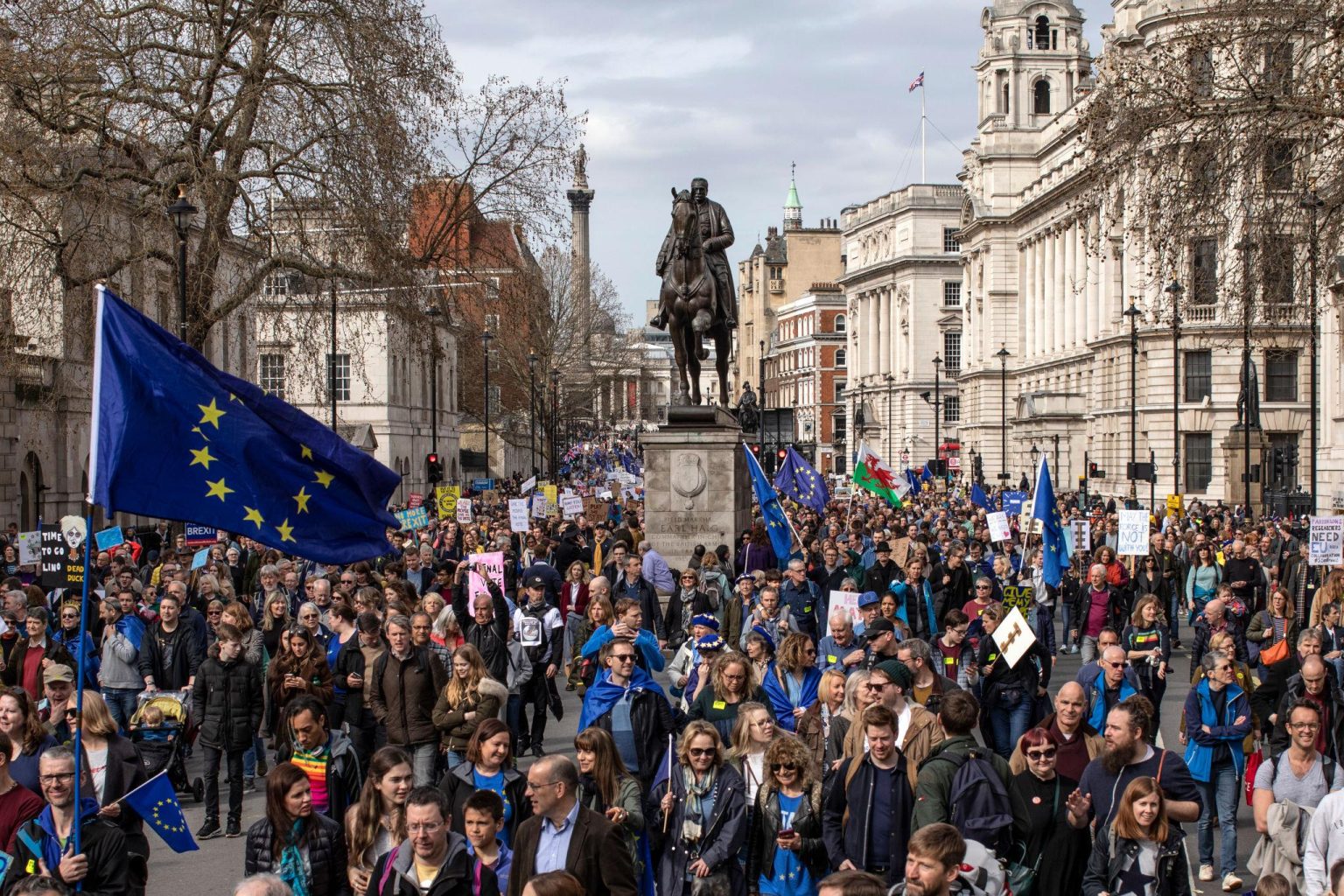
London, 1 October, (Brussels Morning Newspaper) – The debate over UK rejoining EU membership has moved back into the political spotlight after Prime Minister Andy Burnham called for Britain to examine the full range of options for its long-term relationship with Europe, including closer economic integration and the possibility of eventually returning to the European Union.
The renewed discussion marks a significant shift in the post-Brexit conversation. Rather than focusing solely on improving the existing UK-EU relationship, political attention is increasingly turning towards how far Britain could ultimately move back towards European institutions.
Burnham puts Britain’s EU relationship back on agenda
Burnham used his first Labour Party conference speech as prime minister on 29 September to argue that the current post-Brexit settlement was not delivering everything Britain needed economically.
He told delegates in Liverpool that Brexit had “done more harm than good” and said his government would examine different options for strengthening Britain’s relationship with its European neighbours.
The prime minister subsequently indicated that those possibilities could range from closer economic arrangements to participation in the single market or customs union and, potentially, eventual EU membership.
However, Burnham has not announced a new referendum or a formal application to rejoin the bloc. His intervention instead opens a wider debate about the direction of UK-European relations.
Brussels watches renewed British debate closely
The discussion has immediate significance for Brussels because any substantial change in Britain’s relationship with the EU would require negotiations with European institutions and member states.
French President Emmanuel Macron and Spanish Prime Minister Pedro Sánchez welcomed the prospect of Britain developing closer relations with the bloc after Burnham’s remarks.
Macron also indicated that Britain could not necessarily expect to restore all the special arrangements it held before Brexit.
That distinction could become crucial to the UK rejoining EU debate. Returning as a member would not simply mean reversing Britain’s 2020 departure. A future British government seeking membership would have to enter an accession process and negotiate terms acceptable to existing EU members.
Public attitudes towards Brexit have shifted
Polling indicates that attitudes towards Britain’s relationship with Europe have changed substantially since the 2016 referendum.
YouGov research published in June found that 55% of Britons supported rejoining the European Union in principle. Support dropped to 35% when respondents were asked about returning without the opt-outs Britain previously enjoyed.
The difference illustrates one of the central challenges facing politicians advocating closer European integration: general support for rejoining does not automatically translate into support for every condition that could accompany membership.
Brexit continues to shape UK trade and politics
Britain formally left the European Union on 31 January 2020 following the 2016 referendum, in which 51.9% voted to leave and 48.1% voted to remain.
The UK then left the EU single market and customs union when the transition period ended on 31 December 2020.
Trade between Britain and the EU is now principally governed by the EU-UK Trade and Cooperation Agreement. Although it provides tariff-free and quota-free trade for qualifying goods, businesses face customs procedures and other regulatory requirements that did not exist when Britain was an EU member.
Those economic arrangements have remained central to arguments over whether Britain should seek a closer relationship with Brussels.
Why renewed EU discussion matters for Britain and Brussels
The latest debate reaches beyond the symbolic question of reversing Brexit.
Closer integration could affect trade rules, border procedures, migration arrangements, financial services, agricultural standards, security cooperation and Britain’s independent trade policy.
For Brussels, Britain remains an important European economic, diplomatic and security partner despite no longer being an EU member.
The UK rejoining EU discussion therefore raises questions about how both sides want their relationship to develop over the coming decade.
UK-EU summit could clarify Britain’s next steps
Attention will now turn towards the next UK-EU summit and the options the British government chooses to pursue.
Burnham has indicated that the government will examine Britain’s longer-term European relationship, while UK and EU officials continue discussions on areas where cooperation could be strengthened.
No formal process to restore EU membership has been launched, and another referendum has not been announced.
The immediate political question is therefore not whether Britain is about to rejoin the European Union, but how far the government is prepared to move towards Brussels as it reassesses the economic and political settlement created by Brexit.