British PM Sir Keir Starmer has called for “global pressure” to “stop the slaughter” in Sudan.
His comments are timely as, on Thursday at the EU parliament plenary in Strasbourg, MEPs will hold an urgent vote on adopting a resolution on the Sudan war and what a parliament spokesman called the
“catastrophic humanitarian situation.”
Speaking in the UK House of Commons, Sir Keir described the crisis in the country as “utterly horrifying.”
The Labour leader said his country was working with is partners to “break restrictions on humanitarian aid” to Sudan and demanded that all those involved in the bloodshed be held “responsible.”
He said the UK was seeking
“global pressure to stop the slaughter” and to achieve a “sustainable” peace fire.
Ultimately, he told MPs in the Commons at PMQs tht the aim was to “deliver a transition” to civilian rule.
Further comment at the EU parliament on Tuesday in Strasbourg came from the EU commissioner for equality and acting commissioner for crisis management, Hadja Lahbib.
The Belgian official told MEPs at their plenary that “hunger, malnutrition, and disease” are rapidly spreading across the country, while international humanitarian law is being violated.
Lahbib said the outlook in Darfur and Kordofan was “particularly shocking,” recalling last month’s “horrific attacks” against civilians by the paramilitary Rapid Support Forces (RSF) during their capture of El-Fasher and Bara.
The commissioner told MEPs,
“Thousands of civilians in El-Fasher have been killed on ethnic grounds, in house-to-house raids, mass detentions. People are unable to leave the city,”
she said.
She added,
“Three years into a cycle of war, destruction, and atrocities, this is a moment of great concern for Sudan and the entire region.The humanitarian crisis in Sudan is catastrophic. Hunger and malnutrition are soaring.
International humanitarian law is being violated. Civilians face growing threats. Conflict-related sexual violence is rising. Disease outbreaks are spreading. Humanitarian access is being blocked at every turn.”
Separately, Denis MacShane, a former Europe Minister under Tony Blair in the UK, told this website,
“Europe whether as EU or individual nation states has not a policy for Africa – except keeping migrants at bay – worthy of its name. Sudan is a left-over from British colonial rule and the 19th century scramble for Africa.”
The former cabinet minister added,
“Africa is our closest neighbour as a continent and Europe collectively should develop a new combined security-economic growth-respect for human especially women’s rights policy.”
Also speaking to this site Willy Fautré, director of Human Rights Without Frontiers (Brussels) noted,
“The Rapid Support Forces (RSF), part of Sudan’s Tasis Alliance, has taken control of El-Fasher. The defeat for the Sudanese Armed Forces (SAF) means that the entire Darfur region is now under RSF control, giving the RSF strategic leverage in negotiations.
Capturing El-Fasher consolidates RSF dominance across all five Dafur states, severs the last military foothold of the SAF in the region, and opens up direct logistical corridors for RSF supply routes.
The control of El Fasher gives the RSF undisputed dominance over Darfur. It also further secures a logistical corridor to Libya for arms and fuel, and allows the redeployment of RSF forces to the main front lines. Peace is not for tomorrow.”
Yet more comment on the crisis comes from the International Rescue Committee whose president and CEO is former British politician David Miliband , a role he has held since 2013.
A former UK Foreign Secretary, Miliband was inspired to work for the IRC by his experience growing up as the son of refugees.
Madiha Raza, Associate Director of Public Affairs and Communications, International Rescue Committee, exclusively told this site,
“Even before the war erupted in April 2023, Sudan was already experiencing a severe humanitarian crisis that left 15.8 million people in need of aid.”
Speaking on Tuesday, Raza added,
“Now, more than two years of war has drastically worsened these conditions, displacing over 12 million people and leaving 30.4 million people – more than half of Sudan’s population – in need of humanitarian support.
“Sudan is now facing the largest humanitarian crisis ever recorded, and it is entirely man-made. Famine continues to spread across the country, while violence is severely hindering humanitarians’ ability to deliver food where it’s needed most. This is being exacerbated by soaring food prices and a collapse of food supply, which are leaving families starving.
“Needs are particularly acute in the state of Darfur. Thousands of families are fleeing El Fasher, the state’s largest city, to join nearly 400,000 displaced persons who have been seeking safety and humanitarian services in neighboring Tawila.
However, despite reports of large numbers of families attempting to flee toward Tawila, IRC teams on the ground have seen 5,000 to 10,000 people arrive, with El Fasher’s remaining civilian population estimated to be around 200,000 people.”
Raza added,
“The IRC’s staff in Tawila have shared harrowing reports of small children arriving alone, without knowing the whereabouts or the fate of the rest of their family. Extremely disturbing reports and satellite imagery confirm that people are not able to flee El Fasher to safe places like Tawila, which means they are trapped, detained or worse.
“The IRC is calling on the international community, including the European Union, to strongly condemn all attacks against civilians, civilian infrastructure and aid workers, and meet their obligations under international humanitarian law.
“They must secure immediate humanitarian access across Sudan so aid can reach those who need it, and it’s vital they scale up flexible funding to immediately expand life-saving operations and support local and community-based responders.”
Centre right MEP David McAllister, Chairman of the European Parliament’s Foreign Affairs Committee, also spoke to this site about Sudan, saying, “The situation in Sudan has descended into one of the world’s gravest humanitarian catastrophes.”
The vastly experienced deputy, who was born to a Scottish father and German mother and holds both German and UK citizenship, added,
“After nearly three years of conflict, millions are displaced, famine is spreading, and civilians — especially women and children — are being subjected to horrifying levels of violence.”
The centre right member continued, “The capture of El Fasher and the atrocities that followed underline once again that both the SAF and the RSF, as well as those who enable them from the outside, bear direct responsibility for this tragedy.
“What Sudan needs now is an immediate end to hostilities, full humanitarian access, and a credible path back towards democracy. Europe must step up its humanitarian support for the Sudanese people and remain unwavering in demanding accountability for all violations of international and humanitarian law.”
His comments come after the United States presented the warring Sudanese army and paramilitary Rapid Support Forces (RSF) with a strong text for a peace plan.
President Donald Trump has said he would work to help end the war in Sudan after Saudi Crown Prince Mohammed bin Salman asked him to get involved.
Anwar Gargash, the diplomatic adviser to the United Arab Emirates’ president, is further reported by Reuters as saying on Tuesday the UAE welcomed U.S. efforts to end war in Sudan and condemned “atrocities” committed by both Sudan’s army and the paramilitary Rapid Support Forces.
Neither side has accepted the deal yet, senior U.S. envoy Massad Boulos said on Tuesday. On Sunday, Reuters report, however, that army chief Abdel Fattah al-Burhan described the U.S.’s latest proposal as the worst he’d seen, saying it
“sidelined the army and granted the RSF legitimacy.”
Boulos, speaking at a press conference in Abu Dhabi, said the army had come back with “preconditions” but the U.S. wanted the plan accepted in its original form, according to Reuters.
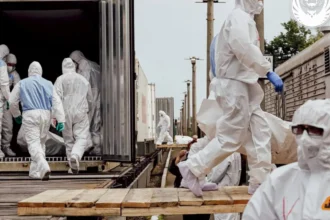
Over 150,000 people have been killed, and millions of civilians have been forced to flee their towns and villages, almost 50,000 in recent days alone. Survivors report systematic war crimes: summary executions of civilians, widespread rape, looting, kidnappings, and attacks on humanitarian workers.