
Washington, 2026 — The Trump Venezuela attack reaction continues to ripple across political capitals, media platforms, and public squares around the world after a dramatic U.S. military strike led to the capture and removal of Venezuelan President Nicolás Maduro and his wife. Reporting by Brussels Morning Newspaper shows that lawmakers, diplomats, veteran groups, and international institutions have responded with intense debate over legality, sovereignty, and long-term consequences. On Jan. 3, U.S. forces launched what the administration called Operation Absolute Resolve, involving coordinated strikes across Venezuela’s capital and the extraction of Maduro to U.S. custody, citing charges related to drug trafficking and terrorism.
The ensuing global outcry and political reaction have brought Trump Venezuela attack reaction sharply into focus, with critics warning that the operation may erode respect for international law, congressional oversight, and regional stability.
What Took Place in Caracas
On a Sunday in early January, U.S. airborne and special forces units executed a multifaceted military operation that targeted strategic Venezuelan military installations and security compounds in Caracas. The mission reportedly involved more than 150 aircraft, advanced electronic warfare systems, and elite assault teams, demonstrating a level of military precision rarely seen in similar engagements.
Officials in Washington described Maduro’s capture as a necessary action to bring a fugitive wanted under U.S. law for narcotics and terrorism charges. The administration labeled the act a “law enforcement extraction,” asserting it was justified under existing statutes and executive authority.
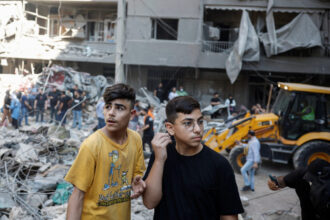
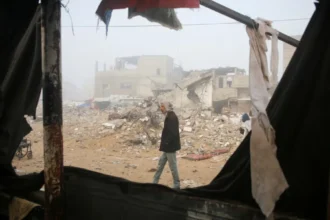
Amid fierce resistance, dozens of Venezuelan security personnel and civilians were killed, with casualties reported by both sides. In a related escalation, armed groups loyal to the ousted government have clashed with interim authorities and U.S.-aligned forces in parts of Caracas.
This unprecedented event forms the backdrop to the widespread Trump Venezuela attack reaction that has dominated headlines and political discourse this month.
U.S. Political Backlash
Immediately after news of the strike, U.S. lawmakers offered starkly contrasting assessments. Republican leaders broadly defended the administration’s decision, with some describing the operation as a decisive blow against Marco-terrorism and a potential step toward stabilizing Venezuela. Supporters have praised the tactical execution and emphasis on capturing a high-value target with minimal U.S. casualties.
However, many Democrats condemned the strike, arguing that it bypassed Congress, lacked clear legal authority, and risked plunging the United States into a wider conflict. Senate Democrats such as Chris Murphy and Chuck Schemer criticized the decision as unconstitutional and a breach of the War Powers Resolution, which requires congressional consultation before engaging military forces in hostilities.
In the U.S. House of Representatives, some members suggested the action amounted to an impeachable offense, arguing that it misuses military power without legislative endorsement. Others called for hearings and resolutions to restrict future presidential authority absent express congressional approval.
The partisan divide significantly shapes the Trump Venezuela attack reaction within the United States and highlights broader tensions over executive war powers and national security policy.
International Response
Global reaction to the U.S. military action has been sharply critical. At an emergency session of the United Nations Security Council, representatives from France, China, Russia, and several Latin American countries condemned the intervention, citing violations of the UN Charter and principles of sovereignty. Many argued that the operation undermines international norms against unilateral use of force.
In Latin America, major governments including Brazil, Chile, Colombia, and Mexico issued joint statements warning that the strike jeopardizes regional peace and could destabilize neighboring states. Some nations expressed particular concern that the U.S.’s claimed authority to “run” Venezuela during a transition period set a dangerous precedent for interventionist policy.
Conversely, a minority of countries and analysts offered cautious support or sympathy. Some voiced hope that Maduro’s removal might lead to democratic renewal, though tempered by calls for legal process and respect for human rights. This polarizing global reaction reflects the complexity of the Trump Venezuela attack reaction and how it intersects with diverse geopolitical interests.
Public Protests and Civil Response
The strike has also ignited substantial public demonstrations in the United States and abroad. In major cities such as San Francisco and New York, protestors rallied against the military action, waving signs decrying unilateral intervention and demanding respect for constitutional processes.
Critics emphasized that the lack of transparent objectives and congressional oversight makes the operation appear politically motivated rather than rooted in genuine national security concerns. Activists and civil society groups have framed part of the Trump Venezuela attack reaction as a defense of democratic norms and global justice.
In contrast, segments of the public, particularly veterans and families affected by Venezuelan export policies or drug trafficking concerns, expressed cautious approval of targeting a leader accused of corruption and criminality. This dichotomy underscores the ongoing debate and the varied interpretations of U.S. action in Venezuela.

Legal and Constitutional Implications
Legal scholars have weighed in, arguing that the operation sits in a murky intersection between executive authority and congressional jurisdiction. Under the U.S. Constitution, the power to declare war lies with Congress, yet presidents have historically engaged in military actions without explicit authorization in certain circumstances.
Critics of the strike suggested that the Trump Venezuela attack reaction centers on concerns that the administration’s justification stretches legal frameworks beyond precedent. They argue that without formal congressional authorization or a United Nations mandate, the operation may set a risky precedent for future military engagements.
In response, the administration insisted that its legal counsel had reviewed the operation thoroughly and maintained that the strike fell within the constitutional powers granted to the presidency as commander-in-chief. This legal tug-of-war remains a core element of the broader reaction.
Effect on Regional Security
Regional security analysts note that the U.S. action has reverberated across the Western Hemisphere. Venezuelan armed groups, including remnants of government loyalists and militias, have become more active in some areas, complicating efforts at stabilization and humanitarian response.
Neighboring countries have fortified borders and increased diplomatic engagement to prevent spill-over violence. The Trump Venezuela attack reaction thus extends beyond rhetoric into tangible policy shifts among Latin American nations, with many urging peaceful, negotiated solutions.

Impact on Energy and Economic Relations
The U.S. announcement following the strike included intentions to involve U.S. companies in Venezuelan oil infrastructure and energy production. While proponents argue this could boost economic recovery and energy security, critics warn it could appear exploitative or resemble historical interventions driven by resource interests.
This aspect of the Trump Venezuela attack reaction has drawn scrutiny from economists and diplomats who argue that sustainable rebuilding requires transparent investment, respect for local governance, and regional cooperation, not just foreign corporate involvement.
One Defining Quote
A former ambassador to the United Nations summarized the reaction
“This action may have removed a leader, but it has also removed the foundations of consensus and law that keep the international system stable.”
Long-Term Strategic Outlook
As the dust settles, the Trump Venezuela attack reaction continues to evolve. Analysts predict that U.S.–Latin America relations will be reshaped for years, with debates over intervention, sovereignty, and the use of military force dominating policy discussions.
The United States faces decisions on how to balance security objectives with diplomatic engagement, while regional leaders seek pathways to peace and reconstruction in Venezuela without external domination.
International organizations and civil society groups are calling for renewed focus on legal mechanisms and multilateral cooperation to prevent similar unilateral actions in the future.

After math Realignment Rewriting Global Norms
The global and domestic response to the U.S. strike on Venezuela demonstrates that the Trump Venezuela attack reaction is complex, multifaceted, and deeply polarized. While proponents tout decisive action against a controversial leader, opponents warn that legality, constitutional order, and international norms have been jeopardized.
The narrative unfolding now will likely influence debates on presidential war powers, international law, and global stability for years to come.