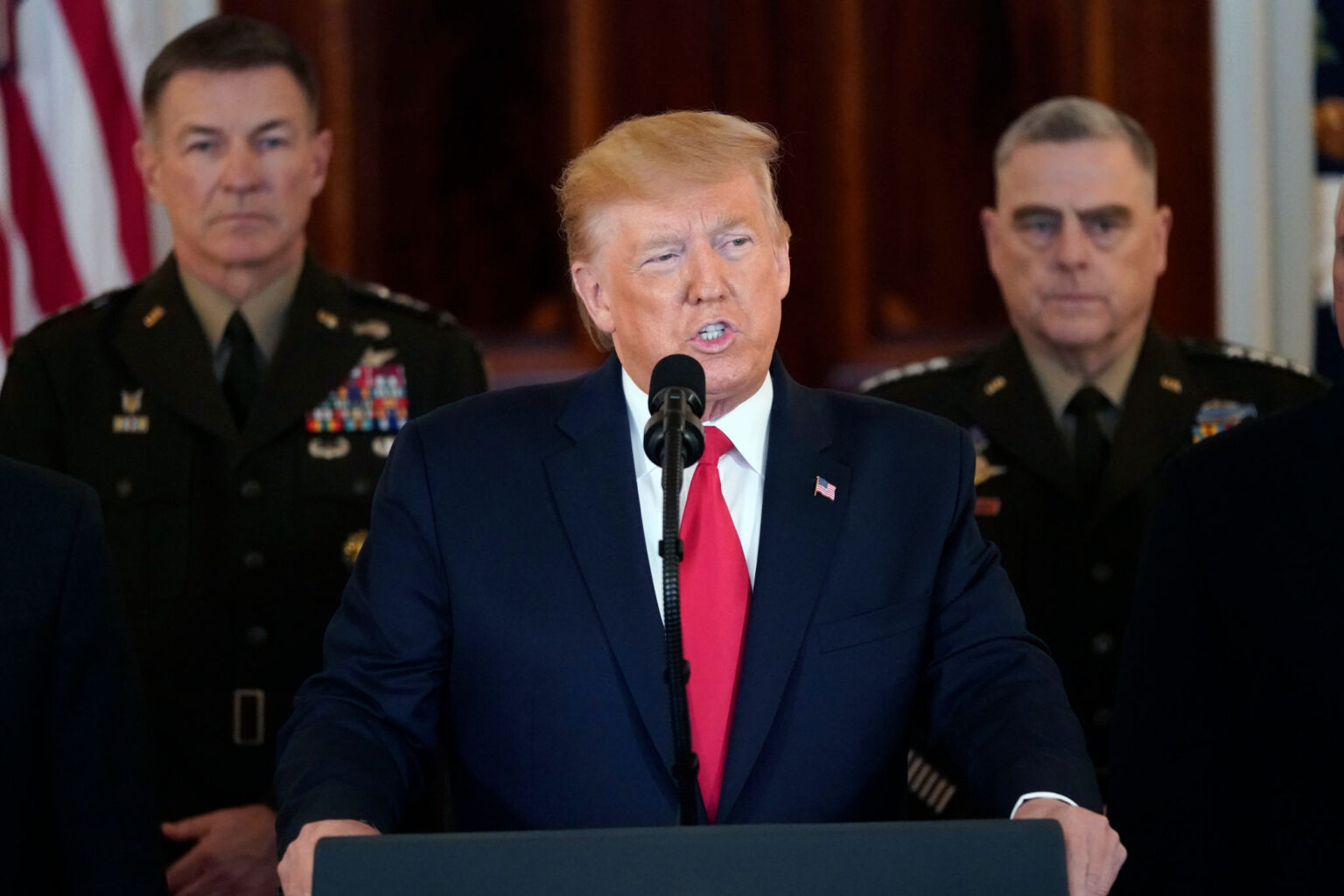
Washington, January, 2026 — Renewed international attention followed fresh remarks tied to the Trump Iran deal, bringing US relations with Iran back to the forefront of global diplomacy. Speaking against a backdrop of heightened geopolitical uncertainty, Donald Trump stressed that any future engagement with Tehran must produce clear and verifiable security results, a stance that quickly echoed across major world capitals.
US officials characterized the development as a strategic re-calibration rather than a policy shift, underscoring that the issue continues to influence long term thinking in Washington and remains relevant far beyond the scope of bilateral ties.
Washington’s Strategic Messaging in 2026
Policy analysts say the Trump Iran deal narrative reflects a broader effort by Washington to project resolve while preserving diplomatic leverage. The approach underscores a belief that negotiations are effective only when paired with credible pressure.
Senior officials indicated that the current posture is designed to influence calculations in Tehran while also reassuring US allies concerned about regional stability.
Historical Roots of the Dispute
The origins of today’s tensions stretch back decades, shaped by mistrust, sanctions, and competing regional ambitions. The Trump Iran deal debate is inseparable from earlier efforts to limit Iran’s nuclear program, many of which faltered due to enforcement disagreements.
During Trump’s presidency, the United States withdrew from a previous agreement, arguing it failed to address long term risks. That decision continues to define diplomatic dynamics in 2026.
Security Concerns and Regional Balance
Security experts warn that language surrounding the Trump Iran deal carries implications for the broader Middle East. Any perception of escalation can heighten anxieties in a region already marked by unresolved conflicts.
Military officials emphasize that preparedness remains defensive, but acknowledge that deterrence relies heavily on signaling intent without provoking confrontation.
Allied Perspectives and Diplomatic Reactions
European and regional allies have responded cautiously to renewed US rhetoric. Many stress the importance of dialogue and multilateral engagement, viewing the Trump Iran deal as a test of collective diplomacy.
Diplomats say ongoing consultations aim to prevent fragmentation among partners while maintaining pressure on Tehran to comply with international norms.
Economic Impact and Energy Markets
Markets reacted with measured caution following developments linked to the Trump Iran deal. Energy analysts note that uncertainty involving Iran often influences oil prices and investor sentiment.
Sanctions and potential policy shifts remain key variables, prompting global financial institutions to closely monitor signals from Washington.
Domestic Political Debate in the United States
Within the United States, the Trump Iran deal has resurfaced as a point of political contention. Supporters argue that firmness strengthens national security, while critics warn of risks associated with heightened rhetoric.
The debate reflects broader divisions over America’s global role and the balance between diplomacy and force.
Media Coverage and Public Discourse
International media outlets have framed recent developments as a return to familiar dynamics. Headlines focusing on the Trump Iran deal dominate coverage, shaping public understanding of the stakes involved.
Commentary ranges from cautious optimism to concern over potential missteps, highlighting persistent uncertainty.
Diplomatic Channels and Negotiation Prospects
Despite sharp language, diplomatic channels remain open. Officials involved in back channel discussions suggest that confidence building measures could still pave the way for formal talks connected to the Trump Iran deal framework.
Progress, however, is expected to be gradual, with trust deficits posing a significant challenge.
Strategic Deterrence and Policy Signals
Analysts note that references to the Trump Iran deal serve as strategic signals rather than immediate policy directives. Such messaging is intended to influence perceptions while keeping options open.
One senior foreign policy analyst said,
“Diplomacy backed by pressure is often used to shape outcomes without crossing into direct conflict.”
Implications for Middle East Stability
Regional governments continue to monitor Washington’s posture closely. Developments tied to the Trump Iran deal have implications for alliances, defense planning, and economic cooperation across the Middle East.
Stability, experts argue, will depend on consistent messaging and coordinated international efforts.
Global Power Dynamics in Focus
Beyond the region, the Trump Iran deal highlights shifting global power dynamics. Major actors see the issue as a bellwether for how disputes between states will be managed in an increasingly multi-polar world.
Engagement by global institutions remains critical to preventing unilateral escalation.

Legal and Institutional Dimensions
International legal experts emphasize that any future agreement must include clear verification mechanisms. Lessons from earlier efforts inform current thinking around the Trump Iran deal discussions.
Transparency and enforcement are viewed as essential to restoring confidence among all parties.
Public Opinion and International Trust
Public opinion surveys suggest skepticism remains high on all sides. The Trump Iran deal debate has influenced perceptions of credibility and trust in international commitments.
Rebuilding confidence will require sustained engagement and demonstrable progress.
Military Readiness and Risk Management
Defense planners stress the importance of risk management amid heightened rhetoric. While the Trump Iran deal remains primarily diplomatic, contingency planning continues in parallel.
Officials underscore that preparedness aims to deter conflict, not provoke it.
The Role of Congress and Institutions
US lawmakers remain actively engaged in shaping policy. Congressional debates surrounding the Trump Iran deal reflect concerns over oversight, authority, and long term strategy.
Institutional checks are expected to play a role in any future agreement.
International Law and Compliance
Compliance with international law remains a focal point. Observers argue that the Trump Iran deal discussions must align with established legal frameworks to gain lasting legitimacy.
This emphasis is shared by allies seeking predictability and rule based order.
Long Term Economic Considerations
Economists highlight that stability linked to the Trump Iran deal could unlock broader economic benefits, including trade normalization and investment flows.
Conversely, prolonged uncertainty risks entrenching economic isolation.
Technology and Monitoring Mechanisms
Advances in monitoring technology may influence future negotiations. Experts say enhanced verification tools could address concerns that previously undermined confidence in agreements related to the Trump Iran deal.
Such innovations may prove decisive in bridging gaps.
Regional Voices and Neighboring States
Neighboring states have voiced concerns about spillover effects. The Trump Iran deal remains central to regional security calculations, influencing diplomatic outreach and defense cooperation.
Dialogue among regional actors continues alongside global efforts.
A Pivotal Year for Diplomacy
As 2026 progresses, policymakers describe the moment as pivotal. The Trump Iran deal stands as both a challenge and an opportunity to redefine engagement strategies.
Outcomes will depend on restraint, clarity, and sustained diplomatic effort.
Beyond Immediate Headlines
While attention often centers on rhetoric, the deeper story lies in the long term implications of the Trump Iran deal debate for global governance and conflict prevention.
Looking Past 2026
The decisions made this year may shape international relations for years to come, testing whether diplomacy can prevail amid persistent mistrust and strategic rivalry.