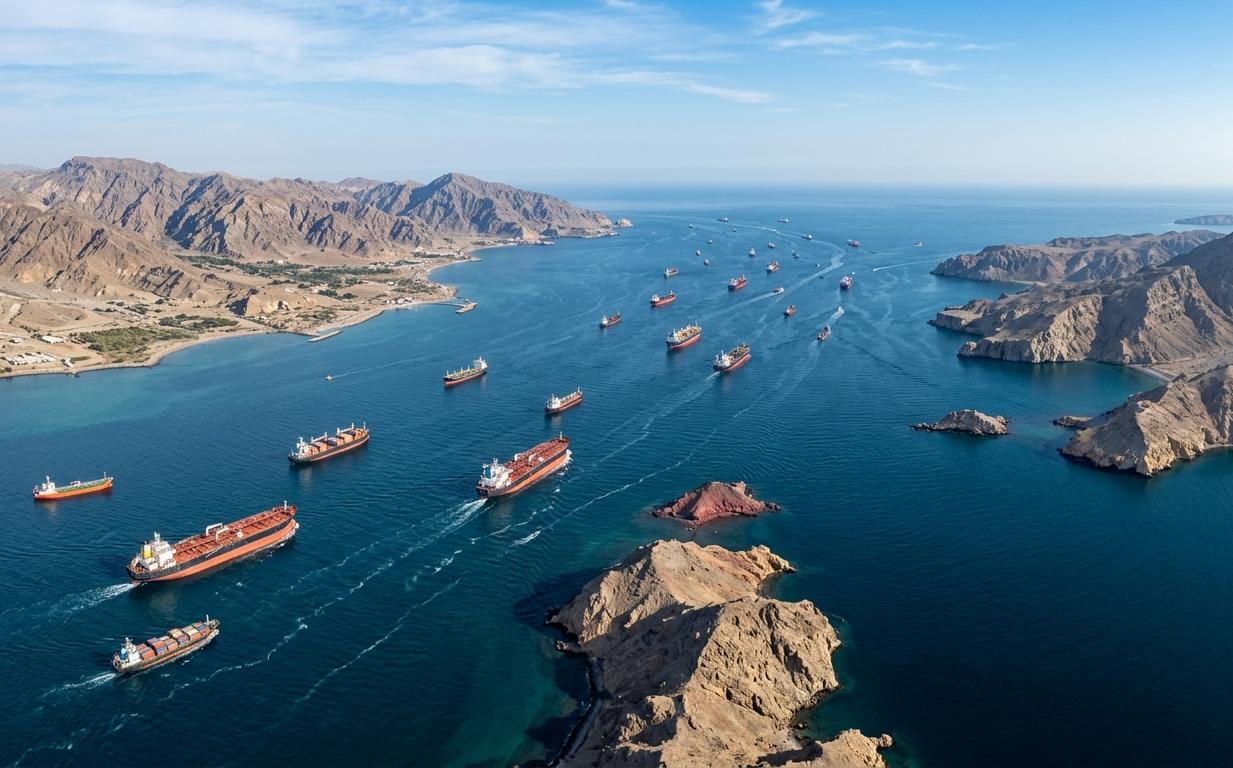
Emmanuel Macron came home from the Gulf last week with diesel cargoes and a single word for Donald Trump. Standing in Doha on Wednesday, the French president called the foreign commentary on his country’s riots “stupid.” Asked whether he meant Trump, he said Trump was among them. Two days earlier, at a rally in Kansas, Trump had told supporters that France was being “conquered, looted, and burned to the ground by migrants, jihadists, and communists.”
The NFL saw a different France. Commissioner Roger Goodell cleared Sunday’s Paris game after speaking with Secretary of State Marco Rubio, and the Steelers and Saints played at the Stade de France. In Mumbai the same week, Rubio declined to judge India’s protests because India is a democracy. He then made one exception, for riots “like what you’re seeing in Europe.” JD Vance posted footage of Limoges’s burning town hall and called it “the future congressional Democrats seek for your country.” Trump told Kansans that France’s “burning steeples and raging fires” were what the “radical Dumocrats” wanted for America. After Macron objected, the State Department called the president “spot on.”
Paris is safe enough for American football. It is not safe enough for American voters.
Washington tells the story of an ally that has lost control of its streets. The truth is closer to the opposite. France is paying the bill for a war Washington started, and lending its burning town halls to an election Washington holds on November 3.
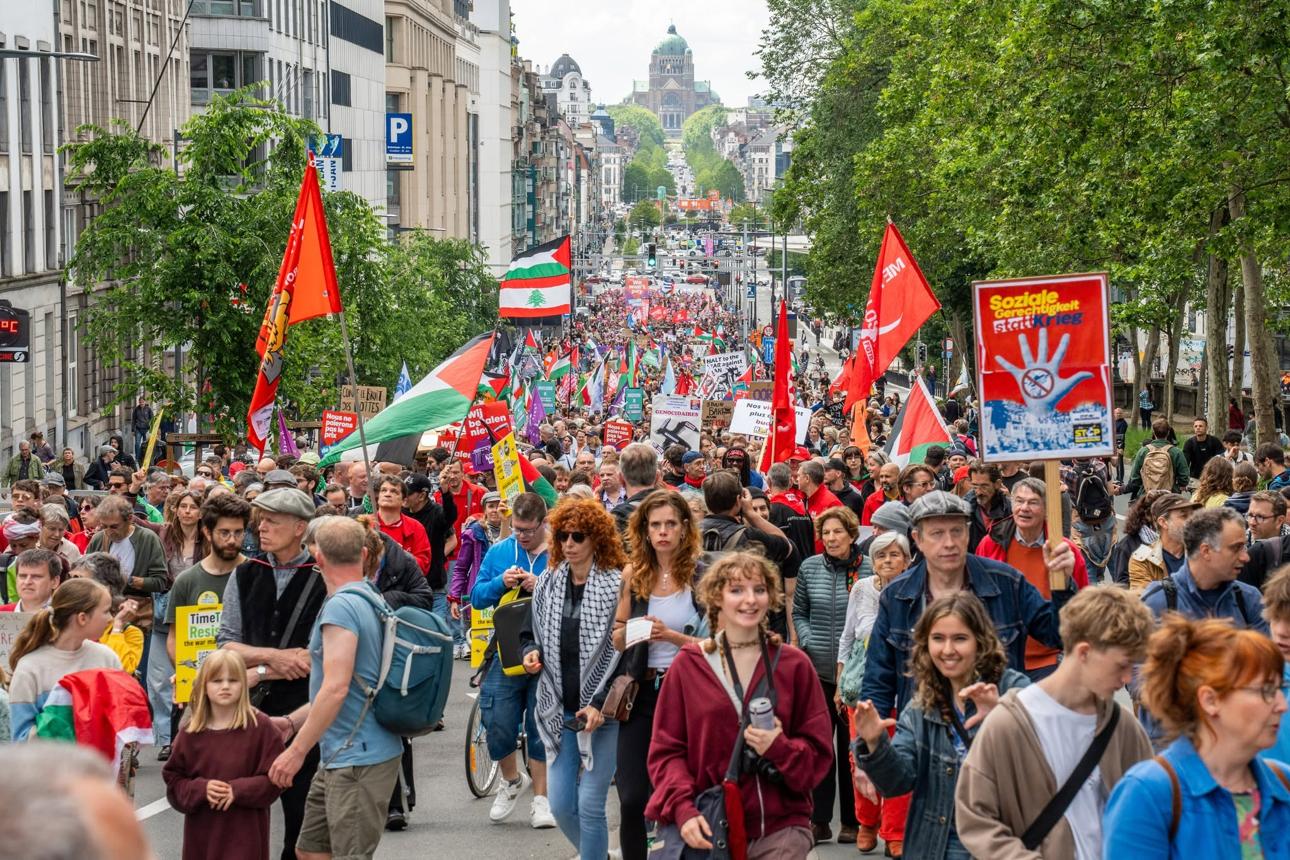
The revolt began in classrooms. In September, lycée students blockaded their schools over missing teachers and crumbling buildings, while fishermen blockaded ports at Nice and Sète over the price of diesel. On October 17 the two currents merged under a revived Yellow Vest banner. Between 550,000 and 800,000 people marched, and thousands were arrested. They came back on Saturday. The Interior Ministry counted 410,000 marchers for “Act II,” after Macron ruled that only union marches could use the capital’s streets. Diesel now costs €2.37 a litre, a cent below its record. Macron says the fuel shock came from a Gulf war France never joined. Trump calls that “fake news.”
Paris has sat in this chair before, facing the other way.
Seventy years ago this Thursday, Israel invaded Sinai under a plan secretly agreed with Britain and France, and the Suez Canal closed. On October 30, 1956, a week before his own re-election, Dwight Eisenhower told aides that those who had started the operation should be left “to boil in their own oil.” By mid-November, Paris and London reported oil supplies 25 to 30 percent short of their needs. Washington held back its emergency plan until the invaders agreed to withdraw. The lesson was blunt. Whoever starts a war in the Middle East pays for it.
Washington taught that lesson and has since forgotten it. On February 28, the United States and Israel attacked Iran. Macron refused a role, and Iran shut the Strait of Hormuz. A month later Trump told aides he could end the campaign with the strait largely closed, according to a Wall Street Journal report carried by Reuters. His advice to fuel-starved allies was to “just TAKE” it. When France closed its airspace to Israel-bound American weapons, Trump warned that “The U.S.A. will REMEMBER!!!”
This is Suez with the seats swapped and no Eisenhower in the room. Three bills are now landing in Paris, and Washington wrote each of them.
First, the fuel bill. Brent traded near $114 on Monday, against about $62 a year ago. Moving a barrel of crude now costs more than $20, against $3 last year, according to Goldman Sachs. In mid-October, European gas traded at $26.70 per million British thermal units, while America’s Henry Hub sat near $3.12. Americans heat their homes at the old price. The French heat theirs at the war price.
Second, the sales slip. “When oil prices go up, we make a lot of money,” Trump wrote in March. American suppliers shipped 59 percent of the EU’s liquefied natural gas in the first half of this year. Brussels is also bound by a $750 billion pledge, signed at Trump’s Turnberry golf resort, to buy American energy. In 1956 Washington withheld oil from a reckless France. In 2026 it sells gas to a blameless one.
Third, the defence floor. NATO allies accepted Trump’s target of 5 percent of GDP for defence and related spending. Prime Minister Sébastien Lecornu’s 2027 budget lifts defence from $64 billion to $71.2 billion while freezing public-sector wages. The students marched for their teachers. The army got its raise. The teachers got the freeze.
Macron has tried every trick in the syllabus to cushion those bills. The UAE and Bahrain pledged diesel that lifts French commitments to 295,000 tonnes a month, just over a tenth of consumption. Qatar promised 2 terawatt-hours of LNG a month through the winter, and a surprise stop in Riyadh added Saudi diesel “for as many months as necessary.” France is also sending troops and air defences to Yanbu, the Saudi terminal that carries crude around Hormuz. Over the weekend the Houthis claimed strikes on Yanbu, Rabigh and the pipeline that feeds them. Riyadh says it intercepted them. Washington would not help there. “The Houthis called us, and they don’t want to fight with us,” Trump said. France stayed out of America’s war. It is now guarding the exits from it, and the exits are under fire.
None of this clears Paris. Iran, not Washington, closed the strait. France’s debt and its policing are French choices. Interior Minister Laurent Nuñez counted several thousand far-left militants who came to attack public buildings, not to discuss diesel. But those failures were survivable a year ago, with Brent around $62. Washington did not write Lecornu’s budget. It set the two numbers the budget had to obey.
Cargoes buy France a winter, not leverage. Europe already holds some. Paris should press the European Commission to tie every further purchase under the $750 billion Turnberry pledge to two written commitments. The first is an American plan, with dates, for reopening Hormuz. The second is an American share of the war-risk insurance scheme Macron is building with the Gulf states, since in Doha he blamed shipping costs multiplied by ten on uninsured ships. Eisenhower told France it would get its oil when it ended its war. Europe can tell Washington it will get its gas money when it ends this one.
The Yellow Vests march again on Saturday. Washington’s interest in French town halls ends on November 3. Two days later, France’s unions strike nationwide. The diesel bill will still be there.