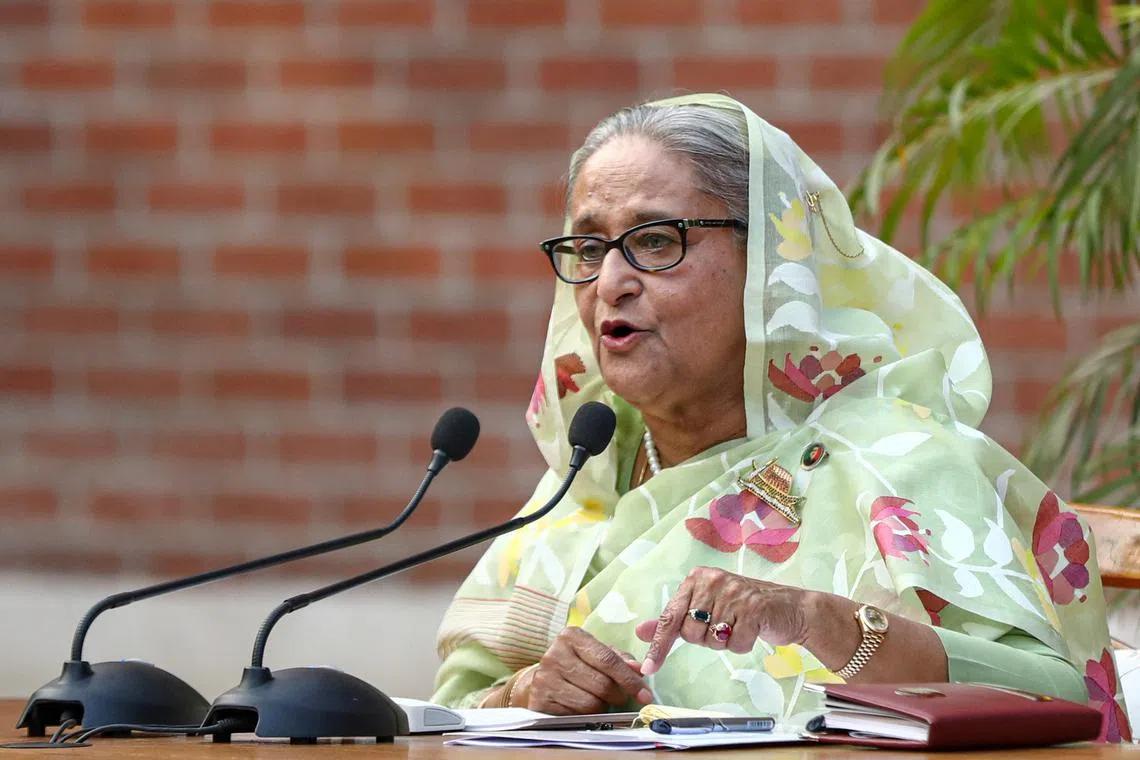
NEW DELHI, INDIA, 9 November – Brussels Morning Newspaper – Sheikh Hasina Passport request has raised fresh questions about the former Bangladesh prime minister’s possible return home after more than two years in exile in India. The development comes as Hasina faces serious legal challenges, including a death sentence issued in her absence over the deadly crackdown on protesters in 2024.
- Sheikh Hasina Requests New Travel Documents
- Why Sheikh Hasina Left Bangladesh in 2024
- Bangladesh Court Verdict Creates Major Legal Challenges
- Bangladesh Government Pushes for Extradition
- Possible Return Could Reshape Bangladesh Politics
- India-Bangladesh Relations Face Another Test
- What Happens Next for Sheikh Hasina?
On Monday, November 9, Hasina requested a new Bangladeshi passport and national identity card through her legal representatives, according to Reuters. The application is being viewed as her most concrete step towards returning to Bangladesh, potentially in December 2026.
Sheikh Hasina Requests New Travel Documents
Hasina’s lawyers at London-based Matrix Chambers contacted Bangladesh’s diplomatic mission in New Delhi, seeking replacement documents.
The request followed reports that her existing passport and national identity card had been revoked by the previous interim administration.
Her legal team argued that Hasina remains a Bangladeshi national and should be able to obtain the necessary identification documents. They also referred to international human rights obligations while requesting prompt consideration.
The application is significant because it represents a formal attempt to prepare for her return rather than simply expressing an intention to travel.
However, the submission does not mean the documents have been approved or that her return has been officially arranged.
Why Sheikh Hasina Left Bangladesh in 2024
Hasina fled Bangladesh on August 5, 2024, after weeks of student-led demonstrations developed into a nationwide movement against her government.
The protests initially focused on public-sector employment quotas but expanded into broader demands for political change.
Violent confrontations between demonstrators and security forces resulted in widespread casualties. The United Nations later estimated that as many as 1,400 people were killed during the crackdown.
The unrest ultimately ended Hasina’s lengthy period in power and forced her to seek refuge in neighbouring India.
Her departure marked one of the most dramatic political transitions in Bangladesh’s recent history.
Bangladesh Court Verdict Creates Major Legal Challenges
One of the biggest obstacles to Hasina’s return is the death sentence imposed against her in November 2025.
Bangladesh’s International Crimes Tribunal convicted the former leader in absentia of crimes against humanity connected to the suppression of the 2024 uprising.
Hasina has rejected the allegations and questioned the legitimacy of the proceedings.
She has nevertheless indicated that she intends to return and surrender before a court.
Any return would therefore carry substantial legal risks, with questions surrounding her detention, judicial proceedings and the enforcement of the verdict likely to attract international attention.
Bangladesh Government Pushes for Extradition
The Sheikh Hasina Passport request has also highlighted disagreements over how the former prime minister should be brought back.
Bangladesh’s government has repeatedly called on India to extradite Hasina under the bilateral extradition treaty.
State Minister for Foreign Affairs Humaiun Kobir recently argued that issuing a new passport was unnecessary because authorities could pursue her return through established legal procedures.
Dhaka’s position suggests that the government wants her return handled as a formal extradition matter rather than an ordinary journey by a Bangladeshi citizen.
India has not agreed to hand Hasina over, leaving an important diplomatic question unresolved.
Possible Return Could Reshape Bangladesh Politics
Hasina’s return could have significant consequences for Bangladesh’s political landscape.
Her Awami League party, once a dominant force in national politics, remains banned following her removal from power.
Many party leaders have been arrested or have moved abroad, while some supporters continue to view Hasina as an important political figure.
Bangladesh is now governed by Prime Minister Tarique Rahman, whose party won the February 2026 election.
A return by Hasina could revive political tensions between her supporters and opponents, particularly as the country continues dealing with the consequences of the 2024 uprising.
The government’s challenge would be to manage the legal proceedings while maintaining political stability and public confidence.
India-Bangladesh Relations Face Another Test
Hasina’s continued presence in India has complicated relations between New Delhi and Dhaka.
India maintained close ties with her government for years, particularly on regional security, trade and cross-border cooperation.
However, Bangladesh’s demands for her extradition have created diplomatic pressure.
A negotiated arrangement concerning her return could help reduce tensions between the neighbouring countries.
At the same time, any decision would need to address the legal and political sensitivities surrounding her conviction and the circumstances of her departure.
What Happens Next for Sheikh Hasina?
Hasina has indicated that she wants to return to Bangladesh in December 2026, although an exact date has not been confirmed.
Her aides have said further details will be announced after the necessary formalities are completed.
For now, the Sheikh Hasina Passport application marks an important development, but several questions remain unanswered.
Authorities have yet to confirm whether the requested documents will be issued, while Bangladesh continues seeking her extradition.
Whether Hasina returns voluntarily or through a formal legal process, her arrival could become a defining moment for Bangladesh’s political future.